This presentation was originally done for our Alexandrian coven’s Outer Court. Peace and Health!
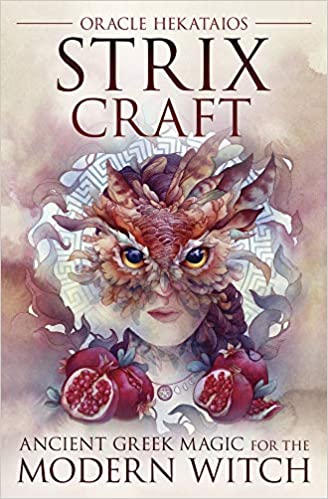
My book is now available to order
internationally.
Peace and Health!
This presentation was originally done for our Alexandrian coven’s Outer Court. Peace and Health!

In my forthcoming book, “StrixCraft: Ancient Greek Magic for the Modern Witch,” I introduce the term “Devotional Witchcraft.” I don’t know if others have used the phrase, but I do like it. Devotional Witchcraft is something I particularly enjoy. I have found in my journey that it works quite well for me, and I think others as well.
Christian Devotions
The Roman Catholic church (RCC) had a significant influence in my life, particularly rituals such as the novena. A novena is a devotional act in the RCC where one performs a set of prayers for 9 successive days (or 9 successive weeks). Candles and prayers are lifted to Mary or any other saint depending on what is needed. The atmosphere of lighting a candle and doing some rote prayers with the rosary was very magical to me. Of course, at the time I did not realize that the RCC integrated a lot of pre-Christian polytheistic forms of worship and religious activities into its doctrines. The ritualistic air about the church was metaphysical in so many ways: incense, prayer, statues, the altar, the Eucharist, and the candles all played with my imagination. I loved it.
When we converted to the Holiness Pentecostal church, the outward trappings were gone. We first met in a middle school cafeteria, and then in a high school auditorium. There was no incense, no Eucharist, no ritual. Just a lot of heavy preaching, shouting, and dancing. I swear it was great aerobics. However, I noticed in reading some of their early material that formality wasn’t far away. As they grew (in their minds) in prestige, the more formal rituals began to occur. They would banish evil spirits and then invoke the angels of the four quarters into the space. Afterwards, they would invoke the Holy Spirit to “have his way.” So we carried that on into our solitary devotionals. One thing I will give Christianity its due is its emphasis on private prayers and devotions. They’re not the only religion to do so, but that was the one which first impacted my life, and so I am using them as my example. I have Jewish friends who use private devotionals, along with Muslim friends. I’ll have to relay the time I attended a masjid (mosque) for a time to renew my faith. Another blog post for another time.
Side note: I wish Jesus’ admonishing to keep all prayers private would actually happen and none of this “National Day of Prayer” or “Prayer at the Flag” in school nonsense. Anyway…
Coming to Neopaganism
I didn’t pay attention to how much devotions had an impact on my life. Due to the intense pressure to conform, after I left the church I looked back and simply viewed anything we were “asked” to do as a threat to my individual time. I put asked in quotes because it was really more of a subtle threat that if we didn’t draw “closer to God,” then we were drawing ourselves further away and we could end up in Hell.
I was reading everything I could which was available on the Occult at that time. All that I read eventually said the same thing: altars, deities, tools, seasons, magick. Older books mentioned spirits, ceremonial circles, drawings that couldn’t be figured out (aka sigils), and fancy stuff you needed at certain times and days. I was much too ADHD for that. As I explored further, I realized that my heart was drawing me towards the Druid path. Having eidetic memory and a drive to pay attention to Nature more (not to mention the images of Merlin and Gandalf as inspiration), I veered from general Neopaganism to Druidry.
Druidry
Druidry was really a homecoming for me in a lot of ways. There was a huge difference in how to understand morality and ethics, especially because I didn’t rely on a book to give me all of the answers to life. I was also angry at the church in general. It totally ruined my family’s life I feel. If I could go back in time, I would vote to NOT go to the church. I had an interest in witchcraft since I was in 5th grade; that was due to my father’s interest in the paranormal.
In Druidry, I met a lot of Christians who were also Druids, and they were finding the commonalities they both had. These Christians were very progressive, and felt a pull towards the Divine Feminine, environmentalism, and pantheism: seeing the Divine in everything which exists rather than the Christian doctrine of God being outside of everything. The only thing in the world, so the churches taught, was the devil seeking whom he may devour.
Druidry was really a complete healing in my mind, spirit, and body. It encouraged me to make contact with Nature spirits, look inward, meditate, and see the enchantment in the world around me. Druidry also taught me the value of developing the arts; in my case, writing. I practiced writing poetry and hymns. I practiced journaling. I practiced writing rituals. Crude at the beginning to be sure, but hey everyone needs to start somewhere. I think Druidry really gave me a sense of devotions by going out into Nature and meditating. There was no emphasis on candle magic, or poppets, or anything of that kind. It was all about self-development, which I valued and continue to value, sharing this philosophy into other practices I am initiated in. Druidry, to me, is the closest I came to being an actual Wizard in that archetype caricature.
Witchcraft
When I began learning to be a witch, I found that devotionals were nil. Or at least, the emphasis was. I can’t speak for the other traditions of Witchcraft which exist (e.g. Mohsian, Blue Star, Silver Crescent, Central Valley, Gardnerian, etc). I just know for me it was all about generalities: deities, tools, seasons, altars, and a connection with Nature (like Druidry). But, there was also a lot of training in Magick: candles, poppets, hexing, spells, intention, correspondences, and ritual structure.
As I continued to learn, I then made a dedication to my patron Goddess Hekate, the Underworld Goddess of Witchcraft, the Dead, the Crossroads, the Dark Moon, and the Torch Bearer. I’ll go into the details of that in a later blog post. Suffice it to say that performing a formal dedication to her changed my entire being and outlook.
Hekate
It would be a long while before I realized something, but Hekate guided me along the way. That something was how powerful and effective my life would be when I performed devotions. At first I didn’t call them that. I just said “I am going to pray.” It was tough using that sentence, because I felt myself go right back to Christianity with the whole “thoughts and prayers” thing. But I felt empty. My spiritual lifeline was fading I felt.
I was experiencing a dark night of the soul.
Devotional Witchcraft
As I learned different paths, I found myself drawn to Hellenic Polytheism, working with the Greek Gods and Goddesses. As I asked questions and remained observant, I realized that Hellenic Polytheists were split into two camps: Reconstructionists (who worked hard to recreate the exact ways their ancestors practiced and believed), and Revivalists (who adapted ancient writings and discoveries to modern times).
I discovered that I was a bit of both.
By Hekate’s training, I learned to venerate the ancestors. I also learned a ritual script that helped me to purify myself and work with the Gods and the ancestors. As I continued my workings, I came to realize something: I hated the term “work” or “work with.” To me, it made it sound like the Gods and I were equal pals who could just chum it up and I could use them for whatever I needed.
That’s now how this works.
People who claimed to be witches (or maybe who are witches; it’s difficult in this occult landscape to not be accused of gatekeeping while at the same time trying to live up to certain standards and define just what a witch is) were proud of the word “work.” I know a lot of Heathens (or claimed to be Heathens) would say, “Ha! I don’t bow down to my Gods. I don’t grovel. I don’t beg. We uphold our virtues and walk with courage!” (Yes, real conversation).
Side note: Not all Heathens thought this way. Some admitted that they gladly bow down to their Gods who are greater than they.
That’s when I realized something: the semantic of the word “worship” brought up memories of Christianity. People equated the word “worship” with begging and groveling. But, after having been on my journey, I came to discover that what I lacked was devotions: routine times of the day, week, or year when I could sit with my Gods and spirits and just communicate.
So I sat down and thought about it for quite some time. I wanted to know if me wanting devotions was something left over from my Christian days and was irrelevant, or was it something many religions encouraged, and Witchcraft just didn’t encourage it? I mean, lots of Neopagan and Polytheistic groups had festival days to their deities. But, I also learned that lots of Neopagans and Wiccans had the viewpoint that the Gods existed only in the mind. They were “archetypes,” that is, mental constructs which explained Nature and the world. They weren’t real, just symbols. They weren’t about to bow down to a symbol.
But, that wasn’t my experience. I experienced the Gods and the spirits of the world as real, unique beings. Hekate is. My ancestors were. Other deities I encountered were. They couldn’t just be symbols, could they? It took a while but I found other occultists who felt the same way as I did. But they still didn’t like the word “prayer.”
Well, I did.
I had to remember from my Christian time that worship meant “worthy of acknowledgement.” Veneration. Honor. All of those were included in “worship.” I did not think of groveling or begging. Of course, even if I did, what’s wrong with crying before their altars every now and again?
Contact
So thus began my devotional journey. I included times to meditate to just breathe. To talk to them. To light a candle during certain times. To wash my face and my hands in a sacred act. In fact, I began to think of the Sacred and Mundane as one complete cohesive unit, not to be separated. All of life is sacred. Everything I did could be done in a holy fashion. Take time in the shower or a bath to relax and purge “goo” from your aura. In the morning say a prayer at your altar, shrine, or just wherever, in order to reconnect with them. True, they’ll never leave you. But it isn’t about them necessarily. It is about you, and what benefits you want to see from your life when you begin to create strong boundaries and view your life as a holy instrument.
Devotions are simply a way to treat our lives with a sense of Other. Of Enchantment. To view the world with eyes wide open filled with spirits, wonder, and honor. That tree has the spirit of a dryad. That spring flows with the blessing of a spirit. The ocean swells with the Old Sea Gods. Those squirrels are all related and belong to the Squirrel Spirit*, who has much to teach us. Take the awe of Nature home with you. The stars are the fires of the Elders who have passed away but watch over us in the bosom of the Star Mother.
Devotionals, I feel, help us to not plateau, and encourage us to come closer to our Gods and spirits. Don’t get me wrong: plateauing does happen, and there are steps to help us rectify and heal from that. But how we can enrich our lives in Witchcraft is by looking to the Gods and the spirits. Witchcraft, with its teachings on spells, can use devotions to weave throughout our Work so that we can become more effective as the people who we are striving to be. Based on my experiences and that of others, I feel that devotions in Witchcraft should supercede spellwork. Don’t get me wrong: spells have their place. We need to exercise our Will and shape our Reality. We need to know that we can affect others by manipulating energies and raising the Power. There is always that.
I just feel that if you have a bond with the Gods and the spirits, they will empower you and magnify your Magic. Their energies will be with yours. You’d be surprised at how high you can raise the Power when you are connected to them.
So if you are feeling low or disconnected, I recommend devotions. Write a hymn. Pray. Dance. Light a candle. Anoint yourself. Talk to them. They are real. Speak also with your ancestors and the spirits who dwell around you.
You are all connected.
Eirene kai Hugieia!
(Peace and Health!)
Oracle
*I realize I mentioned ADHD and the first thing which came to mind as an example is Squirrel. The irony is not lost.
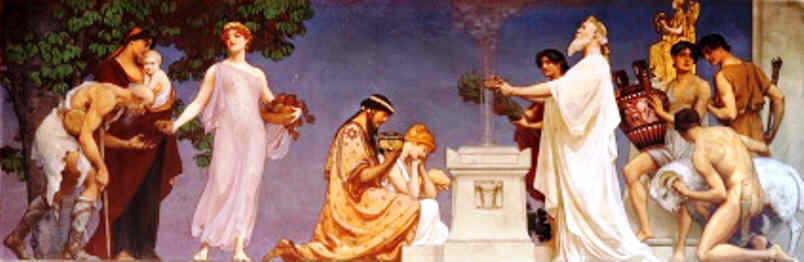
worship (n.) Old English worðscip, wurðscip (Anglian), weorðscipe (West Saxon) “condition of being worthy, dignity, glory, distinction, honor, renown,” from weorð “worthy” (see worth) + -scipe (see -ship). Sense of “reverence paid to a supernatural or divine being” is first recorded c. 1300. The original sense is preserved in the title worshipful “honorable” (c. 1300). (1)
Worship (n.) 1. The practice of showing deep respect for and praying to God or a god or goddess. 2. Religious rites and ceremonies. 3. Great admiration and respect for someone. 4. (His/Your Worship). Esp. in Britain: a title of respect for a magistrate or mayor. 5. v. (worships, worshipping, worshipped; U.S. also worships, worshiping, worshiped). 1. Offer praise and prayers to God or a god or goddess. 2. Feel great admiration and respect for. (2)
As previously posted, Samhain is an important holy day in modern Druidry, Wicca, and some other witchcraft traditions. While a Gaelic festival, some modern witches have incorporated the meaning of this night with the worship of the Goddess Hekate. I say “worship” rather than “work with.” (emphasis mine). I hate the latter phrasing, making it seem as though the Gods and spirits are toys to be trifled with. One minute they are useful, and the next to be put away in some neat package of your mind until They are useful later on again. I consider that disrespectful.
 The Cave of Oracle