Patron Deities

Horned-God-Moon-Goddess-Herm-Altar-Statue
The Goddess and the Horned One

I often get asked about patron deities a lot. Who has chosen me? How do I start? How can I find out my God and Goddess? What do I do once I know? Allow me to delve into this topic a bit more.

Wicca
In the 1950s a religion cropped up which became known as Wicca, although it was simply known as Witchcraft at the time. It was spearheaded by a man by the name of Gerald Gardner. In his writings (and those of later authors), Wicca as a whole had two patron deities: the Horned God and the Goddess. The Horned God is the embodiment of the Sacred Masculine, an archetype consisting of an amalgamation of Pan, Cernunnos, Gwyn ap Nudd, Donn, among others. The Horned God is a God of the Underworld, the sacred hunt, Nature, Sex, and the Wild, the Sun, and sacrifice.

The Goddess is the other half of the Craft’s deities. She is the embodiment of the Sacred Feminine. She is the Lady who is the Triple Goddess of Maiden, Mother, and Crone. She is connected to the green earth, the stars, the Moon, fertility, and the sea.

Both the Horned God and the Goddess are viewed as a pair which invoke the power of polarity; that is, as opposites, the Sacred Masculine and the Sacred Feminine come together for the purposes of creation, Magic, death, rebirth, and fertility. Wicca is viewed as being duotheistic: only two deities who embody all of the Gods and Goddesses. Some Wiccans take the occultist Dion Fortune’s words literally:

All of the Gods are one God, and all of the Goddesses, and there is but one Initiator.

This imagery has lasted in Traditional Craft for a very long time. It works for some Wiccans. However, I am a polytheist; I believe in the existence of all individual Gods and Goddesses, each with their own story and personality. They exist outside of ourselves, and so therefore I am not a duotheist.

When Traditional Initiatory Wicca spread here in the States from England in the 1960s, many Wiccans began to create their own covens because the demand for initiations and the eagerness of wanting to join a coven outnumbered how many covens actually existed. Many began to find whatever they could and started to “self-initiate” to the Gods. They started their own covens and sacred Traditions. They copied what they could from existing writings written by Wiccan initiates, and started their spiritual path.

However, this Wicca was do-it-yourself, and as a result the oral lore which was passed down in Traditional Initiatory Wicca was missing. DIY Wiccans took hold of the Horned God and the Goddess and insisted (in a way) that their witches individually had a patron God and a patron Goddess.

Side note: Some today use the word “matron” for the Goddess, but this is incorrect. Use patron, which is equally valid for both deities.

The Rise of Polytheism
Many polytheists then and now feel uncomfortable in Wicca, with its seemingly duotheistic philosophies. They yearn to experience connections with more than one deity. This is where I am at.

Early on in my studies I read the books which informed me of the need to pick a God and Goddess. I tried to think of some, and I couldn’t. When I started learning Druidry, the idea of a patron God and Goddess were foreign; other paths I followed didn’t have this duotheistic concept, such as Sicilian-Continental Craft and StrixCraft.

When I became initiated into Alexandrian Wicca (a “denomination” of Wicca, for lack of a better term), I already had Hekate and Dionysos whom I followed. Hekate was my original Goddess, and it just so happened that she led me to Dionysos, with whom I devoted myself to. So the presentation of being encouraged to have a God and Goddess was not necessary for me. That being said, others were exhorted to do so as a fundamental part of their training. But how would they find out? Some just picked a couple at random who they felt made sense. Others just didn’t have them.

Polytheism in Wicca
I am involved in Hellenic Polytheism as well as Wicca. I have also had the privilege to meet other Wiccan polytheists who didn’t follow the dying-and-rising God mythos. The Sabbats – celebration holidays for Wiccans – are dedicated to multiple deities who represented the cycles of Nature during that time. This contrasts with your average Wiccan Sabbat (whether DIY or Trad Craft), where usually Sabbats are routinely dedicated to a specific God or Goddess, or else follow a story of the God and Goddess throughout the year.

For polytheism, rituals have a different meaning. Sabbats can be for any number of deities and daimons. This isn’t limited to Hellenic Polytheism in Wicca mind you. There are Celtic Polytheists, Norse Polytheists, and Germanic Polytheists in Traditional Initiatory Craft who are changing the face of Wicca from being duotheistic to polytheistic.  Duotheism may continue to exist on some level since the Horned God and the Goddess may be viewed as the default patron deities of the Craft itself. Individuals, however, may have their own which aren’t limited to two.

Patron Deities
So how do you find out your patron deities? The answer is that you don’t have to know that. Some witches and other spirit workers stick to working with their ancestors and their daimons, not worrying about deities except MAYBE to worship. I say maybe because I know some people who do not acknowledge deities period.

But if you are so inclined, I’d suggest perhaps looking at what you do and who can become a patron that matches your vocation. For example, artists may turn to Athena; doctors and health professionals to Asklepios or Apollo; metal workers to Hephaistos; sailors to Poseidon or Manannan Mac Lyr; and so forth. When in doubt, I also recommend seeking out a competent diviner who will be able to guide you.

However, do not be surprised if more than one deity or daimon calls you to their attention. While now DIY Wicca is more duotheistic in teaching than Traditional Initiatory Craft, one does not need to approach Wicca as merely a gateway to a God and Goddess. If you are drawn to two patrons, there isn’t anything wrong with that, so don’t feel like you need multiple ones as well. I just want you to know that you never need to limit yourself to be called by one or two deities or daimons. Keep in mind that this is an individual journey, and where you walk may ultimately find you journeying with more than two companions.

Devotions
Once you find out who your patrons are, I suggest beginning to worship them. One can do this by simply talking to them. Pray. If you have the space, build a small altar. You can use a flat surface or a cabinet. Light a candle; write your own poetry or hymns; light some incense; print out imagery if you can’t afford a statue; pray. As you research more, I’m sure your imagination will take over and you’ll be able to add stuff as you wish. These are devotional examples which will draw you closer to your deities.

Conclusion
Discovering your patrons is an individual journey. Some people have only one deity. Others have two or more. That’s fine. But don’t feel pressured that you need to have exactly two to reflect the Masculine and the Feminine. For many, this polarity is outdated as more intersex and transgender folks join our Craft and ways. They, too, are on a path and follow it wherever it may lead. Sacred Androgyny is also paramount. Some traditions of the Craft are reflecting these changes in their philosophies and thealogies as it continues to meet the needs of more people. Some continue the polarity schema, but again it isn’t the end all be all. Just be open to your intuition and research as your walk continues. May the blessings of the Gods be with you.

Eirene kai Hugieia!
(Peace and Health!)
Oracle

My book is now available for pre-order!
 

Why I Am A Witch


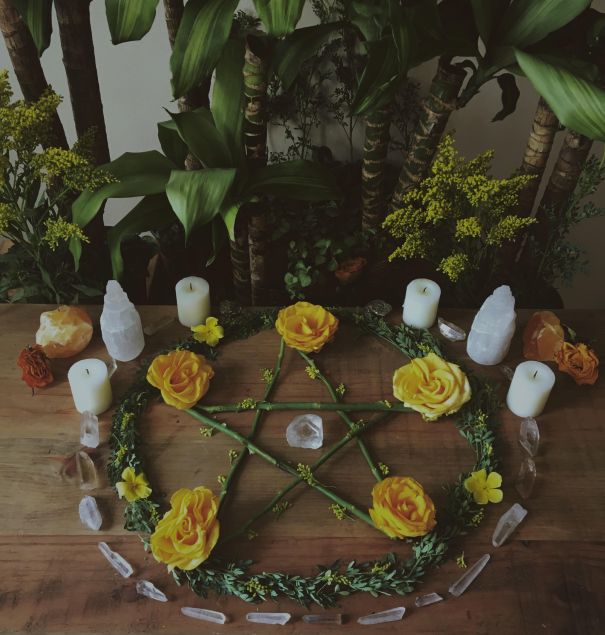
Pentacle_on_wiccan_altar
A Wiccan Altar

When I was younger, I was a born-again, Holiness Pentecostal Christian. I even became a licensed and ordained minister, and was far above my peers in knowing the Bible (I could quote entire sections verbatim). As a teenager, many looked up to me in how I was very ethical and demonstrated morals. Of course, though, I wasn’t perfect, even though the church taught that we should be “perfect in everything.” Perfection was the goal; our prize of striving towards excellence. One slip, and if we died, no matter how much we worked to be good Christians, we’d go to Hell.

Born-Again Christian Struggles
As a born-again Christian, I enthusiastically embraced this religion. It was different – new and shiny. The attendees were 98% African-American, and being Holiness Pentecostal, there was a lot of shouting, music, dancing in the spirit, and hard brimstone and hellfire preaching.

I believed in it, though. Wholeheartedly. The energy was palpable. I could sense it. In addition, solid prayers lasting an hour plus frequent fasting seemed to awaken things in me: prophecy, healing, and a way to channel energies for such things as laying on hands. But, in all of that, I encountered some problems: my sexuality, books which I was not allowed to read, and the chaos that impacted my family because of religious obligations.

Sexuality
Since I was 5 years old, I liked guys. I can’t remember a time when I didn’t. To girls at the time, I was curious. But my attraction to other boys (as a kid, not an adult) really caused me a lot of internal problems. Problems that I took out on other family members. I was a mimic, so I behaved as others did around me. But, I was afraid to be different, and I felt shame. It wasn’t because I was threatened by an adult. No one knew at the time. It was simply an instinct to hide this side of me.

When I hit puberty, we were attending the church. As a result, I didn’t have a normal adolescence. I was strictly held in certain boundaries: the men at the church wanted me to behave like them. Shake hands like them, “bro hug” like them, and dress like them. When I was younger I walked around in my mom’s heels and played with her makeup when no one was around. I really enjoyed feeling like I was performing for an audience. I loved women’s clothing. I thought they were more elegant and chic compared to what I saw men wore, which was boring and lacked color and flair.

I knew that I would encounter issues with the church. Again, as a mimic I followed along with the crowd. I carried myself in school and around others with a smug sense of superiority because I was going to Heaven and I was no longer a sinner. Yes, I could still sin, but I needed to immediately ask God for forgiveness so I wouldn’t be in Hell. I hid what I could, but unfortunately the suppression of my sexual identity manifested in other ways, such as shamefully still looking at guys and having nervous breakdowns behind closed doors. I hurt people. I hurt my family. I had a nasty temper needing to always be right about things.

Books
My dad had an extensive library filled with books on the paranormal and metaphysical. When I was in fifth grade, I began my interest in witchcraft. I read a book on the occult, along with Madame Helena Blavatsky’s writings. Madame Helena, for those not in the know, was the founder of a movement known as Theosophy. Theosophy made a powerful influence on the occult scene in England and the United States in the mid-19th century. It would influence such occult pioneers like Dion Fortune. There were even concepts from this spiritual movement which crept into Wicca, such as the word Summerland, the place where witches are believed to go to when they die.

He had a lot of information that I studied in-depth: chakras, pranic breathing techniques, healing, reincarnation, UFO’s, out-of-body experiences, spirit possession, and healing. His bookshelves were also filled with various books on Nature, archaeology, anthropology, and cryptozoology. I loved it.

But, when we converted to Christianity, my father refused to convert. He hated churches and the Bible. He would often take out different versions of the Bible and point out inconsistencies. He never wanted to go back to that limited viewpoint of the world. He wanted me and my siblings to learn how to “expand [our] horizons” and explore the wonders of the world.

As a result of this refusal to convert, our pastor quoted the Bible. Acts 19:19 stated:

Also, many of those who had practiced magic brought their books together and burned them in the sight of all. And they counted up the value of them, and it totaled fifty thousand pieces of silver. (Acts 19:19, NJKV).

Fifty thousand pieces of silver, if they were silver denarii, would equal today to about $5 million dollars. If they were silver talents, then the cost is enormous, at about $1.5 billion! All of that knowledge and wisdom lost to the ages. My passion, however, was reading and researching. I carried that over into my Christian days, but the pastor said that in order to free my father and household from demonic spirits (everyone not saved had a demon, in a view echoed in the film the Matrix, wherein everyone not unplugged was a potential agent and therefore threat), we had to burn the books.

By the house we had a metal barrel. Immediately, anything that was remotely metaphysical or encouraged it, was destroyed. I mean Disney videos, video games, books, and any films deemed inappropriate. While this purging was happening, my siblings and I quickly hid stuff. Yes, I was a hypocrite. I struggled to do the right thing, but I felt so much heartbreak, and I secretly protected a couple of books. One of them is a first edition hardback of the book “The Mists of Avalon.” My dad read that book nightly to me when I was 7 and 8 years old. What happened after the Great Purge? No change. My dad still refused to go.

The Occult
When I was older, I left the church. I wanted nothing more to do with it. My love of research influenced me to find another path. I wanted spirituality, but one which wasn’t damning about who I was as a person. I was messed up and, like my siblings, had PTSD about so much. Were we going to Hell for real? Were we wrong? And a zillion other questions.

But explore I did. I went for it and just did not care anymore. Based on my independent research, my dad was right about the Bible and its contradictions and shortcomings. It wasn’t being interpreted correctly; verses were picked that fell in line with the doctrine of the church. A lot of other things were ignored.

That’s when I returned to the inspiration of my youth: the occult. Not knowing where I was going or what I was doing, I read everything I could. I didn’t realize how much was involved in spiritual awakenings: deities, tools, altars, and seasonal celebrations. But often authors had disagreements about certain correspondences. However, unlike the Christian church I grew up in, no one called out anyone else. Differences of opinions were fine. Some stuff was not compromised, such as authors who were part of secret Mystery Traditions and felt that their way was the way according to their unified practices and philosophies. I had to learn the difference because of the PTSD involved when it came to opinions on certain matters.

Either way, my sexuality was also vindicated. There were plenty of figures in Neopaganism and Witchcraft who expressed their identity proudly. I wasn’t lost anymore. I could at last find some peace among people who would accept me for what I was.

The Benefits of Witchcraft
The more I studied, the more I was intrigued about a religion whose sole teachings happened to be about “harm none.” Or virtues found in Heathenry. Or the triad sayings in Druidry. I could make my own moralistic decisions and create my own path. I could ask questions and answers were readily given. Or if they didn’t know, they would tell me. No one pretended that they had all of the answers. Later, however, I learned painfully that some figures in the Craft felt that they were superior and filled groups with gossip about other groups and people. Don’t get me wrong, I didn’t exactly put people on a pedestal. But my Christian upbringing instilled in me a penchant to “respect your elders” and not contradict anyone if you felt differently about a subject. To many folks, that was fine. To a few, it wasn’t. I had to learn how to navigate the differences.

Be that as it may, I learned a lot about personal responsibility and not blaming anything on the devil. I learned about self-development. I learned that I could free myself from my Christian upbringing. Although, to be sure, it took many, many years for that to happen. I’d have nightmares about being back in the church and hearing those sermons about Hell. Emotionally and spiritually, I was still connected to that energy. It took a very long time for those cords to be cut finally.

Witchcraft introduced me again to who I felt I was. It didn’t mean I never ran into mistakes, because I did. A lot. It wasn’t perfect. And yes, there were politics in groups. Many groups imploded because of issues. I realized quickly that if people left Christianity angrily at a distrust of authorities, they would bring that attitude into Neopagan and Witchcraft circles. A bunch of angry people trying to be in charge is always a recipe for disaster. Gossip kills groups more than anything. But the key to work with that, I learned, was that wherever humans come together, there be politics. It was just about educating oneself on ethics, choices, and boundaries. And one can always vote with their feet, as the saying goes.

Witchcraft opened me up to the paranormal and metaphysical. I saw pictures of occultists’ houses with large libraries. Books were their church, their sacred places. Honoring Nature and themselves in whatever way they thought was best. Artists, anarchists, lawful citizens, historians, lawyers, teachers, immigrants: people from different backgrounds and races who felt a pull to the Other. There is still so much to learn in Witchcraft. The journey never ends. That, more than anything, thrills me the most.

Eirene kai Hugieia!
(Peace and Health!)
Oracle

Familiar Spirits in Witchcraft

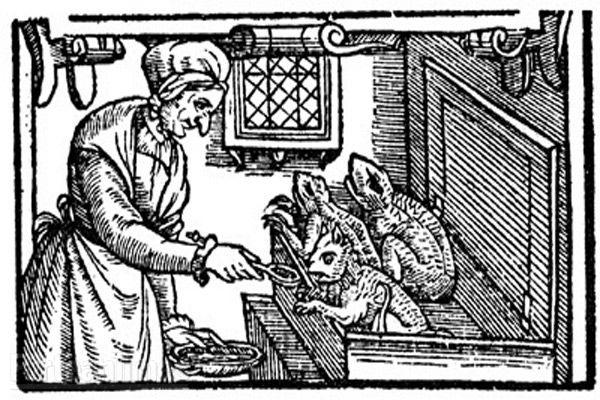
Witches'Familiars1579

Familiar spirits are an interesting topic, not least of which because they are powerful aids to one’s journey as a witch. Exploration of these spirits intrigues me as well. What I am about to write is my personal journey and advice to work with a familiar spirit. Mind you, there are a lot of books out there, each author giving their own take on this subject matter. Different traditions may teach different methods. That’s as it should be; the witch’s path is an individual one. We all aren’t going to agree on methods and definitions. The final result is that: does it work? If it works, go with it.

What is a Familiar Spirit?
I have to begin with my definition, otherwise semantics will get in the way and we’ll have a problem. Some of you will be coming from a knowledgeable background on this subject and will be confused or agree with the context in which I use the words “familiar spirit.” Likewise newer folks will read this and take away that I am the final authority of the subject and may get into debates with other witches thinking that they’re talking about the same concept but actually have different meanings. But if I define it first, we can go from there.

Here is my defintion:

A familiar spirit is a spirit ally of the witch who enters into a symbiotic relationship with them in order to assist them with magic in protection, healing, divination, trance work, and be a companion for their life.

Oftentimes, the familiar and the witch have experienced many lifetimes together. They are attached in a kind of “twin soul” format. The familiar is awakened with the witch’s first journey into the magical realm. Indeed, the familiar may be the one responsible for that person to undertake that journey to begin with!

I believe, based on my own experiences, that a familiar spirit may be an animal, a fae, a demon, a plant, or a human on the other side (or perhaps some other category). Not necessarily an ancestor per se, but a guide who probably appears as a human. Michael, Alex Sander’s spirit guide, probably fell into this category. Ancestors are a completely different category of spirit allies.

The Witch and the Familiar
The witch has a lot to gain from obtaining (or awakening) a familiar spirit. I’m not one to believe that every pet a witch has is a familiar spirit. But, I am one to believe that a familiar spirit may take possession or form of an animal, who will then accompany that witch for their lifetime in whatever “pet form” that spirit desires to inhabit over its different life forms. We humans are visual learners (which is why meditation is important). Some visualize better than others, while others maintain a difficult hold on their mental imagery. For that reason, a tactile familiar spirit will most likely happen so that the witch has a better relationship with them then if it were remaining ethereal. Or it just might be the familiar’s choice.

The familiar spirit and the witch have always been a team. In fact, when someone remembers being a witch and begins their path work, I believe that one of the first things which should be done is to have a familiar spirit. While I recognize this is difficult for many witches (and some will say it is too advanced), I disagree.

101 or Advanced?
I feel that the problem inherent in the modern Craft is not that a witch cannot gain or awaken their familiar, but that there is no “know-how” readily available in the 101 books. Most witchcraft literature that has been available out there for years has focused on altars, deities, tools, and the seasons. All of that does have its place, but I also believe understanding spirit guides and their place with the witch takes us to, well, the witch in the witchcraft. In fact, thanks to many authors out there too numerous to name, there has been a resurgence in knowledge available to the witch (both new and old) wherein people are now taught how to obtain a familiar spirit or any other spirit ally. I think this is great, because it demonstrates how much our spirit guides want to be a part of our journey, and vice-versa.

So the question becomes: is obtaining (or recognizing) a familiar spirit too advanced for the average witch? I can’t speak for other traditions and what they do. I am only familiar with three (one of which I founded). Even then, philosophies will differ. The joke is that you ask 3 witches the same question and you’ll probably get at least 6 different answers. But here are my opinions on the matter.

I don’t believe having a familiar is advanced. I believe it is part and parcel of one’s path as a witch. I believe, based on witch lore, that a familiar spirit is as witchy as knowing herbs, knowing the ins-and-outs of casting a circle, walking with the Elements, and so forth. The familiar is the one that bonds with the witch and ensures that the witch is always connected with the Other.

Calling the Spirit 
Familiar spirits, also known as fetches, imps, demons, fae, and the like, are all going to be unique. Mine is a demon. I don’t have a name for it yet, and I want to be able to allow it to give me one, but nothing has happened. I know some occultists would want to name theirs or even try to subdue it to give up their name. Names have power. They give you power over a thing. Suffice it to say that familiars, as symbiotes, shouldn’t have to give you their name if they don’t want to. That’s their prerogative. Keep in mind that your relationship with the familiar spirit is one of mutual trust.

I mentioned earlier how the familiar spirit may be the one who helps the witch along their journey, even without the witch’s knowledge. I’ve seen this to be true for a few people. One young lady said that before she ever entered the Craft, she would be followed by black dogs, with particular attention by one in her neighborhood. It was a stray. Her parents wouldn’t allow her to adopt it, but nonetheless she made friends with it. She would feed it, and the dog in turn watched out for her while walking down her neighborhood. Curiously, the dog appeared when she started reading metaphysical literature. When the dog passed, she was devastated. Years later, a black dog which looked exactly like the old one came into her life in the form of a stray. This time, she adopted the dog. The black dog is her ward, and she recognized the spirit of the old dog in this one. To call forth a familiar spirit, in fact, might just be you learning to form a bond with something which was already there.

My Demon
My demon dwells in the Azure Flame right above the crown of my head. That’s where they reside. I say “they” because they are androgynous. They protect me from having people try to cold read me, from the evil eye, and from energies otherwise not welcomed. An incident occurred years ago where I was at the church I grew up in. The reason I was there was a matter regarding my family (the religious side). The Pentecostal church had music and energy and a shouting sermon galore. I sat there, and I felt my demon pushing against everything. When we left, I had the vehicle pulled over so I could retch. The battle was too much for me, and I became sick as a result. I recovered quickly, but I realized how enormous this energy was and how well my demon protected me.

The demon has also been my ally as I travel with the Goddess Hekate as an oracle. Oracular possession happens to be my specialty, one which the Goddess bestowed upon me. I did not realize it at the time, but my demon was awakened when I dedicated myself to the Goddess as her priest. To oracle became my contract with her. The rest is history.

The demon has allowed me to meet other spirit guides. I can’t say that I’ve always been faithful to its heeds and warnings, but I have learned a lot on the journey from mistakes which could have been avoided if I had just trusted the still, small voice of my familiar. I continue to learn, and how to feed it, and maintain my trust with it.

Awakening my familiar has been a wonderful tool for my Craft. I believe every witch should have one. If you are in trad Craft, I believe not too long after your initiation a ritual should lead to you knowing your demon. Your familiar. They are your cherished companions. They will help you magically in your endeavors. I admit not everyone will agree with me. That’s okay. I just feel that a familiar spirit attached to us and vice-versa is what aids us in our witchcraft. The Gods are fine. Worship is great. But don’t forget your familiar spirit. They were with you in the beginning, and will be with you in your return.

Eirene kai Hugieia!
(Peace and Health!)
Oracle