The Danger of Literalism in Myth

Graves Myth
A book on Greek Mythology

Literal interpretations of our stories is something that pops up in a lot of places. From Zeus being someone who nobody will come near to Artemis hating men, I’d like to tackle this creature. There is a lot of misunderstanding when it comes to explaining Greek myths. In order to begin, we have to start with poets which programmed humans to literalism in the first place.

The Gospel of Homer and the Epistles of Hesiod
Ancient Greek poets such as Homer and Hesiod often wrote their stories after praising the Muses, Goddesses of Inspiration, Memory, Music, and other arts. This indicates that their poetry was divinely inspired, and not just their invention. The problem lies in that not much literature has survived from this time period, but we know that there are different mythic tales depending on the region of Greece or Magna Graecia (the Orphic Myths come to mind, as well as some of the stories of the city of Lokri). There were no uniform stories.

Still, scholars throughout the Middle Ages and the later 19th century were obsessed with viewing Homer and Hesiod as the critical texts that everyone believed in. Hardly anyone thought to give space for oral traditions passed down from mouth to ear, which was surely the case for most of Greek Mythos. Instead, epics such as Homer’s “The Iliad and the Odyssey,” along with Hesiod’s “Theogony,” were viewed as the final authority on how Greek Mythos was to be interpreted.

The Plays
In time, playwrights wrote about mythological narratives, but with the purpose of entertainment. The playwrights didn’t really (as far as we know) look at mythos as sacrosanct: holy relics to be untouched and reverenced. Instead, by reading some of the tragedies such as “The Bacchae” written by Euripides or the words of Aeschylus give us indication that – gasp! – fan fiction existed.

That’s right: the Greek Myths were nothing more than fodder for excitement and suspense to the audience as a whole. Unfortunately, many writings were lost, and in some cases only fragments survived. For example, for Aeschylus only seven plays survive, out of a possible ninety which are attributed to him.

The Presocratics
The Presocratics were a group of philosophers and mystics who predated or were contemporary with the philosopher Socrates. They are considered some of the first critics of poetic myth. They were early scientists who had a natural curiosity of the world around them, and began to view mythic tales as explanations for natural phenomena, or simply allegories and fables. Teachers in this school of thought often didn’t agree with one another, and that was fine (for some).

The Presocratics weren’t atheists; in fact, many were quite theistic and religious. It was just that they challenged interpretations of the natural world: that the deities and spirits were the first cause for activity in the world and the Cosmos.

The Rise of Christianity
This post is not an attack on Christianity, but it does deserve mention. When Christianity first began, many of the Greek Fathers (that is, major figures in the formation of the Early Church who were Greek or Hellenistic) encouraged the metaphorical interpretation of the Bible. An example is Origen who wrote that some parts of the Bible should have an allegorical interpretation. He lived most of his life in the great city of Alexandria, where he had access to the great library I’m sure.

Origen famously wrote:

When God is said to ‘walk in paradise in the cool of the day’ and Adam to hide himself behind a tree, I do not think anyone will doubt that these are figurative expressions which indicate certain mysteries through a semblance of history and not through actual event.

Following this, the Eastern Orthodox Church attempts to use a balanced approach between literalism, allegory, historical narrative, and moral lessons. The Roman Catholic Church as a whole also at times uses this approach. The Bible is not the only material they go by. They also have the oral traditions, the Mysteries, and the lives of the Saints.

Martin Luther and Sola Scriptura
Martin Luther, the Reformist who left the Roman Catholic church and formed his own movement (later the Protestants), saw the teaching of sola scriptura (by Scripture alone) as one of the fundamental differences between himself and the Church. As a result of rejecting the Catholic traditions, he was declared a heretic.

Protestant Christians grasped onto this teaching, and Biblical literalism was born. The Bible is literally believed to be “God-breathed,” the inerrant Word of God. Nothing outside of it can exist in contradiction to it. Every single word is to be the only answer to how a Christian should live in the world, no questions asked. This teaching is said to stem from the apostle Paul’s letter to his acolyte Timothy:

Indeed, all who desire to live a godly life in Christ Jesus will be persecuted, while evil people and impostors will go on from bad to worse, deceiving and being deceived. But as for you, continue in what you have learned and have firmly believed, knowing from whom you learned it and how from childhood you have been acquainted with the sacred writings, which are able to make you wise for salvation through faith in Christ Jesus. All Scripture is breathed out by God and profitable for teaching, for reproof, for correction, and for training in righteousness, that the man of God may be complete, equipped for every good work. (2 Timothy 3:12-17).

The Protestant Framework
Due to this framework of sola scriptura, many Protestant Americans and other peoples have a difficult time with reading the Bible without questioning it. They take it at face value, and as a result transfer that mindset to other avenues. Critical thinking skills are discouraged, and the responsibility of a reader is no longer a part of their training. My late father taught me the value of a reader’s responsibility insofar as reading a text is concerned: read with an open mind, ask questions, examine the book section by section, analyze, and then interpret. And leave room for changes in interpretation as you continue to re-read the texts at different stages in your life.

These skills are hardly taught in public schooling anymore. As a result, when we grow and change religions or philosophies, we tend to see a philosopher or “esteemed writer” as an orthodox source of knowledge. This has unfortunately passed into Neopaganism, Polytheism, and Witchcraft.

There are many people who have come to these religious practices taking authors at their word that the final period is it. As a result, our stories and songs (myths) are distorted. A famous example in Hellenic Polytheism is how many handle Zeus or Hades. Zeus’ sexual exploits (rape included) create a strong reaction and aversion for people who have experienced those things. They refuse to worship a “patriarchal God” who does what he wants, being unfaithful to Hera and causing all sorts of mischief.

What people don’t realize is that we need to take a philosophical approach, a worship approach, and a critical approach to these stories. Zeus, a fertility God of the Storms and Weather, is why he is very active. Recall that there are different myths depending on the region and even Mystery Cult. Remember: the “Gospel of Homer” and the “Epistles of Hesiod” (tongue-in-cheek here) are someone’s fan fiction of mythic figures. It is their interpretation, and their own agenda.

Conclusion
Zeus is not a rapist. Hades didn’t rape Kore who became Persephone. Hekate is not a hag. Evolution is real. Personally, I do not look to the myths as how to view the Gods. I can, and that choice in how I interpret is up to me and how it defines my relationship with the Gods and spirits. However, archaeological evidence has a better tale in how everyday people approached the deities and spirits. It often clashes with the poetic styles we have. I encourage you to gain a foothold in philosophy, thealogy (yes with an “a”), hermeneutics, and exegesis. These will be of tremendous value moving forward for the budding Neopagan, polytheist, and witch. Our books may be sacred, but we are not Protestant. They are not scripture. You have your own mind, and Reason is a gift from the Gods.

I would also like to remind you: the Father of Rationalism, Parmenides, was taught the rules of Reason in an Underworld journey to the Goddess Persephone. So think about that the next time you worship your deities and spirits, using Reason to guide you.

Eirene kai Hugieia!
(Peace and Health!)
Oracle
Honoring the Dead

skull-765477_1280-853x1200
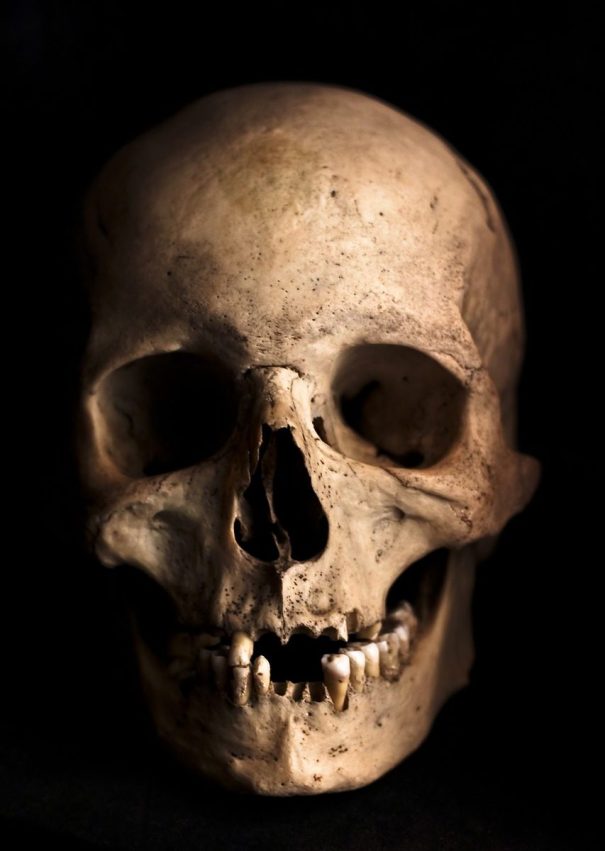
The Skull of the Dead

I have written about the ancestors here. Anyone who knows me knows that I look at our ancestors as the lifeline to my Craft. The accumulation of their knowledge and wisdom flows through me, and getting in touch with that empowers me. But how do we honor the ancestors? What’s an example we can use for veneration and shrines?

Who are the Ancestors?
When most people think of the ancestors, the first thought are those who are connected with us in blood. This isn’t wrong, and in fact is a stepping stone to understanding the ancestral link we carry with the past. I call this the Crimson Thread. The idea of the Crimson Thread is that it represents our unity with the beloved dead.

For many folks, the Crimson Thread is a simple lineage via on ethnicity/race into the past. With modern technological advances such as found in organizations like ancestry.com or 23andme, we are able to explore our lineage even further and see where our bloodline stems from. For others, it is a mishmash of various cultures. One isn’t better than the other, and in fact when we go back far enough, we are all mutts.

The beloved dead can be divided into different categories:

  • Family
  • The Shadowy Ones
  • The Heroes
  • The Collective

Family
Family lineage is the first introduction people have to ancestral veneration. Many start with the death of parents, grandparents, or others. There are photos and/or mementos and we place those on a mantle or a table that acts as a shrine/memorial. It is a simple way to remember, and keep in mind the power of Memory: that lifeline which keeps the remembered dead some immortality. For the family lineage, we typically keep those members who belong there and had a good relationship with. It is an idealized format. It also includes family by choice: adopted family, group souls, and even pets.

The Shadowy Ones
These are the relatives we would rather not remember. The ones who were abusive, psycho, or others which were harmful to us. Ones we would rather not be related to. These we would rather cut the Crimson Thread from. We don’t want to be associated with that side of our bloodline.

The Heroes
These are the dead whom we exalt to a status of what would be idol worship: celebrities who made a positive impact on our lives. Not limited to celebrities, it extends to anyone not of family relation who influenced us for the better: mentors, teachers, friends, neighbors, and others.

The Collective
The collective dead are the sum of our past. They are not immediate members of our family, but generations within generations within generations. These are the ones which group themselves together and go all the way back to our very first ancestor in Africa. Power resides here.

Working with the Ancestors
Certain criteria are needed to work with the dead:

  • Consciousness exists after the death of the physical body.
  • Communication between the living and the beloved dead occurs.
  • Influencing factors occur between the living and the beloved dead.

These three are crucial. Without these beliefs, there is zero point in forming a relationship with them. I believe that in our Craft and Occulture, ancestral veneration is a must if we are to claim our power and create a healing, vital, positive impact in our lives. Mind you, they are beliefs, subject to doubt. There is nothing wrong with doubt, and in fact healthy doubt keeps us sane. However, like Magic, it requires some faith to understand the workings of bloodline and see the synchronicity that occurs from veneration of the dead and watching the results in our lives.

Ancestral Shrine
If you want to interact with the ancestors, there are some things I have done which might help you. Mind you, the following isn’t necessarily a prescription so much as a set of ideas and a grounding framework from which you can launch your own praxis. I begin with a very basic foundation. The additions are up to you or whatever your particular tradition prescribes.

The Shrine
Pick a shelf, a table, a mantle, or any other flat surface you may have. If your space is limited, then I encourage you to use a dresser, a chest, a corner table, or anything you see which may be of use. You don’t need to complicate matters. In fact, as you continue to work and honor them, they may grant you blessings to eventually have more space. For now, use what you have. If you have a home and understanding family who would love to participate, leave an empty chair for them. You may also use a vertical space such as a cabinet.

Get a white cloth and place it on the flat surface. On it place a small glass for water. Water is the lifeline of who we are as beings in this world. The glass, when filled, reawakens their energies. Don’t leave it there for weeks though. Change out the water and clean the glass when you see it get dirty.

Place one candle on the shrine. I prefer tealights and votives. They don’t take up a lot of space like some tapers do. I’m also writing for people with small spaces in mind. If you have a larger space, use two candles and two glasses of water. If you have a table space, leave some food and drink for them which you will later dispose of.

KEY: DO NOT UNDER ANY CIRCUMSTANCES EAT FOOD LEFT FOR THE DEAD!!!

Continuing with the shrine, place photos and/or mementos on there. Be sure that the photos only have their image on there; no living members should be on the shrine. Why? If someone alive is on there, you’re telling the ancestors that this person is ready to join them.

KEY: DO NOT UNDER ANY CIRCUMSTANCES PLACE PHOTOS OF THE LIVING ON THERE!!

Offerings 
As mentioned earlier, leave food and drink for the dead. Perhaps cook their favorite meal, or a family favorite if you have more than one ancestor on there. Place their favorite alcoholic drink, juice, cigars, cigarettes, or whatever you think will make the space homey. This is where they will visit you. This is a portal, and to attract them is the goal.

Other offerings you give perhaps may be reading from a book they loved, writing some hymns, or or engaging in an activity you know they would want to see you do (e.g. weaving, playing video games, talking to them from your heart, etc). You may also place fresh flowers they loved. To add, celebrating their birthdays or milestones in your life with them will certainly add to trust. The beloved dead yearn to communicate with us, and so offerings are an ideal thing to make and strengthen that connection.

Communication
Communing with the dead is simple: just talk. That’s right. Just speak to them. Tell them your wishes, your fears, and your goals. The ancestors are very adept at helping you make things happen…more so than deities I should say. Why? The ancestors have struggled to overcome life. Deities have not, and they may have demands which may be overwhelming. The ancestors, however, may not. The only demands I have ever had – which is overwhelming in and of itself – is to live my best life, and to honor their legacy by honoring myself.

But how will the dead speak? They speak in various ways: synchronicity, divination, trance work, dreams, or automatic writing. Each of these are skills which, with time, can be developed. The dead will help you.

But What If…
But what if your occult activities aren’t making grandma happy because she was a Southern Baptist?  I get this question a lot, and it is a good one. I have generations of Roman Catholics in my family, and a bit of Holiness Pentecostal. However, I believe – based on my experiences – that these can be worked with. I believe that by addressing the Collective, grandma can remember her past and her lineage. This will bring about healing for you and yours. Grandma, after all, will know she is dead and be conscious about it. She’ll meet everyone else in the Collective. Being dead doesn’t make you a better person, but I believe it does help us in this day and age heal from the past.

Then again, to really give you something to think about, there is inherently nothing wrong with honoring grandma by putting a Bible on the shelf. She may be dead, but she will still help you. She’ll understand that much. Celebrate her triumphs, her goodness, and her faith. The Bible, although believed by many to be the inerrant Word of God, is also used loosely in Magic without the literalist baggage. I’m not saying grandma believed in using the Bible for Magic (unless you have conjure ancestors); I’m saying that making it comfortable for her and others in your bloodline to come to you is important. Remember: working with the dead isn’t just about you, but about instilling Memory in you to keep their legacy alive.

What about the Shadowy Ones? Those abusers with whom you eschew relationships with? I have a separate altar for them. Yes, an altar. On it is one candle. The candle is for me – to show that despite all, I am a survivor. Whatever happens with them in the afterlife is up to higher powers. I am not concerned about it. I don’t have to forgive anyone. I warn people about bitterness being a poison, which it is. But one can be unforgiving without being bitter. You just forget and let it go. I keep the Shadowy Ones there because I want to acknowledge that their spirits are there, but also that they cannot overcome my light. It is a ward, so to speak. I use a black altar cloth on that one. I only light it on the dark moon, during which the Goddess Hekate is active and helps with the train of the dead.

Hekate and the Restless Dead
For my personal religious calendar (also used in StrixCraft), I follow a lunar cycle. The end of one “moonth” (month) is the dark of the moon, when it doesn’t shine in the night sky. This day is sacred to the Goddess Hekate, the Lady of the Underworld, the Crossroads, the Dead, Witchcraft, the World Soul, and the Liminal Spaces. Because the dark moon is a transition time between one lunar cycle and the next, as a liminal being she guards that area.

For the Shadowy Ones, I believe they ride in her train and are taken to their destination, one I do not know about nor would I wish to. During this time, I also encourage you to clean your altars and shrines so that you can enter the next cycle prepared in cleanliness. The Goddess Hekate is also your protector from the Shadowy Ones. Remember that they cannot harm you when you connect with the Goddess. There are other beings of the Crossroads of course, and these will be specific to your traditions if you are in one.

I must add this as well: there might be times when the dead are restless and perhaps even the Shadowy Ones might be active to harm you. The Goddess, however, is Queen of the Restless Dead; she and your ancestors will ward you. It doesn’t mean you let your guard down. It means that your faith and connection will help you to be protected. When in doubt, seek out a specialist adept in exorcisms who can handle a haunting. I say this not to scare you, but to demonstrate how palpable ancestral working can be.

Generational Curses
Family curses, in my experience, happen more often than we would like. What is a generational curse? Simple. It is a vice or trait which creates a negative and perhaps even deadly impact from one generation of your family to the next. It can be alcoholism, mental illnesses like schizophrenia, early deaths, abusive behavior, or other. Generational curses can be healed with the help of the Collective Dead. It will take time and inner healing, but I encourage you to seek out an experienced spiritual guide to help you transition these pains. Doing it alone is never easy, and in fact may make things worse.

Conclusion
I didn’t touch on the Heroes and I realize that, but to be honest honoring them can be, in some ways, no different from your immediate ancestors or the Collective. In your Craft, ancestral veneration is powerful. The Crimson Thread unites you with your past, even your pre-Christian past that was conquered by Christianity. While yes your family was Christian probably for 2,000 years (at most), your pre-Christian practices go back longer. For me, my ideal connection to the Collective is a pre-Christian ancestor who is a spirit guide in all of this. For my immediate ancestors, it may take some time after grieving to release them to the Collective, but release them in time I will (they have to be prepared as well of course). When you honor and work with the Crimson Thread, you will be amazed at the results of your Magic and Craft. May the journey bless you, as it is well worth it.

Eirene kai Hugieia!
(Peace and Health!)
Oracle


The Afterlife

Charon
Charon

Conceptualizing what happened to people once they had passed turned out to be a matter of debate (nothing has changed). In ancient Greece, there seems to have been a difference between what everyday people thought and what the literature mentioned. Poets had their own imaginations, yet it did spread to the populace. There were also hypotheses as to what awaited initiates into Mystery Traditions. What made it different? How was it envisioned? And what is taught by the Strix?

Shades of the Dead
In ancient Greece, the understanding of what happened with the dead was pretty much well established by about 8th – 6th centuries BCE. In the Odyssey, the poet Homer wrote of the dead wandering throughout the Underworld as shadows: gloomy and poor. It was not something to aspire too. It was so bad that when the spirit of Achilles was raised from the dead temporarily, he mentioned how he would rather be a slave than the king of the Underworld. 

The Dead weren’t creepy, scary, or evil. They were just sad. Their life in the Underworld depended on the constant memory of their descendants who were charged with maintaining their tombs and celebrating their milestones. Offerings such as cakes and wine were given to them. In this, the Dead continued to have hope, because the inevitable was oblivion.

Paradise and Tartarus
By about the 5th century BCE, the image of the Underworld was going about a change. Instead of just some gloomy place, there were levels. Socrates, the famed philosopher, was probably taught this by the witch and prophetess Diotima, who was his mentor. It passed to Plato who, in his “Gorgias” (a dialogue featuring Socrates), mentions it as a place where the wicked receive judgement.

Originally a place where the Titans who fought against Zeus and the Gods went after their defeat, it was this place of wickedness which has filled the imagination of many people. This imagery even passed into Christianity, where a section of Hell is known as Tartarus. The punishments towards the wicked fit the crimes they committed.

On the other spectrum, we have Paradise, also known as Elysium (or the Elysian Fields). It was said to be located in the West, and also called the Blessed Isles. Originally a place for demigods and Heroes, it was expanded in later imagery to those who lived out of Piety, performed heroic deeds, and/or were specifically chosen by the Gods. The Elysian Fields even made it to the New Testament as “Abraham’s Bosom,” also called “Paradise.”

The Mystery Traditions
The Mystery Traditions had a different account of the afterlife than those mentioned above. Initiation into the Mysteries guaranteed one a different afterlife. The Eleusinian Mysteries were believed by some to grant them a happy reunion. The Orphic Mysteries, on the other hand, promulgated the belief in reincarnation – more accurately metempsychosis, a form of reincarnation. What’s the difference? Metempsychosis refers to the spirit leaving the body at death and working its way through the Wheel of Fate in order to break the cycle and be one with the Divine. When a soul is reincarnated, they may choose to be human or animal. It is a choice devoid of karma, which is an Asian concept belonging to a specific religious practice. In the Orphic Mysteries when one passed, they were given instructions to follow a certain path and overcome obstacles. Orphic initiates were faced with a path that led to two springs: one named Lethe (Forgetfulness) and the other named Mnemosyne (Memory). They said a password to allow them to enter, and drink from the Well of Memory. From here they would reincarnate with their past life memories intact.

StrixCraft
In the StrixCraft as I teach it, the Ophic Strix initiates are promised deliverance from their former selves by Dionysos. It is Dionysos who intercedes on behalf of the initiate as they stand before Persephone. Claimed by Dionysos, the initiate will then walk upon the Starry Road to Memory, drink from the Moon Well, and continue to their next life. Once an initiate, always an initiate.

There is a Fourfold scheme to our bodies as we teach it:

  • The Physical Body
  • The Lunar Body
  • The Solar Body
  • The Starry Body

Our etheric anatomy is something I’ll touch on in another blog. For now, I would like to say that for us as Strix, our multiple bodies each have a destination. The physical body returns to Ge, from whose energy we borrowed to live. We now return that energy back to Earth Mother.

The Lunar Body remains attached to the physical body. Upon death, there is a separation between the two, and the Lunar Body is the active principle which either remains intact because of Memory, or may dissolve and return to the Earth Mother if nothing is there to keep it alive and fed.

The Solar Body, upon death, separates from the Lunar Body and reincarnates along family lines. In the form of a bird the Solar Body reaches the Sun and travels the road to the Underworld where it will meet Persephone. This is the entity which interacts with other beings and carries emotions, intelligence, and awareness.

The Starry Body, upon death, is the ruling God-Self which guides the Solar Body to remember the initiations and past life deeds. The Starry Body carries the “True Name” imprinted with the Solar Body that will allow the chain of initiations to continue throughout the rest of that individual’s lives. The Starry Body is the Higher Self which connects us to the Gods and the Cosmos. One day the Starry Body will become a part of Nyx, carrying our memories to her.

Conclusion
The Underworld’s geography often changed depending on the time period and the knowledge acquired by those who returned from the dead in near-death experiences. I believe that the concept of the Underworld came about because our ancestors felt there must be somewhere that we travel to while we sleep. Dreams are portals to other realities, and it may have seemed that while we were sleeping, another part of us was awake. That’s just my belief though. My hypothesis.

The revelation of the different bodies and their destinations in StrixCraft as I teach it is pulled from contemplation and communing with the spirits. They may not be orthodox insofar as Hellenic Reconstructionism is concerned, but they make sense for us and our initiates. We look forward to our lives continuing, and allowing Nyx to use us so she may know herself even better.

Eirene kai Hugieia!
(Peace and Health!)
Oracle


Devotional Witchcraft

unnamed
Devotional Candle

In my forthcoming book, “StrixCraft: Ancient Greek Magic for the Modern Witch,” I introduce the term “Devotional Witchcraft.” I don’t know if others have used the phrase, but I do like it. Devotional Witchcraft is something I particularly enjoy. I have found in my journey that it works quite well for me, and I think others as well.

Christian Devotions
The Roman Catholic church (RCC) had a significant influence in my life, particularly rituals such as the novena. A novena is a devotional act in the RCC where one performs a set of prayers for 9 successive days (or 9 successive weeks). Candles and prayers are lifted to Mary or any other saint depending on what is needed. The atmosphere of lighting a candle and doing some rote prayers with the rosary was very magical to me. Of course, at the time I did not realize that the RCC integrated a lot of pre-Christian polytheistic forms of worship and religious activities into its doctrines. The ritualistic air about the church was metaphysical in so many ways: incense, prayer, statues, the altar, the Eucharist, and the candles all played with my imagination. I loved it.

When we converted to the Holiness Pentecostal church, the outward trappings were gone. We first met in a middle school cafeteria, and then in a high school auditorium. There was no incense, no Eucharist, no ritual. Just a lot of heavy preaching, shouting, and dancing. I swear it was great aerobics. However, I noticed in reading some of their early material that formality wasn’t far away. As they grew (in their minds) in prestige, the more formal rituals began to occur. They would banish evil spirits and then invoke the angels of the four quarters into the space. Afterwards, they would invoke the Holy Spirit to “have his way.” So we carried that on into our solitary devotionals. One thing I will give Christianity its due is its emphasis on private prayers and devotions. They’re not the only religion to do so, but that was the one which first impacted my life, and so I am using them as my example. I have Jewish friends who use private devotionals, along with Muslim friends. I’ll have to relay the time I attended a masjid (mosque) for a time to renew my faith. Another blog post for another time.

Side note: I wish Jesus’ admonishing to keep all prayers private would actually happen and none of this “National Day of Prayer” or “Prayer at the Flag” in school nonsense. Anyway…

Coming to Neopaganism
I didn’t pay attention to how much devotions had an impact on my life. Due to the intense pressure to conform, after I left the church I looked back and simply viewed anything we were “asked” to do as a threat to my individual time. I put asked in quotes because it was really more of a subtle threat that if we didn’t draw “closer to God,” then we were drawing ourselves further away and we could end up in Hell.

I was reading everything I could which was available on the Occult at that time. All that I read eventually said the same thing: altars, deities, tools, seasons, magick. Older books mentioned spirits, ceremonial circles, drawings that couldn’t be figured out (aka sigils), and fancy stuff you needed at certain times and days. I was much too ADHD for that. As I explored further, I realized that my heart was drawing me towards the Druid path. Having eidetic memory and a drive to pay attention to Nature more (not to mention the images of Merlin and Gandalf as inspiration), I veered from general Neopaganism to Druidry.

Druidry
Druidry was really a homecoming for me in a lot of ways. There was a huge difference in how to understand morality and ethics, especially because I didn’t rely on a book to give me all of the answers to life. I was also angry at the church in general. It totally ruined my family’s life I feel. If I could go back in time, I would vote to NOT go to the church. I had an interest in witchcraft since I was in 5th grade; that was due to my father’s interest in the paranormal.

In Druidry, I met a lot of Christians who were also Druids, and they were finding the commonalities they both had. These Christians were very progressive, and felt a pull towards the Divine Feminine, environmentalism, and pantheism: seeing the Divine in everything which exists rather than the Christian doctrine of God being outside of everything. The only thing in the world, so the churches taught, was the devil seeking whom he may devour.

Druidry was really a complete healing in my mind, spirit, and body. It encouraged me to make contact with Nature spirits, look inward, meditate, and see the enchantment in the world around me. Druidry also taught me the value of developing the arts; in my case, writing. I practiced writing poetry and hymns. I practiced journaling. I practiced writing rituals. Crude at the beginning to be sure, but hey everyone needs to start somewhere. I think Druidry really gave me a sense of devotions by going out into Nature and meditating. There was no emphasis on candle magic, or poppets, or anything of that kind. It was all about self-development, which I valued and continue to value, sharing this philosophy into other practices I am initiated in. Druidry, to me, is the closest I came to being an actual Wizard in that archetype caricature.

Witchcraft
When I began learning to be a witch, I found that devotionals were nil. Or at least, the emphasis was. I can’t speak for the other traditions of Witchcraft which exist (e.g. Mohsian, Blue Star, Silver Crescent, Central Valley, Gardnerian, etc). I just know for me it was all about generalities: deities, tools, seasons, altars, and a connection with Nature (like Druidry). But, there was also a lot of training in Magick: candles, poppets, hexing, spells, intention, correspondences, and ritual structure.

As I continued to learn, I then made a dedication to my patron Goddess Hekate, the Underworld Goddess of Witchcraft, the Dead, the Crossroads, the Dark Moon, and the Torch Bearer. I’ll go into the details of that in a later blog post. Suffice it to say that performing a formal dedication to her changed my entire being and outlook.

Hekate
It would be a long while before I realized something, but Hekate guided me along the way. That something was how powerful and effective my life would be when I performed devotions. At first I didn’t call them that. I just said “I am going to pray.” It was tough using that sentence, because I felt myself go right back to Christianity with the whole “thoughts and prayers” thing.  But I felt empty. My spiritual lifeline was fading I felt.

I was experiencing a dark night of the soul.

Devotional Witchcraft
As I learned different paths, I found myself drawn to Hellenic Polytheism, working with the Greek Gods and Goddesses. As I asked questions and remained observant, I realized that Hellenic Polytheists were split into two camps: Reconstructionists (who worked hard to recreate the exact ways their ancestors practiced and believed), and Revivalists (who adapted ancient writings and discoveries to modern times).

I discovered that I was a bit of both.

By Hekate’s training, I learned to venerate the ancestors. I also learned a ritual script that helped me to purify myself and work with the Gods and the ancestors. As I continued my workings, I came to realize something: I hated the term “work” or “work with.” To me, it made it sound like the Gods and I were equal pals who could just chum it up and I could use them for whatever I needed.

That’s now how this works.

People who claimed to be witches (or maybe who are witches; it’s difficult in this occult landscape to not be accused of gatekeeping while at the same time trying to live up to certain standards and define just what a witch is) were proud of the word “work.” I know a lot of Heathens (or claimed to be Heathens) would say, “Ha! I don’t bow down to my Gods. I don’t grovel. I don’t beg. We uphold our virtues and walk with courage!” (Yes, real conversation).

Side note: Not all Heathens thought this way. Some admitted that they gladly bow down to their Gods who are greater than they.

That’s when I realized something: the semantic of the word “worship” brought up memories of Christianity. People equated the word “worship” with begging and groveling. But, after having been on my journey, I came to discover that what I lacked was devotions: routine times of the day, week, or year when I could sit with my Gods and spirits and just communicate.

So I sat down and thought about it for quite some time. I wanted to know if me wanting devotions was something left over from my Christian days and was irrelevant, or was it something many religions encouraged, and Witchcraft just didn’t encourage it? I mean, lots of Neopagan and Polytheistic groups had festival days to their deities. But, I also learned that lots of Neopagans and Wiccans had the viewpoint that the Gods existed only in the mind. They were “archetypes,” that is, mental constructs which explained Nature and the world. They weren’t real, just symbols. They weren’t about to bow down to a symbol.

But, that wasn’t my experience. I experienced the Gods and the spirits of the world as real, unique beings. Hekate is. My ancestors were. Other deities I encountered were. They couldn’t just be symbols, could they? It took a while but I found other occultists who felt the same way as I did. But they still didn’t like the word “prayer.”

Well, I did.

I had to remember from my Christian time that worship meant “worthy of acknowledgement.” Veneration. Honor. All of those were included in “worship.” I did not think of groveling or begging. Of course, even if I did, what’s wrong with crying before their altars every now and again?

Contact
So thus began my devotional journey. I included times to meditate to just breathe. To talk to them. To light a candle during certain times. To wash my face and my hands in a sacred act. In fact, I began to think of the Sacred and Mundane as one complete cohesive unit, not to be separated. All of life is sacred. Everything I did could be done in a holy fashion. Take time in the shower or a bath to relax and purge “goo” from your aura. In the morning say a prayer at your altar, shrine, or just wherever, in order to reconnect with them. True, they’ll never leave you. But it isn’t about them necessarily. It is about you, and what benefits you want to see from your life when you begin to create strong boundaries and view your life as a holy instrument.

Devotions are simply a way to treat our lives with a sense of Other. Of Enchantment. To view the world with eyes wide open filled with spirits, wonder, and honor. That tree has the spirit of a dryad. That spring flows with the blessing of a spirit. The ocean swells with the Old Sea Gods. Those squirrels are all related and belong to the Squirrel Spirit*, who has much to teach us. Take the awe of Nature home with you. The stars are the fires of the Elders who have passed away but watch over us in the bosom of the Star Mother.

Devotionals, I feel, help us to not plateau, and encourage us to come closer to our Gods and spirits. Don’t get me wrong: plateauing does happen, and there are steps to help us rectify and heal from that. But how we can enrich our lives in Witchcraft is by looking to the Gods and the spirits. Witchcraft, with its teachings on spells, can use devotions to weave throughout our Work so that we can become more effective as the people who we are striving to be. Based on my experiences and that of others, I feel that devotions in Witchcraft should supercede spellwork. Don’t get me wrong: spells have their place. We need to exercise our Will and shape our Reality. We need to know that we can affect others by manipulating energies and raising the Power. There is always that.

I just feel that if you have a bond with the Gods and the spirits, they will empower you and magnify your Magic. Their energies will be with yours. You’d be surprised at how high you can raise the Power when you are connected to them.

So if you are feeling low or disconnected, I recommend devotions. Write a hymn. Pray. Dance. Light a candle. Anoint yourself. Talk to them. They are real. Speak also with your ancestors and the spirits who dwell around you.

You are all connected.

Eirene kai Hugieia!
(Peace and Health!)
Oracle
*I realize I mentioned ADHD and the first thing which came to mind as an example is Squirrel. The irony is not lost.


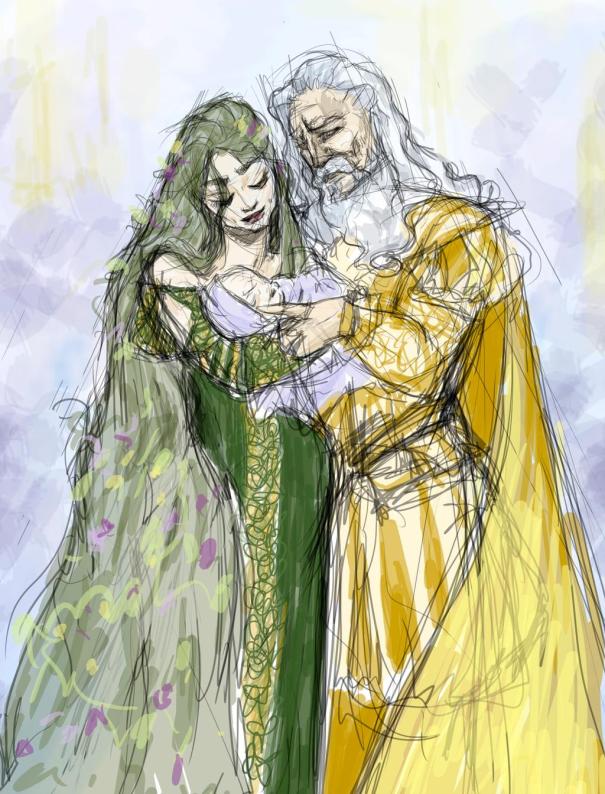
The Sacred Marriage of Zeus and Demeter

demeter_and_zeus_sketch_by_mybonsaipatroclo_d4m1ddc-fullview

There seems to be an air of potent sexual symbolism during the late part of April and the early part of May. This energy was manifested in certain ways across a few European cultures, but the one which is celebrated in StrixCraft as I teach it is based on a unique observation of our climate here in Florida.

Beltainne
In the beginning of May, many Neopagans and Witches celebrate the holiday known as Beltainne. Beltainne is a Gaelic fire festival and considered one of the Greater Sabbats in Wicca. The festival is also known as Cetshamhain, or “Summer’s Beginning,” the opposite of Samhain which is “Summer’s End.” As a fire festival, bonfires were lit across the countryside, offerings were left for the Good Neighbors, people and cattle walked between the flames (and jumped over them), and house fires were doused, ready to be lit by the bonfires. Yellow flowers – the color of the Sun – would decorate homes.

Beltainne is enjoyable with activities such as the ones mentioned above. However, it is the erection of the Maypole (double entendre purposefully made) which is the highlight of the festivities. There is a lot of potent sexual symbolism during this time. The Maypole being the penis and the hole that was dug to insert it in being the vagina.

Floralia
Another festival celebrated during this time was the Roman Floralia, held in honor of the Goddess Flora. In her sacred grove sacrifices were made. Due to the sexual symbolism also held during this time, sex workers were part of the festivities, along with wine drinking. While usually seen as outcasts in ancient Rome, their participation during the Floralia marked them as special guests free of harassment.

Along with Flora, the nymph named Maia was also worshiped. Maia is a Greek spirit who is a daughter of Atlas and one of the seven Pleiades. When her worship transferred to Rome, she was acknowledged as an aspect of the Great Goddess. She was said to promote growth, and her nymph status connected her to the dead. In fact, a group of Lares (ancestral spirits) were also celebrated on the first of May (the month named after the nymph).

The Sacred Marriage
In Florida, we have a subtropical climate. In the Summer begins the Wet Season; I call it the Green Time. Due to StrixCraft’s Greek roots, I observed the seasonal cycles and, during my worship one day, the lightning flashed in the afternoon followed by heavy rains. I knew instinctively that the God Zeus as the storm bearer over the land was making sensual love to Demeter, the Yellow Earth Mother. In the teachings I pass, the Earth Mother has three separate manifestations: Green, Black, and Yellow. The Green Mother is Gaia, the Black Mother is Rhea, and the Yellow Mother is Demeter.

The question comes as to why the Yellow Mother rather than the Green Mother? Simple. Demeter’s place in our myths is that the colors yellow are sacred to her, along with the symbol of agriculture (maize and wheat), as well as the specific function of fertility. With the union of Zeus and Demeter in our lands, the potential for fertility is there, and takes place.  Gaia is the wild Green Mother who can grow out of season. Certain plants in our climate will grow no matter when. But the fertility for harvest time is Demeter’s role.

The Children of the Earth and Storm
Persephone is the child of Zeus and Demeter. As such, her Underworld associations are potent during the Summer here in Florida. How? Persephone is not viewed as Kore/Persephone of the seasons in the myths as we learn in our StrixCraft. She WAS a Kore, but now she reigns eternal as Persephone: in her own power and glory she rules alongside Hades. As the Queen, she provides the necessary telluric (earth) energies that help break the seeds and send forth the roots. Demeter from above, Persephone from below. This symbolism is also in Wicca:

By seed and by root, by bud and by stem, by leaf and flower and fruit…

Here we see the interactions of the energies produced by the Two Goddesses as I interpret it via a Strix lens. This gives our festival a completely different paradigm. Not just a polarity construct, the Sacred Marriage of Zeus and Demeter involves the Underworld along with the birth of nymphai who pervade the clouds, the storms, and the land. The Dead, led by Persephone, can arise and bathe in the ecstatic life of lightning and earth. Communing with them is easier during certain times of the year, and the Sacred Marriage is one of them. Other hallowed times are the Anthesteria, the Feast of the Dead, and the sacred festivals of Hekate in November.

Celebrations in the World
While this was an observation I have made for Florida, there is no reason why similar observations cannot be done in other climates. Just observe and see which Gods and spirits are active during this time. The Gods are flexible that way. Polytheism is flexible this way. For example, the wet season in the Mediterranean is in the Winter, so Zeus and Demeter would be active during this time rather than the dry Summer (I believe California also has a Mediterranean climate).

In other climates the addition of Helios (the Sun God) would be a perfect. Again, this is based on your observations of the natural world. One of the necessary reading materials I encourage some students to read are books which discuss their local weather patterns instead of Magic. Magic is an inherent part of the natural world I feel. Therefore, to know the tides of Magic means knowing your local area’s patterns and climate which will grant you the opportunity to know your local spirits.

The Spirits of the Season
All in all, the Sacred Marriage is more than just the union of Storm and Land. It is about awakening the spirits around you. It is about contact with the Other, and using the portals of Storm and Land to broaden your experiences. The Gods and the spirits exist simultaneously. They are all part of the Divine. Touch one and the other will also be contacted. Remember, it is more than just the Gods. The daimons (spirits) of our world also deserve our attention.

Eirene kai Hugieia!
(Peace and Health!)
Oracle