
In my previous post on familiar spirits, I used the term and spelling of “demon.” This caused a lot of triggers in people who see that word and immediately it conjures up images of evil spirits, the devil, and Hell. In fact, many witches and Neopagans thought that I was secretly a “black witch” (a racist term if ever there was one)! I pay no mind to those. However, in the interest of communicating clearly and concisely what I mean, I would like to discuss the spelling, and what is being written about.
Agathos Daimon
In ancient Greece, the term daimon meant a tutelary spirit. It was considered a watcher: something that oversaw a person’s fate and luck in life. There were different kinds of daimons (or daimones); the most famous perhaps is the Agathos Daimon, the “Good Spirit.”
The Agathos Daimon is honored on the second day after the New Moon. It is envisioned as a serpent, sometimes androgynous, who is also a companion spirit which dwells in or with a human until they die. On its holy day, libations and offerings were given as people prayed to it, hoping for good fortune (the Agathos Daimon was said to be partnered with the Goddess of Good Fortune, or Tykhe). In fact, the serpent of the home is still honored in some places in Europe where it is known as the Lady of the House. A hole is made in the floor and libations of milk, wine, as well as offerings of food are thrown in to appease the serpent of the home (I mention this in my forthcoming book “StrixCraft: Ancient Greek Magic for the Modern Witch”).
In later antiquity, the Agathos Daimon was more deified. Not simply a household or luck spirit, the Agathos Daimon now had a temple. In fact, one can find the Agathos Daimon in ritual work in the Greek Magical Papyri, the eclectic grimoire of Graeco-Egyptian magic. There is even a hymn attributed to Orpheus, known as an Orphic Hymn, that is for the Agathos Daimon. Orpheus was a poet and singer (bard) from Thrace who traveled the Underworld to find his love. He was killed by the maenads (ecstatic worshipers who were women) of the God Dionysos. This is how important it was, that a hymn was dedicated to it.
In the StrixCraft as I teach it, we have the Azure Flame which burns just above the crown of the head. This Azure Flame is the repository of our individual Agathos Daimon: a spirit to harmonize ourselves. There is a specific rite which allows us to feed and give continual life to it, and by doing so the belief is that it will continue to steer us towards good things in life. Not the absence of life’s trials and tribulations, mind you. Simply that we can be tenacious in our dealings with both ourselves and others.
Daimones
A daimones, as mentioned earlier, is a spirit. The theurgist and philosopher Proclus believed that all daimones were somehow intermediaries between the Gods and mortals. They filled every niche in Nature: mountains, springs, rivers, forests, etc. In modern times, some occultists feel that even neighborhoods and cities might have their own daimones overseeing and influencing the luck of a place.
Good and evil daimones were recognized. A good spirit was a eudaimon, while an evil spirit was a kakodaimon. So the idea of evil daimones (daimons, daemons, demons) was not unheard of. However, I liken kakodaimones as wild and feral spirits on the astral plane: some don’t want anything to do with us and prefer to remain in their realms, while others may hunt us because they view us as prey (especially when we start expanding our life force via Magic).
Eudaimones, on the other hand, desire to bless us, protect us, and perhaps may even desire to form an attachment with us. They inspire us to become greater than what we are. They push us to strive for excellence in all things; that still, small voice and the inner fire that encourages us to move onward in the face of difficulties.
Daemon
When the Roman Empire took over Greece and its colonies, there was a lot of heavy borrowing from the Greeks and their language into Roman culture. In Latin, daimon was daemon. Someone inspired by their daemon was said to be “daemonic.”
Icons and statues of deities were said to be inhabited by their “daemon.” That is, it was not the statue but the life force within the statue which was the hallmark for its worship. The Bible, however, made an enormous impact on how daemons were viewed. In the Greek translation of the Hebrew Bible (what Christians call the Old Testament) known as the Septuagint, daemon, or demon, was now viewed in a negative context.
Near Eastern religions from Sumeria, Canaan, and Babylon, for example, had religious outlooks of what was considered good or beneficent to humans, as opposed to what was evil or destructive. They weren’t the only ones, but I mention these since they had a heavy influence on Hebrew thought and philosophy. There were even borrowings of mythology from these cultures into the Bible (for example, the Babylonian story of the Enuma Elish has a lot of similarities with the Book of Genesis creation story…which was written after the Jews were exiled from Babylon and not during the time of Moses).
Demon
Christianity, when it first arose, was made up of a number of sects and religious differences. It wasn’t until Constantine I (called the Great by Christians) converted to Christianity and gathered the representatives from one sect to discuss the doctrines of the church, that the inevitable happened: d(a)emon became firmly entrenched with “evil,” or destruction. Knowing that the statues of the polytheists were believed to be inhabited by the d(a)emon of a deity, the apostle Paul in 1 Corinthians 10:20 said:
Rather, that the things which Gentiles sacrifice they sacrifice to demons and not to God, and I do not want you to have fellowship with demons.
(1 Corinthians 10:20, NKJV)
All spirits were registered as evil. Monotheism, the belief that there is only one power in the Cosmos, now had victory. Polytheism, the belief that there are many powers in this world and Cosmos, was the behavioral practice for nearly every culture on this planet for thousands of years. Monotheism, by its very teachings, left no room for multiple realities and truths. One lens, one belief, one practice, one right way to a spiritual path. That path was buffered by male priests who established themselves as the ruling class, borrowing heavily from ancient Roman religion. I’ll talk about monotheism in another blog post. Let me turn our attention back to demons.
Which One Do I Have?
Now that I have given you some kind of background, the question remains as to what exactly did I mean when I say “demon” as a familiar spirit. I actually meant a spirit, a daimon, but one which was not a nice looking angel, or a romantic motif of “totems” (a term that belongs to the Native American tribes such as the Ojibwa), spirit animals, and the like.
My demon – due to its nature – is feral. They are not domesticated. I use the word “they” because, as I mentioned in my previous post, they are androgynous. Because of the way they behave towards others on my behalf, it can be seen as destructive (aka evil). But they aren’t. They have influenced my life, even when I was a church kid with problems. They are very protective, and as such have been hurt as I have been. Whenever we are traumatized, it isn’t just you who are in pain. Your spirit, your familiar, has also been hurt.
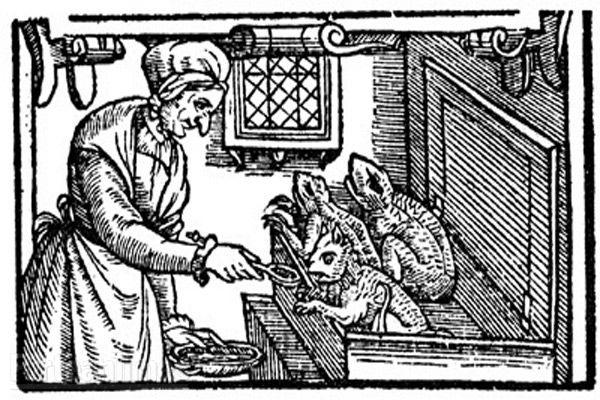
Although the modern connotation has “demon = evil,” that isn’t the case. Demon familiars are some of the finest protectors out there. Like other familiars, they may take the form of a flesh and blood animal or simply be ethereal. I know a few people who have even created “homes” for their spirits on their shrines, such as a statue or an icon.
Conclusion
So, all in all, after the history lesson, you’ll see the evolution of the language and the connotations they evoke in people’s minds. Some monotheistic (or even duotheistic) religions view the world in terms of good/evil. That’s their paradigm. And while evil spirits are known from ancient tablets, stelae, and folklore, I wonder how some spirits are truly vicious. They can be: certainly we have wild animals, plants, and fungi in this world which are dangerous, and will turn on you without hesitancy. Some may kill for no reason other than pleasure and dominance. Some do so because they are hungry and that is their lot. I think we Neopagans and Witches often romanticize Nature too much. We don’t think about blood sacraments and the suction of the life force from us. We put way too much importance on ourselves on the food chain – both physically and spiritually. Egos abound.
As a witch, I don’t have to apologize for the spirit I have. They are connected to me and I to them. In working with my demon, I have been blessed to understand my own boundaries (still learning though) along with recognizing my full potential (work in progress). Hopefully this post will help you overcome your fear of the unknown and the wicked. Demons can be playful, tricksy, and fun (like the Fae). They can also be deceptive. And, when cornered, vicious.
Have one at your own risk.
Eirene kai Hugieia!
(Peace and Health!)
Oracle
 The Cave of Oracle