
The Burning Times. The time when women who were village wise women were rounded up by the millions in Europe and burned at the stake. They were followers of the Old Gods, and paganism was now under attack. Paganism had to go underground. Women were systematically hunted down because of their in-depth knowledge of herbs which rivaled the new, patriarchal, medical profession. The Church set an all-out war against women, creating horrendous torture devices for confessions of witch meetings. Women were the inheritors of the Old Religion. They were kin with the fairies and the land, and when they were slaughtered the kinship with the earth was sacrificed and patriarchy began the industrialization which set out to rape the Earth Mother. The revival of Witchcraft and the return of women to their right in power is a battle between the Earth Mother and the tyrannical Father God who oppresses women.
Is It True?
The bitter topic of the Burning Times has been and still tends to be a measure of how feminist one is in the Neopagan and Witchcraft communities. It’s almost like a penile measuring rod, the “my witchcraft is more authentic than your witchcraft” trope. Many in the early part of the Craft claimed that their ancestors were burned at the stake. That they were the inheritors of surviving lore from the Old Religion. Interestingly enough, I’d like to point out that the phrase “Old Religion” applied to Roman Catholicism in the reign of Queen Elizabeth I (1).
The Precursor
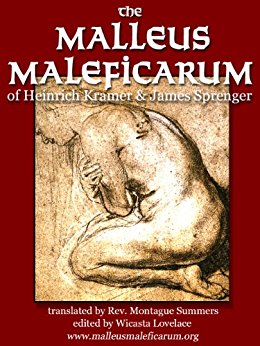
Many believe that the Roman Catholic Church pushed for a belief in witches and condemned women in particular for being so, that the Church viewed paganism as a rival religion. The manual which really started it all was the Malleus Malificarum (2). But was it? Let’s examine this further, shall we?
Early modern Europe was the period roughly from the 15th – 18th centuries. This was a time of profound changes in European society en masse which affected every strata of the continent, particularly due to the empirical nature of Europe and its alliance with the Holy Catholic Church. This monopoly of religion found rivalry with Islam in the East as well, which peaked with the Crusades between the 11th and 15th centuries.
The Rise of Nationalism
The Church had been facing unprecedented challenges to its hold over the European kingdoms and empires. The secular nature of rising kingdoms in England, Spain, and France led to the breakup of the Roman Church in other countries. Kings objected to the Pope’s rule. One of the best examples of a nationalistic church that answered only to the monarchy was the Church in Spain.
Religious Rivalry
In 1453 a wave of panic swept through Western Europe as news came of the fall of Constantinople by the Ottoman forces under Sultan Mehmed’s 80,000 troops. The Muslim Turks made their way to Eastern Europe. The Orthodox Church, which was based in the East prior to its fall, was cut off from Western Europe (except for its cultural arm of Russian Orthodoxy in Moscow). As a result of this separation, Orthodoxy was never exposed to the Reformation.
In 1517 Martin Luther launched the Protestant Reformation with the publication of his 95 theses in Germany. Prior to this, the Czech reformer named Jan Huss spread his changes against the Roman Church. Huss was burned at the stake in 1415 for heresy. This is important to keep in mind. John Calvin, another reformer, burned a polymath by the name of Michael Servetus at the stake for heresy against his teachings.
Jews
Jews were always viewed with suspicion. They were always accused of blood sacrifices. They were also held responsible for the Black Death, the people believing that Jews poisoned the wells. However in other parts of Europe minus France, England, Germany and its states (i.e. Holy Roman Empire), the Jews were expelled. When the Muslims in Spain were ousted, the tolerance which Jews found under their reign was renounced by King Ferdinand and Queen Isabella. The Spanish Inquisition was founded in 1478 to root out Jews and Muslims in hiding who became Catholics in name only. Prior to this in 1451 a Papal Bull under Pope Nicholas V was issued that prohibited social intercourse between Muslims and Jews with Christians.
The Hammer of the Witches
During this entire upheaval in Europe, in 1484 Pope Innocent VIII issued a Papal Bull known as the Summis desiderantes affectibus. It was specific about paganism and witchcraft. Now here is where we go: to the persecution of witches which set off the Burning Times. The secular authorities in Germany opposed the inquisition led by Institorus (known also as Kramer). The Bull was to circumvent this battle of jurisdictions. In the end, however, no secular support came to Kramer and Sprenger. Their methods failed, and even the Church condemned them later on. Thus, no action was taken against purported witches by either secularists or church officials. Even the Spanish Inquisitors were told not to believe anything the Malleus said.(3)
Burning At the Stake
In the lands where the Holy Roman Empire once ruled (such as Germany), the witch hunts went crazy. The first major witch hunt were the Wiesensteig witch trials in 1562-3. The root of the hunt was the religious zeal on both Protestants and Catholics, along with natural disasters. As a result 67 women were killed by being burned at the stake. Trials which followed later led to a total of 44 deaths by burning. As gruesome as this is, it must be kept in mind that burnings at the stake afflicted others aside from women as “witches.” Remember the Black Death accusations against the Jews I wrote about earlier? Over 800 Jews were burned as a result of these accusations. Remember the Spanish Inquisition I mentioned? From 1478 to its ending in 1813, Jews suspected of not being true to the Catholic faith were burned at the stake. It is estimated by some that over this period of time about 30,000 Jews were executed by burning.(4) While witchcraft was viewed with skepticism, Jews were seen as major adversaries to be quelled.
But the numbers, while high, also don’t take into account how many bodies were exhumed to be burned or even effigies of the individual in case the person had escaped. For example, in 1415 John Wycliffe, the English Reformer, was declared a heretic. His body was taken out of the grave and burned.
Witches or Jews?
Did trials against accused witches occur during early modern Europe? Yes they did. The problem comes from how we interpret “witchcraft” during this time period. Also, it wasn’t just women. Priests, judges, animals (yes, animals), nobles, and other classes were frequently accused of witchcraft. In this case, witchcraft was associated with diabolism. Remember that the famous Papal Bull by Innocent VIII gained little traction, even though it is repeated in many modern and popular books on witchcraft by prominent witches themselves that it was accepted by society at the time with gusto. Witchcraft, however, in early modern Europe was synonymous with heresy. This expands the scope of our investigation.
As we saw earlier, Jews were heretics. They were blamed for much of the witch craze. In unstable religious wars between Catholics and Protestants in Italy, Germany, France, and England, witch hunts increased. But the perpetrators en masse were often either Jews, or Catholics (in a Protestant dominant area) or Protestants (in a Catholic dominated area). Jews, however, are the “witches” we are looking for. Witches’ meetings were called Sabbaths and their meeting places synagogues. (5) Many of the accusations made to witches such as the Black Mass, desecrating the hosts, and orgies were made against Jews.
It is my personal belief that the witch hunts which killed thousands of people over a period of 300 years was targeted at heretics, in particular Jews, Muslims, and other Christians. Actual “witches,” as many have come to envision them, did not exist. I know this may make me a laughing stock by some. People want desperately to believe in persecutions to make their religion valid. Nearly every religion has faced some kind of persecution. But not only religious figures; secular figures as well have faced opposition by Christianity or Islam. Persecution for being different is what happens to us. We all have been either persecutors or the ones being afflicted. With some exceptions, that doesn’t make our stance true. It doesn’t make what we believe any better because we have a martyr syndrome. I grew up in a church which thrived on the Martyr Complex as evidence for authenticity. As we have traveled briefly, we have seen that the entirety of the witch hunts was much more complex than we believed. Massive social and religious changes in Europe contributed to an atmosphere of instability, causing widespread panic and fear. People did what they thought was right: murder. This just goes to show you the depths of depravity that we can do because someone is different.
I don’t think I need to spend more time on this. I think it is safe to say that there is probably more to address, and I will do so in later blog posts, such as the Society of Diana and Magic in the Middle Ages. But for now, let’s try to understand how most of the witch craze began. That way, when we are watching modern witches and Neopagans tout that the Burning Times was real as described in the first paragraph, we can be armed with information. Not that it will probably change their mind. But at least it can hopefully change yours, and give us a much healthier sense of Self. We don’t need to look back on false history to say that what we believe and practice is authentic to ourselves. That Magic works. That we are empowered as women and men of the Craft to make changes in our lives and the lives of others. To follow the guidance of the Gods and spirits. Let’s embrace real change. If anything, we have enough of modern witch hunts to deal with, between persecutions of polytheists around the world to many Neopagans and modern witches here in the States: there windows smashed with rocks and their jobs threatened. We have a lot of work to do now. Focus on the present so the future can happen. This is where real Magic lies.
~Oracle~
(1) Challoner, R. (1814). The Grounds of the Old Religion, Or Some General Arguments in Favour of the Catholic, Apostolic, Roman, Communion. London: Augustine Pagan.
(2) Institorus, H., & Sprenger, J. (2006). Malleus Malificarum (C.S. Mackay, Trans.). Cambridge: Cambridge University Press. (Original Work Published 1487).
(3) Jolly, R., & Peters (eds.), (2002). Witchcraft and magic in Europe: the Middle Ages. London: The Athlone Press.
(4) Pasachoff, N. E. & Littman, R. J. (2005). A Concise History of the Jewish People. Lanham, MD: Rowman & Littlefield.
(5) Ginzburg, C. (1989). Ecstasies: Deciphering the Witches’ Sabbath. (R. Rosenthal, Trans.). Chicago, IL: Chicago University Press.
 The Cave of Oracle