I have of things to think about and to write my thoughts on here. Thank the Gods for blogging and social networking! A lot of times I need some sort of creative outlet to express myself unhindered, even if it can be rather crude. Having a right-brain injury has affected how I used to be and how I am now. So many times the only outlet I have is writing, which is good considering that I’m not usually as crude as I have been in a couple of blog posts. But moving past that…
A few days ago, just before our Temple celebrated the Rite to Hestia, Dionysus came a’knocking and instructed me to begin an intense devotional with him that will last 3 lunar cycles. I have absolutely no idea what is in store, if anything. But I plan on sharing some of my experiences and thoughts throughout this process. I’ve done it before with Hekate, and the gnosis achieved was beyond intense. The subsequent revelations and Visions I received led me to the path I am now, and to the establishment of the Ophic Strix Mysteries.
In any case, I know I can expect one thing: change. Change for my own good, whatever that may entail. As I write about (some of) my experiences and thoughts, I hope to spur others to worship the Gods. Because sometimes, while venting can be an outlet, a lot of arguing accomplishes nothing. Especially if that arguing is not backed up by actually doing any work. I mean, hell, that’s all anyone complains about when it comes to politics! And while I think there is a time and place for debate, there is also a time when we need to center ourselves and commit to the kind of Work we proclaim to do.
I know for myself one of the things which Dionysus has done is take away my craving for meat. I am a proud omnivore, glad to fill my face with steak cuts of any kind! But when He began to impel this kind of Working upon me, I began to notice that I wasn’t craving meat, chicken or seafood. And…I was okay with that. This is very different from when Hekate asked me to go on a temporary fast for Her. She didn’t ease anything at all! Ugh! *blows a kiss to the Bitch’s altar* I love you, Momma! Hehe.
Anyway, off I go. Time for some pruning and shearing. Time for some preparation. Oh, sacred God, let me be intoxicated with Your love!
I hope it can accomplish the task of prompting further community questions and discussions on these topics and more. I welcome dialogue. Dialogue can often lead to impassioned opinions on every side of the opinion aisle, but as long as they are courteous and professional, I see no reason why we can attempt to understand one another, even if we disagree. The majority of this blog was extrapolated from an article I wrote for the Witches’ Voice. You can find the original article here. There have been some additions to this blog post, however, so it will be quite different in many respects.
The Debate
It has become somewhat of a proverb in our modern Pagan Community: just what is Paganism? What makes you a Pagan? I read a lot of blogs and occasionally chime in on Facebook feeds where many people debate just what Paganism means to them. Unfortunately, the fights begin when people start pushing their personal definitions onto others and begin using them as a means of comparing who is “more Pagan” than the other. Pagans who are vegetarian begin to condemn Pagans who are meat-eaters for not being Pagan; Pagans who are polytheist begin attacking Pagans with atheist leanings that they are not Pagan; Pagans who perform daily devotions begin chiding other Pagans who don’t for not being Pagan “enough.”
What has happened is that rather than focusing what unites us and having a real discussion, our human propensity for one-upping emerges and it bleeds into spirituality. Ego battles ensue, and very soon we forget what we were discussing in the first place. Then there are the Reconstructionists who eschew the word Pagan because they think of eclectic New Age White-Lighters with crystals chanting “Om, ” or hippies smoking ganja with a “feel good” outlook on life that are anti-authoritarian. While this is certainly an image of some, it’s not everyone. Nonetheless stereotypes emerge and they are construed as negative imagery. It seems that even amongst our own, we have turned the word “Pagan” into a negative term…something that, ironically, our Christian forebears began doing to their non-Christian neighbors.
(For the record: I am not saying anything is wrong with holding crystals and chanting “Om” or to be a hippie that smokes ganja) .
A blogger had written about how he doesn’t call himself Pagan anymore. When he started studying Druidry, he found that what he was studying wasn’t historically accurate. He then went on to study Celtic Reconstructionism. Unfortunately, he and his group didn’t find a comfortable welcome at Pagan festivals. While he was focused on historical accuracy, many of the Pagan workshops focused more on what he felt were contemporary New Age concepts such as ley lines, auras, and the like. In addition, many Pagans who were familiar with Wicca felt disconnected to the Reconstructionist methods of performing ceremonies. He states that he and his group seemed to find more common ground with practitioners of other belief systems such as Native Americans and Tibetan Buddhists. He is one of many who have dropped the appellation “Pagan” in favor of “Polytheist.” While that is certainly his right, I personally believe that there were some missed opportunities; opportunities which I will explain later.
Definitions
It has been noted in a publication that was a collaboration of scholars (many of whom are practitioners) that many dictionaries seem to be responsible for presenting a non-definition of Paganism (2005, Modern Paganism In World Cultures: Comparative Perspectives). Michael Strmska has done a marvelous job of looking at The Oxford Concise Dictionary of English Etymology, The American Heritage Dictionary, and The Scribner-Bantam English Dictionary for how “Pagan” is defined:
1) “One who is not a Christian, Muslim or Jew, ”
2) “Heathen, ”
3) “Idolator, ”
4) “One who has no religious beliefs, ”
5) From Latin paganus rustic, peasant, from pagus rural, the country, originally landmark fixed in the earth, ”
He rightly concludes that hardly anyone can come away with a positive sense of the term Pagan, and thus we in the Community are having a troubling time defining just who and what we are. Many modern Pagans believe in some of these definitions, and will hastily classify Buddhists, Shintoists, and Native Americans as “Pagans.” Moreover, an implied conclusion is drawn that since Christianity, Judaism, and Islam are popularly seen as Monotheistic faiths, then “Pagan” should apply to only those who are polytheistic. This presents a problem, as it effectively excludes a growing number of Goddess worshipers who venerate solely the Great Mother Goddess, a monotheistic concept in which the Goddess is All That Exists. She is tangible in everything: the earth, the wind, the fire, the sea, the stars, you and I. While this type of monotheism includes a pantheistic blend, it is nonetheless monotheistic.
What I think happens is that terms are thrown around like everyone knows what they mean, but in the midst of arguing and debating they are lost in visual and word associations that have little to do with the ACTUAL definition. For example, if I say “monotheism” many minds will automatically jump to the Father concept of God in Christianity. Your mind may also link to other word and concept associations such as “exclusionary, ” “Bible, ” and “transcendent.” In other words, your mind comes to terms with how many Christians, Jews and Muslims define monotheism, but not necessarily what the word actually means. Monotheism simply means “One Deity.” That’s it. So if you are a Pagan who believes in the Great Mother Goddess, that She is All and All is She to the exclusion of other Deities, then you are monotheistic. This concept is very popular in a growing number of Dianic and Hekatean circles. In my opinion, the transcendent vs. immanence debate is more a matter of epistemology than theology/thealogy.
But we still haven’t answered where “Pagan” comes from or if the definitions above are valid.
Pagan is Pejorative
The problem is that the negative appellation of “pagan” comes from the Roman Christians themselves who applied the term to others who were not part of their faith. Moreover, as Christianity spread and conversion occurred through war and politics, traditional customs and folk practices among the rural populace were called “pagan.” But country folk had no name for their observances, as they were the result of hundreds and perhaps thousands of years of familial custom and traditions. The religious evolution of the word “Pagan” started becoming more evident away from its original definition of “rural dweller” around the fourth century CE with the changing religious tide. Here we have evidence of the progression of the word as it began to change with the times.
This is where many modern Reconstructionists break with those who call themselves Pagan. For Reconstructionists, they are using historical accuracy and scholarly research in an attempt to bring back the original ritual practices, ethos, and philosophies of their ancestors. This means that many modern Wiccan-inspired Pagan ceremonies that involve cast circles, invocation of the Four (or Five) Elements, and celebration of the Oak and Holly King are nowhere near what they do. In addition, because they include ancestral veneration in their praxis, they feel it was an affront to their ancestors to have their faiths demeaned by the Christian rulers with the negative word “Pagan.” Reconstructionism, in a sense, can be seen as an attempt to reclaim and take pride in one’s ancestral lineage, whether that is ethnic Greek practices, Romanian, Russian, Bulgarian, Lithuanian, Scandinavian, Irish, Nordic or Roman; there is a swell of pride in that one is actually reviving the ceremonies and sacred mythos that was suppressed or altered by Christian conquerors. I for one am glad to know that people are reconnecting and reforging relationships with their ancestors and their cultures.
Medieval Paganism
Shortly after the fourth century CE and at the onset of the Middle Ages, many people in various rural areas in southern, western and northern Europe were amalgamating beliefs from Christianity into their folkloric customs and superstitions (a term applied by Church authorities to what many now refer to as folk magic). People readily adapted, and there are numerous examples worldwide of ethnic practices that survived – many times with the approval and participation of the local Christian clergy – as syncretic expressions of people’s faiths (2005, Pagan Survivals, Superstitions and Customs). What happened was that the cultural expressions and traditions continued, albeit changed and altered. Sometimes even new rituals and customs were created to fit with new paradigms. According to the literature of the period, “Pagan” was still pejorative. But what we are glimpsing is the adaptation of traditional customs and the development of new ceremonies in the light of the times.
It didn’t just happen in Europe either. The same thing occurred among native populations in the Middle East, Africa, Central Asia and India under Islamic rule (2012, Paganism in the Middle Ages: Threat and Fascination). From reading the Bible, we can also get a glimpse that similar situations had occurred under the rule of the nation of Israel (and even later when the nation split into Israel and Judah). The native beliefs of the Canaanites, Hittites and Amorites would not be squashed under Jewish rule. They stubbornly clung onto their native traditions, in spite of governmental persecution and ethnic genocide. But evidence is abundant that many practicing Jews also syncretized their faith with that of others. Syncretism is not new, and is a very old practice among humanity. We are always borrowing ideas and norms from other places, because this is what we do. It’s natural behavior. But in this blending of ideas, myths and practices, unique differences were evident depending on the culture, region, town or area you traveled in. This is important to keep in mind, because this format neatly resembles the wide diversity of practices, beliefs and customs found in modern Paganism.
Renaissance Paganism
There is an argument as to whether any Paganism existed during the Renaissance. Keep in mind however that when these arguments are taking place among scholars, they are using the definitions that we had used earlier. The most popular is describing someone who is not a Christian, Jewish or Muslim. The argument goes that the people responsible for reviving Classical Greek and Roman studies (i.e. mythology, imagery, literature, etc.) identified as Christian, and therefore could not be Pagan. Rather some even argue that no one in the Renaissance actually believed in pre-Christian Deities, but rather pretended as if they actually existed (2005, The Pagan Dream of the Renaissance).
But the revival of pre-Christian philosophies, sacred literature and practices cannot be denied. The translation of the Corpus Hermeticum, The Chaldean Oracles, andThe Orphic Hymns served to bring Classical Pagan Neoplatonic thought into a world on the cusp of change. Indeed one of the influences of the Italian Renaissance, Gemistus Pletho (1355 – 1454?) founded a Mystery School in Greece where he taught polytheism and his students prayed to and venerated the Olympian Gods. While modern Reconstructionists may argue if his formats were correct, this is a wonderful example of Pagan thought reviving. Much later the English Platonist Thomas Taylor (1758 – 1835) described himself as a Hellenistic Pagan. Here we have the definition evolving to religious identity.
Modern Paganism
If you remember the definitions of Pagan in the dictionaries, the most common was someone who is not a Christian, Jewish or Muslim. However, without realizing it, during the studies done about the Middle Ages “Pagan” became the appellation attributed to continuations of religious and folk practices that had their roots in the pre-Christian past. During the Renaissance it became applied to people who gathered to study and practice the pre-Christian Hellenistic as well as the syncretic Judeo-Egyptian-Hellenic Hermetic faith in some way. Whether these roots had different offshoots or made way for new expressions, the commonality between them all was that they had come from a period before the political takeover of Christianity.
The continuation and re-discovery of pre-Christian practices, literature and philosophies throughout the Middle Ages, Renaissance and post-Renaissance world opened up new avenues for the fall of political Christianity in Europe, the rise of scientific thinking, the era of the Romantics and Transcendentalists. It also paved for the Occult Revivals – from Italy to England and to the United States – which were all social, political and spiritual grounds that were broken and made possible the 20th century public revival of Paganism beginning with Wicca. Modern Paganism is the newest expression in a long line of movements in which people were desperately trying to break free from a belief system that they did not align with. Many of us use similar practices, philosophies and concepts that were studied during these tumultuous times, no matter what our Group or Tradition is (i.e. ADF, AODA, British Traditional Wicca, British Traditional Witchcraft, Hellenismos, Theodism, Kemetic Orthodoxy, Stregha, Strix Craft, etc.) . Or we have spawned new expressions of celebration that were inspired by these efforts.
Reclaiming the Name
Recall that the Roman Empire had taken over the entirety of Europe, North Africa, and parts of the Near East. As a result in these areas is where we find the term “Pagan” applied to the people and cultures that did not align with Christianity. But as we have also seen, this term evolved from its original meaning of “country dweller” to “non-Christian.” Later the definition expanded to “someone who is not Christian, Jewish or Muslim.” It even meant “idolator” in the sense of someone who honored the Old Gods or were seen as superstitious by the Church. However, I believe the term “Pagan” can continue to evolve in meaning, and we have the opportunity to use it in the present. We have examples in our past of the term being for religious identity.
I mentioned earlier that I believe our blogger missed a valuable opportunity at Pagan festivals (although to be fair to our blogger, it doesn’t seem like the missed opportunity was his fault in the least). Rather than feeling welcome, he and his group felt like outsiders in a place that promoted many teachings and paradigms akin to New Age. I can’t say I blame the blogger for feeling like an outsider. There are many Pagans who argue about the rightness and trueness of casting a circle, calling the Elements, doing Cakes and Ale, and talking about the Moon Goddess and Sun God. Many, but not all, have and will attack a ritual practice they deem at odds with their own ideology. And many, but not all, have very liberal, Leftist and anti-authoritarian leanings. So much so that if a Pagan were to admit they were Republican, conservative and did not believe in Climate Change I predict a fair share of ostracism. The opportunity I believe that may have been missed was education to introduce the Pagan Community to Reconstructionism. It really was unfortunate that he and his group were belittled for “doing things wrong” because he did not follow Wiccan-inspired formats.
Pagan has become synonymous with Wicca, and that is a definite mistake. But another error is that for too long “Pagan” has adopted rudiments of political and activist thought. This is another weakness in our definition, because it is not accurate. For example, you will not find under the definition of Christianity the word “United States Republican , anti-gay, pro-life and pro-war persons who believe in the literalism of the Bible.” There are many Christians who are Leftist and Democrat in the United States, and there are many who do not believe in the literalism of the Bible. Yet, they identify as Christian nonetheless even though the fringe fundamentalists may not accept them as such. And that’s the problem we’re facing: the difference between practice and belief. Liberal Christians (sometimes called progressive Christians) self-identify as Christian because they share similar practices with their more hardline right-wing contemporaries: they share inspiration from the words and teachings of Jesus Christ. While the interpretations might differ between the camps, nonetheless they have a unifying principle between them.
I believe there is a commonality that many of us – whether Reconstructionist, Revivalist, or Eclectic – can share when we designate ourselves “Pagan.” But it will definitely take ongoing dialogue, intellectual discussion, and agreeing to examine ourselves in order to drop unnecessary divisions that cloud our minds rather than free it (e.g. including veganism, peace activism, Goddess monotheism and politically liberal leanings as automatic synonyms of “Pagan”). In other words, we have to be willing to leave our individual beliefs behind and look at what our practices bring together, as well as where they come from. There is nothing wrong with trying to reconstruct our past, but there is also nothing wrong with creating new celebrations; indeed, that has always been a part of human expression!
A vast scope of diversity and yet shared unity can be seen similarly in modern Hinduism. Many scholars view the striking similarities between many Pagan ideals, ideologies, practices, and divisions with Hinduism. Indeed, some go so far as to say we share a common spiritual (and perhaps genetic) ancestry as Indo-Europeans. This may be our shared commonality: the revival or reconstruction of the pre-Christian religious practices, mythologies and philosophies of Europe, North Africa and the Middle East. As I mentioned before, this was the extension of the Roman Empire, and it was in these areas that Classical Pagan thought, philosophy, magico-religious practices, customs and beliefs that were essential as the inspiration behind the modern practices of what we call Paganism. It is also where we find the word “Pagan” used so much. Beneath this Pagan umbrella we can include ethnic polytheist Reconstructionists, American and European witches, Druid Revivalists, and American and European peoples who practice continuations of folkloric survivals, customs and traditions rooted in our pre-Christian past.
Pagan is a term to be reclaimed to fit with the times. We also should not discount the anti-authoritarianism of our hippie predecessors. Their activism is what made possible the public emergence of Pagan practices. It sowed seeds that have blossomed in many corners as people revive links that were thought lost. While certainly we are far from ending our dialogue, I am hoping that our shared commonalities as peoples who are building bridges to our nearly lost spiritual inheritance can at least open up more avenues to explore what our future means for all of us.
Post Script
My Hellenic Temple, the Temple of Hekate: Ordo Sacra Strix, is a polytheist Temple that blends aspects of the Western Mysteries and Classical Hellenic Polytheism. In this case, we tend to approach ritual theology from a different angle than our Neo-Wiccan and Wiccan neighbors. I am a Traditional Wiccan myself, being an initiate of the Minoan Brotherhood. I am also a member of the Order of Bards, Ovates and Druids. I have friends within the various Polytheist, Neo-Pagan, Neo-Wiccan, Trad Wiccan, Recon, and Revivalist camps. I have walked among them, spoken to them, and come to understand where each person is at in their faith and why. Unfortunately for Polytheists, there seems to be a great deal of misunderstanding currently regarding their praxis and the clash they are experiencing with those familiar with Neo-Wiccan ideology. Why? I haven’t the foggiest clue. I don’t know if it’s due to people suspecting practices that are different, or just ego clashes between leaders of the various camps, all of whom are strong-willed people. As a devotee of Dionysus and Hekate, as well as someone who has triumphed over a lot of trauma, I, too, have a very strong-willed and assertive personality which easily clashes with other people. The side-effects of my brain injury don’t help: lack of empathy, asking a million questions, and being difficult with social cues. Nonetheless, I am a firm believer in the wonderful Work of my Gods and the Spirits that we worship and are allied to. This dogmatic belief is very antithetical to what modern Paganism claims to embrace. And so, like other Polytheists, we are finding difficulty in finding some sort of cohesion within the Community. But I’ll blog about that in another upcoming post. For now, we have legacy to think of and Gods to worship.
Strmiska, Michael (2005). Modern Paganism in World Cultures: Comparative Perspectives. In Michael F. Strmiska (Ed.), Modern Paganism In World Cultures: Comparative Perspectives (pp. 4-54). CA: ABC-CLIO, Inc.
Filotas, Bernadette. (2005). Pagan Survivals, Superstitions and Customs.Toronto, Canada: Pontifical Institute of Mediaevel Studies.
Steel, C., Marenbon, J., and Verbeke, W. (Eds.) . (2012). Paganism in the Middle Ages: Threat and Fascination. Belgium: Leuven University Press.
Godwin, Jocelyn. (2005). The Pagan Dream of the Renaissance.NY: Red Wheel/Weiser.
Ancient Greek kylix-krater from Apulia (c. 380 – 370 BCE). Courtesy of Wikipedia.
Polytheism simply means “Many Gods.” The term encompasses the belief and worship of many Gods and spirits, something which was quite common with our ancestors (and with many contemporary indigenous societies). But this belief implies much more than the simple matter of how we view the Divine, because belief is something that is rooted with our emotional center. It is anchored in the central nervous system, thus dictating how we view and interact with the world around us. Polytheism is plurality: the way we appreciate the diversity of color, race, ethnicity, philosophy, and the Gods. People these days try to say “I see no color,” hoping such rhetoric will make them as non-racist as possible. But by not seeing color, we are robbing people of who they are and trying to create a comfortable umbrella – a facade – of what they are not. we are attempting to pigeonhole all of us into a monochrome vision that overlooks our uniqueness, our worth as an individual, and what we mean to the world around us.
Polytheism is a return to seeing the color and luster of each person, and creating a paradigm whereby they are seen for WHO they are, and WHAT they are. We may have things in common, but we are who we are without allowing those similarities overshadowing that our DNA has worked in making sure that no two humans are completely alike. Even twins have some differences, however subtle.
The Gods, in our approach, are beautiful. They are awesome, and They are terrifying. They are beyond our comprehension, and yet even in Their sphere They are limited. I understand that my Gods are NOT omnipotent, NOT omniscient, NOT omnibenevolent, and NOT omnipresent. I also understand that my Gods are NOT the same, but unique and different. How dare I rob Them of who They are?
Hekate is NOT Diana.
Apollo is NOT Lugh.
Epona is NOT Rhiannon.
Cerridwen is NOT Ishtar.
Aphrodite is NOT Inanna.
Zeus is NOT Thor.
Poseidon is NOT Manannan Mac Lir.
But what They are is for each person to experience themselves. And herein is where my approach to ritual is quite different from other peoples.
Ritual is Love
When I was eclectic, ritual was a pain in the gluteus maximus. I had no idea what I was doing or why. Sure, some books tried to tell me about the intricacies of circle casting, calling the quarters, and invoking Deity. Some more “advanced” books tried telling me about the Occult energies that streamed through and why the circle was cast the way it did. But no one told me WHY we did ritual. What was the purpose? “Walk Between the Worlds?” What the fuck did that mean? I’m sure it has merit for someone somewhere to do ritual mechanically like that, and to make sure the altars have every correspondence that you need so we know what Sabbat we’re celebrating and why. Such is what I all the “Neo-Wiccan” approach to ritual, or even “eclectic Pagan.” Although, to be fair, I think everyone is eclectic in some form.
But as I have personally grown and changed in my faith, I have become a polytheist: a believer in the Gods of my own Temple, and those of others. While I might not necessarily serve cultus to other Gods, I have my own that I have fallen in love with (even if They don’t love me back, which I’ll explain in a later blog post). So my rituals are my love letter to my Gods.
Yes, my love letter. Every symbol in the center of my Temple is meant to convey a reminder of Who THEY are, and what I can offer to Them in return for Their awesomeness. I have no shame in my love letters: the perfume of my incense rising, the burning of the offerings which I have painstakingly taken time to create, the ikon on our shrines being just a flirtatious image of the unparalleled beauty which They behold, but can somehow tease something from me: a point of connection between the two of us.
My Gods are alive, They are real, and They are more than I can ever say. In my desperation to feel a glimpse of Their daimon, I will often starve, deprive myself, cry, bleed, sweat, and cry guttural tones of ekstasis. I want to go back to the Time of my Sacred Ancestors, and dance for Them. I want my joy to overflow like intoxicating wine, and I want Them to be pleased with what I have before me for Their unrivaled Glory. The auguries and oracular possessions are Their mercies poured out so I can but taste Their whispers in my ear.
In my love letters, I ain’t stirring, summoning and calling up shit. I am asking, offering, asking, flattering, offering and worshiping. I worship because They are worthy of worship. I have no issue groveling on the ground before Them, because They are mightier than I. They have rulership over spheres I can scarcely imagine. They are my passion and my yearning.
This is the final of my three-part series on modern Pagan Ethics, and I am seriously wondering if I should do any type of series in the future. I may, but right now I need to give a rant about some thing. But I’ll save that for my next blog entry. While I have discussed some of the misnomers about the Law of Three and the Wiccan Rede, it seems that many in the Neo-Wiccan camp insist on interpreting both principles as inviolate laws. They refuse to mingle with Witches (even those who are Traditional Wiccans) that profess they have zero issues with cursing and hexing, like we somehow have a disease that affects us. Or, worse, yet, that we carry “negative energy.”
You know what? Nature is positive and negative. We are fucking human, and we experience the range of emotions going from anger, to happiness, to sad, to bored, to extreme pissiness, to horny, to whatever else we have. Our sex tastes feature from gentle to rock-your-ass-clawing-biting-spit-blood-cum-in-your-face deal. We love our neighbors, and hate our neighbors. We love our families, and we hate our families. We feel love and betrayal. We feel injustice and the venom that can come from traumatic pasts or unsavory characters.
And yes, we carry negativity, because it’s called LIFE!
I have zero conflict about lending healing energy when someone needs it, and I have absolutely no conflict within me when I am betrayed, hurt or attacked to attack back. When someone does their absolute best to ruin my life or my reputation, I will pull out my arsenal, dig a pit to the Underworld, offer some blood, bury a tablet, and resort to eviscerating them in writing. That’s witchcraft; that’s magic.
I am a Witch, and a Wiccan. I honor the Dead and the Old Ones. I know how to channel and call up spirits for harm and healing. One of my Gods, Apollon, is the God whose arrows inflict both plague and healing. Hekate is my Goddess who rules the heavenly skies and the dread denizens at the crossroads. Dionysus calls down madness upon those who reject Him or offend His people. Whatever consequences I face from my actions, it’s upon my head. I know what the fuck I am doing, and the last thing I need is some wannabe witch telling me, “Oh but you’re going to surround yourself with negativity and don’t forget the Law of Three and Harm None!” Honestly, those words (or something similar) are all I need to figure out what kind of person I am dealing with. They have told me more than I ever need to know. And I pity the person who thinks that because I am Wiccan, I won’t resort to magic to get even.
Here’s the reality of the situation:
We all have ways we deal with conflict, betrayal, hurt and bad people. Sometimes the ways in which we are dealt are not fair. I don’t have a lot of money. I can’t afford lawyers. I struggle. My witchcraft is born because of the suffering I live. I think many American Neo-Wiccans are spoiled. While I think that there are many ways to deal with certain conflicts in a healthy manner, some things cannot. Bad employers discriminating against you? Someone suing you? Someone accusing you of something that you’re innocent of? Someone is threatening to take away your kids and leave you with nothing? Trust me, when your back is against the wall and you can’t think of a way out: magic. Hexing. Cursing.
Francois Rabelais (1494-1553). Picture courtesy of Wikipedia.
In my last blog post I talked about the Threefold Law and its relevance in modern Paganism, and how I do believe it has its place in Wicca especially. I guess I should clarify: many Pagans claim the word “Pagan” and yet do not follow Wicca or Wicca-inspired paths (e.g. Neo-Wicca). So I guess I should have changed the above to “Modern Wiccan Ethics,” but there you go. If I did, my OCD would have started clawing at my screen because the first part – already published – is called “Modern Pagan Ethics.” Oh well…I don’t give a shit. It’s my blog, and we’ll just keep going, shall we? On this second part, I’d like to dissect the Wiccan Rede a bit further, and see if it has any relevance to practicing Occultists, particularly those who follow Wicca or a Wicca-inspired path. In addition, many new Pagans start off their education by coming to Wicca first. Everyone comes up to the Wiccan Rede sooner or later, just like the Threefold Law. As a practicing Occultist, I constantly question everything: is it relevant? Does it work? Why do we have this creed/practice/belief? What is this based on? Questioning is never frowned upon, or should never be in any case. It’s a healthy part of Occultism, and allows us to evolve systems. Before you read my take on the Wiccan Rede, there are a couple of other pieces I think are informative. The first was written by Donald Michael Kraig, author of Modern Magick and Modern Sex Magick, and you can find the link here. In response to his blog post, respected Gardnerian High Priestess Deborah Lipp (author of The Way of Four and other books) wrote her own thoughts on the matter here. I encourage you to read these posts before reading my own. On Don’s blog you’ll even see my own response, which is the first one. In fact it was reading those pieces that made me want to go back, study, and then blog my own thoughts on the matter, which led to this three-part series. So let’s start with the basics: just what is the Wiccan Rede?
The Wiccan Rede
Pick up any book on modern Wicca or Wicca-inspired practices, and undoubtedly in the “Witch Ethics” section you will find mentioned the Threefold Law and the Wiccan Rede. Typically, the definition is given that:
“Rede” means ‘Counsel.’ It counsels a witch to harm none but do what ye will.”
More or less statements follow along those same lines of thought. The admonishment is that when you cast spells and work magick, you can do whatever you want as long as you don’t harm anyone in the process. As an encouragement for apprentice witches to be sure they don’t, they are encouraged to study some healing modality. After all, we wouldn’t want to give people a reason to persecute us, now would we? I mean, we don’t want to practice “Black Magick” so-called, right? That’s evil. (If you cannot sense the snarkiness in my tone, please be assured I am being sarcastic). The Wiccan Rede perhaps became even more popular thanks to modern pop culture shows such as Charmed, where the Rede is quoted in the first episode (even though the Halliwell Sisters end up doing a lot of major harm throughout the series). The Rede itself is usually found in the form of an eight word rhyming couplet, which is:
“Eight words the Wiccan Rede fulfill,
An it harm none, do what ye will.”
Origin Story
Following the popularity of his first book on Witchcraft, in 1959 Gerald Gardner published The Meaning of Witchcraft, his final volume before his death in 1964. In this book Gardner went into a bit more detail on his personal experiences and practices within the Witch Cult of the New Forest. His purpose, probably since the publication of High Magic’s Aid, was to ensure the revival and, thus, survival of the Witch Cult that he was a part of. Of course, after Witchcraft Today, Gardner discovered that there were other groups in existence around England. Whether they were fragmented survivals from the Middle Ages or before, or else inventions spurred by the English Occult Revival of the early 20th century, is moot at this point, and I’ll post my thoughts on the matter in another blog post. Our purpose here is to find the origins and relevance of the Wiccan Rede. In his book, Gerald makes the following statements:
“John Calvin’s [ortho]doxy (a most ill-favoured hag) was embodied in his favorite dictum, ‘All pleasure is sin.’ … Witches cannot sympathise with this mentality. They are inclined to the morality of the legendary Good King Pausol, ‘Do what you like so long as you harm no one.’ But [Witches] believe a certain law to be important, ‘You must not use magic for anything which will cause harm to anyone, and if, to prevent a greater wrong being done, you must discommode someone, you must do it only in a way which will abate the harm.’ This involves every magical action being discussed first, to see that it can do no damage, and this induces a habit of mind to consider well the results of one’s actions, especially upon others.” –The Meaning of Witchcraft, p. 127
Here is the first recorded instance, as far as my own research will allow, that demonstrates Gardner contrasting the dogma of Protestant Christianity and that of Witchcraft as he knows it. He quotes “Good King Pausol,” and then goes on to elaborate what he feels it means when it comes to the “harm no one” dictum. Who is this Good King Pausol?
The French Connection
France in the late 19th and early 20th centuries was a haven of Bohemian art, lifestyles and literature. This fragile time period is known today as La Belle Epoque (“The Beautiful Era”). The country had literally become tired of wars and internal struggles between rising and falling governments that swung between monarchies and republics. Thousands of lives were lost in a maelstrom of poverty, useless border wars, and revolutionary struggles that seemed to end in failure. France was attempting to find its place in the world, which was a growing economy of Western powers setting foot and claiming foreign territories as their own. Western European colonies were the political trends of the time, along with the burgeoning growth of industrial power. Yet the French people fought to make great strides by mostly electing left-wing, pacifist candidates for government positions during the Republic eras. Paris became a cultural center with the famous works of the late Vincent Van Gogh, new Expressionist styles of art, along with Art Nouveu and Impressionism. Although this was still a significant dark period for many underclass workers and rampant struggles between Church and State, nonetheless France’s literary, medical and artistic circles flourished. One of the prominent literary and progressive voices at the time was a gentleman by the name of Pierre Felix Louis (1870 – 1925). Although heterosexual, he was routinely welcome into homosexual circles due to his progressive stances, being friends with Oscar Wilde. He wrote on lesbian erotica and Pagan themes since the age of 18. Intrigued by Classical Greek thought on homosexual and lesbian love, he changed his last name to Louys, substituting the “i” for “y.” This means little to some people, but in French the letter “y” is known as the “Greek i.” In 1901 he wrote a novel called Les Adventures du Roi Pausole, souverain paillard et debonnaire (The Adventures of King Pausole, the bawdy and good-natured sovereign).
The novel takes place in the fictional utopian kingdom of Trypheme, where Good King Pausole rules a land with free love. He has a large harem, and has sex with a different concubine everyday of the year. On page 4, the Code of Trypheme is given as :
“I. – Ne nuis pas a ton voisin.
II. – Ceci bien compris, fais ce qu’il te plait.”
(My translation):
“I. – Do not harm your neighbor.
II. – This well understood, do what pleases you.”
The author continues to elaborate on this code which runs the entire kingdom:
“Il est superflu de rappeler au lecteur que le deuxieme de ces articles n’est admis par les lois d’aucun pays civilise.
Precisement c’etait celui auquel ce peuple tenait le plus. Je ne me dissimule pas qu’il choque le caractere de mes concitoyens.
Pausole se reservait le plaisir quotidien de sauver par ses arrets quelques libertes individuelles.”
(My translation):
“It is unnecessary to remind the reader that the second of these articles is allowed by the laws of any civilized country.
It was precisely that which the people wanted the most. I do not conceal from myself that this shocks the character of my fellow citizens.
[King] Pausole retains the daily pleasure of saving judgement due to some liberties.”
Essentially, what we have is a novel that is written exploring the concepts of free love and law by Conscience, rather than Rule by Law (or Church Law for that matter!). Keep in mind that many European countries were having struggles between the power of the Roman Church and that of the state. Many utopian novels at the time explored these utopian themes, and French literature wrote it on quite a bit. It’s easy to see that one of the major influences on Louys’ book was Francois Rabelais (1494 – 1553). Rabelais was a French Renaissance humanist, Greek scholar and a monk who poked fun at religion. In The Complete Works of Francois Rabelais it’s said that “[Rabelais] has so many French and Anglophone admirers that space only allows for a minute sampling; in France Jules Renard, Anatole France, Pierre Louys…” Rabelais also had an admirer in the person of Aleister Crowley, who most likely adopted the “Do What Thou Wilt” dictum from Rabelais.
A Case of Synchronicity
Gardner knew many Occultists in his time, being a member of several groups, which is not unusual. Hell, I love joining and celebrating with many groups so I can study the systems, history and lore and in order to further network with other Occultists as well. Wisdom comes from many wells, after all. Sometimes separate sources can give a person inspiration to further their own Work, and in the case of Gardner I think he found it with Crowley as well as the works of Pierre Louys, both of whom were greatly influenced by Rabelais. By the time Wicca came to the public, in Occult circles Crowley’s “Thelema” and its maxim of “Do what thou wilt” was well-known. Whether Gardner knew that Rabelais was the prime influence upon both of these people we will probably never know (unless we conjure his spirit and ask his opinion), but it’s clear that the dictum of “Do what thou wilt and harm none” was enough for him to adopt it into his version of the Craft. At first, it was probably oral lore, since as far as I have been able to ascertain it is not written down in the actual Book of Shadows. Yet, Doreen Valiente was familiar with it enough to quote in a speech. In November 1964 a private newsletter titled Pentagram had a copy of Doreen Valiente’s lecture before 50 Witches and Occultists, and part of it was:
“I think we have earned the right to proclaim the old teaching of tolerance and freedom, and mutual respect, which is contained in the saying called the Wiccan Rede. ‘Wiccan’ is the Anglo-Saxon plural of ‘wicce’; and ‘Rede’ means counsel or teaching: Eight words the Wiccan Rede fulfill: and it harm none, do what ye will. This is a simple, positive moral code; and it could make the world a much happier place.” – Doreen Valiente, November 1964.
A Positive, Moral Code
If you notice, there is a difference in how Gardner quotes it in his Meaning of Witchcraft as opposed to how Doreen says it. It’s no secret that Doreen was an accomplished poet, and rewrote the original Book of Shadows to include lots of poetry that flowed more beautifully in rhyme. Personally, I believe it was Doreen who came up with the eight word couplet, putting into verse something that might have, as I already stated, been oral lore in Gardner’s reworking of the Craft. Wanting to make Witchcraft public and with as little controversy as possible, I think the “harm none” saying was a way for Gardner to help new Witches be guided in their moral compass when working magick. But wanting a break from the old rulebook of Ten Commandments, Occultism instead admonishes those walking the Arcane Arts to follow their own conscious (call it what you will: Higher Self, Agathos Daimon, Holy Guardian Angel, Inner Light, etc.). Instead, it was something which covens could use when working together. Since the increase in solitary practitioners away from a coven setting, I think that the Wiccan Rede has received a bad reputation of ridicule. Many solitaries, not experiencing the workings of coven magick, work independently and take the interpretation of the Rede way too far. They treat it as an inviolable command by the Great Goddess. Nothing, however, could be further from the truth.
Many Witches, myself included, are in the medical field. We are trained in knowledge which has the potential to kill a human. Yet that knowledge is necessary so that we know how to help facilitate healing the body as well. Psychologists are trained in the inner workings of the mind and have the potential to really induce mental and emotional breakdowns if they wanted to. Yet these trappings are again necessary. Many of the old herbals admonish the use of toxic herbs in the use of healing, such as digitalis for cardiac problems, henbane for anesthesia, and belladonna for certain respiratory disorders.* I get irritated when I have to inject needles, wrap a cast, or cause some sort of discomfort and ignorant Pagans are yelling at me that I am “harming!” I also became irritated when I used to go shopping at the store for meat and some Pagans with a politically-vegan bent berated me that I was breaking the “Harm None” rule to animals. Everyone who yells about this has totally missed the point about the maxim in the first place.
Eight words the Wiccan Rede fulfill…
The Wiccan Rede, according to Gardner, was placed so that a coven working magick could agree on the outcome. In coven settings, a group mind is necessary. Everyone has to be “in one accord,” in a unified agreement as to the purpose of the Working. Part of an apprentice Witch’s training in a coven setting is to become used to the symbols and associations unique to that coven so that when certain tools and symbols are pulled forward, everyone knows EXACTLY what they are doing. Discussion and preparation are accomplished beforehand so there is a mutual harmony. Everyone’s focus is imperative to the success of the Work at hand. So the Rede, in and of itself, is a compliment to the Threefold Law. Both are encouragements for Witches to rely on their own critical thinking skills, and not on the laws of some sacred book deemed hallowed by the Saints of Witchdom. A Witch must use their own powers of Deductive Analysis and Reason, and then be prepared to bear responsibility when it comes to the consequences of their actions. As I stated in my last blog post, consequences can be positive or negative. “Harm none,” however, is NOT a commandment. It is simply a neat rhyming couplet to help us with our decision-making. The root of this dictum comes from the utopian dreams of French novelists, where people are admonished to follow their conscience and characters have a living of free love away from the leering eyes of judgmental people. Humans, in the eyes of the Craft, already have notions of right and wrong within us. This was a total break from the Roman Church and its Protestant offshoots, which insist that man is born sinful and is prone to bad behavior from the onset; humanity, via the laws of the Church, must be guided to do what is right. This kind of mindset then creates a struggle between fundamentalist Christians and others when laws are being proposed which outlaw victimless crimes (like smoking marijuana), or keep certain ways of living illegal which are ludicrous to outlaw in the first place (such as homosexuality, same-sex marriage, adultery and bigamy to prevent polyamory, etc.).
Most covens won’t take anyone under the age of 18, and it is hoped that by then you have some semblance of right action. If not, then you need some serious help (and I don’t mean that sarcastically; many people grow up in very abusive environments and it takes us many years – decades even – to adopt positive behaviors and better notions of right and wrong). In the Craft, your personal experiences mean something, and you are treated like a capable adult who is old enough to make their own decisions. No one needs to hold your hand. No one needs to sit over your shoulder like a reprimanding angel. In the coven setting, there does need to be agreement for mutual harmony, but in the solitary life we are all admonished to follow what we already know. If people can sit and understand how freeing the Rede is, and how much empowerment the Craft can give us, then I think it truly would be a better world indeed.
Eirene kai Hugieia!
(Peace and Health!)
~Oracle~
*WARNING: Do NOT ingest these toxic herbs, as they are potentially lethal and very unsafe for human consumption!
Sources:
Gardner, G. (1959). The Meaning of Witchcraft.
Julian, P. (1982). La Belle Epoque.
Louys, P. (1901). Les Adventures du Roi Pausole, souverain paillard et debonnaire.
Rabelais, F., transl. by Donald Frame. (1991). The Complete Works of Francois Rabelais.
Scourging of the Initiates into the Dionysian Mysteries.
This is the first of a three-part series exploring some ethics that are popular in modern Paganism. It will give me a chance (hopefully) to have some creative dialogue with people who may or may not agree with me. From there I will also be presenting how the Hellenic Mysteries construed their viewpoint of the Cosmos, and where this paradigm fits into the Ophic Strix teachings. When it comes to ethics and the Mystery Traditions, there are some long-held beliefs I have come to challenge. Just because it was handed to me, doesn’t mean I am going to accept it. I can’t. It’s in my nature to question and put to the test that which is given to me, whether it’s old-wives tales from my parents (anyone remember being told swallowing gum would stay in your tummy for 7 years?) to religious teachings (3-fold Law, Harm None, etc.). In this segment I am going to dissect the Threefold Law and find out what is really being taught here. More importantly, is it relevant? When it comes to occult practices, the question is always asked if what you are doing works. If it works, keep it. If it doesn’t, discard it. If it does indeed work, keep using it and find out how. So here we go:
Just what exactly is the Threefold Law (sometimes also referred to as the “Rule of Three”)? The word “Law” is there to imply that it is akin to some physics law like the Gauss’ Law of Gravity or the First Law of Thermodynamics. In other words, something that is quantifiable and has been observed to be a principle in action. But rather than being a scientific law, it belongs more in the realm of Metaphysics. But first things first: where in the hell did it come from? And what’s with the number “Three” in there?
The Leland Connection
As far as I have been able to ascertain, Gerald Gardner was a voracious reader of all things Occult. He was also very familiar with the writings of Charles Godfrey Leland (1824-1903), an American folklorist who traveled extensively and studied subjects which were considered obscure. For example, he was one of the first Westerners to write about gypsies and the Myths of the Algonquin Indians. But perhaps he is more popularly known in modern Paganism for his Aradia, Or the Gospel of the Witches which talks about a 14th-century figure named Aradia who was sent to earth to teach witchcraft and the religion of the Goddess Diana. A lot has been written about the influence that Leland had on Gardner and the origins of Wicca, so I won’t go into any detail here. If you want any further information, see my reference list below. For this blog article what is particularly interesting is an excerpt in the first chapter when the Goddess Diana is giving instructions to Aradia. The Goddess tells her:
“And when a priest shall do you injury,
By his benedictions, ye shall do to him Double the harm, and do it in the Name
Of Me, Diana, Queen of witches all!”
What is particularly noteworthy is the command by the Goddess to inflict harm, and doubly so! That Gerald was familiar enough with this passage leaves room for little doubt when one looks at some of the influences that this writing has had on modern Wicca. For example, compare these passages from the Gardnerian Book of Shadows with those of Aradia:
“Whenever ye have need of anything, once in the month, and better it be when the moon is full, then shall ye assemble in some secret place and adore the Spirit of Me who am Queen of all Witcheries. There shall ye assemble, ye who are fain to learn all sorcery, yet have not won its deepest secrets – to these will I teach things that are yet unknown. And ye shall be free from slavery. And as a sign that ye be free, ye shall be naked in your rites. And ye shall dance, sing, feast, make music and love – all in my praise.” (Book of Shadows)
“Whenever ye have need of anything, Once in the month, and when the moon is full,
Ye shall assemble in some desert place,
Or in a forest all together join
To adore the potent spirit of your queen,
My mother, great Diana. She who fain
Would learn all sorcery yet has not won
Its deepest secrets, them my mother will
Teach her, in truth all things as yet unknown.
And ye shall all be freed from slavery,
And so ye shall be free in everything;
And as the sign that ye are truly free,
Ye shall be naked in your rites, both men
And women also: this shall last until
The last of your oppressors shall be dead;
And ye shall make the game of Benevento,
Extinguishing the lights, and after that
Shall hold your supper thus.” (Aradia)
The Hellenic Connection
Gardner was a fan of Plato, of this there is little doubt. Gardner makes references to Plato in his Witchcraft Today. It is quite possible that Gardner was familiar with Plato’s The Republic which featured The Myth of Er. The Myth of Er is an eschatological tale as recounted by the Greek Sage Socrates to a person named Glaucon. Socrates states that a warrior by the name of Er had a near death experience in which he woke up about to be burned on the funeral pyre but was able to recount his journey to the Underworld. In Er’s vision, some souls who had been just while alive had journeyed to the Upperworld where they found bliss, while the unjust souls went further into pits below the thrones of the Judges to meet their retribution. To recount the entire Myth in detail would be too long, but there is an interesting passage that Socrates tells Glaucon:
“The story, Glaucon, would take too long to tell; but the sum was this:—[Er] said that for every wrong which they had done to any one they suffered tenfold; or once in a hundred years—such being reckoned to be the length of man’s life, and the penalty being thus paid ten times in a thousand years. If, for example, there were any who had been the cause of many deaths, or had betrayed or enslaved cities or armies, or been guilty of any other evil behaviour, for each and all of their offences they received punishment ten times over, and the rewards of beneficence and justice and holiness were in the same proportion [emphasis mine].”
-Plato, The Myth of Er, from The Republic, transl. by B. Jowett.
Another work that Gardner might have been familiar with was written by the playwright Aeschylus, who wrote the play The Oresteia. This Greek trilogy weaves a tale of endless cycles of family vengeance and bloodshed. The family featured, the House of Atreus, was founded by Tantalus who had offended the Gods when he cooked his own sons and fed them in a banquet to which he had invited the Gods to eat. Other stories of child sacrifice and murder are given, which arouse the Erinyes (the Furies), whose function under the order of the Titans was to call for exact retribution. In other words, blood for blood, an eye for an eye. However, the main character of the tale, Orestes, is given a fair trial in Athens where the Deities Apollon and Athena are present. Orestes is acquitted, and the Erinyes are pacified by Athena, who calls an end to the old order of cyclic bloodshed and karmic vengeance and replaces it with the laws of the state and the institution of civilization.
Early References
Before the Witchcraft Act was repealed in England (thanks to the efforts of the Spiritualists), Gardner wrote a fiction novel titled High Magic’s Aid. It carried a lot of Occult principles, and some have suggested that Gardner was trying to put into print teachings and rites that he was familiar with from the New Forest coven of which he was a member. During an initiation ritual, there is a moment when the newly initiated Witch, who is given the Craft Name Janicot, must bind and scourge their initiator. The initiating Witch, named Morven, tells Janicot something interesting as the latter binds Morven:
“Learn, in witchcraft, thou must ever return triple. As I scourged thee, so thou must scourge me, but triple, where 1 gave thee three strokes, give nine, where seven, give twenty-one, where nine, give twenty-seven, where twenty-one, give sixty-three. (For this is the joke in witchcraft, the witch knows, though the initiate does not, that she will get three times what she gave, so she does not strike hard). Jan was nervous but she insisted, and at last he gave her the required number, but struck very lightly. Then [Morven] said; Thou hast obeyed the law. But mark well when thou receivest good, so equally art bound to return good threefold.” (High Magic’s Aid).
Unlike the words of the Goddess Diana who encouraged the witch to do double harm upon the priest, in this passage Morven warns Janicot to be aware that whatever intent and energy is sent out, it will return back onto him. But more than that, the Witch is obliged to return positive intents threefold when good has been done to them. In a way this admonishment behaves much like the concept of Pay It Forward. In this sense, then, what we have is a positive way of viewing how to interact and behave with the world rather than a “Thou Shalt Not” of negative commands. The admonishment and reminder of how this concept works is exemplified in the initiation ritual so that it becomes part of tactile memory: do not strike hard, for you will be struck likewise in return.
Why the Number 3?
While this concept is easy to grasp for many modern Pagans, the fuss enters the picture when it comes to the number “3.” This is usually where people get confused, and all sorts of writings are out there detailing the various ways that the Threefold Law is interpreted literally. There are those who say that your energy will come back and affect you mind, spirit, body. There are those who say it will literally come back three times so that you are affected three times the amount (personal mathematical calculations ensue). There are more, and everyone debates about it. Personally, I think the point is missed in the usage of the number 3. If you read High Magic’s Aid, you will quickly see the number 3 throughout the book: 3 people, 3fold law, 3 strikes of the bell, 3 knots, etc. Again, Gardner knew his Myths and Occultism. 3 is a sacred number, and always has been among Indo-Europeans cultures. Frequent examples of the number 3 can readily be found such as the Three Fates, the Three Graces, Triple Goddesses, 9 Muses (3×3), 9 Worlds (3×3), Three Realms, Three Roads (a crossroad), etc. Indo-European cultures frequently held a tripartite view of the world in which society was divided up into 3 major classes (i.e. Priests/Nobility, Warrior, Worker). Examples include Celtic, Roman, Greek, Iranian and Indian cultures (The Trinity and the Indo-European Tripartite Worldview, 1999).
It has been suggested that perhaps our Indo-European ancestors at one time might not have been able to count beyond the number 3, and that everything revolved or was an extension of that number (The Number Sense: How the Mind Creates Mathematics). Stanislaus Dehaene writes:
The Indo-European root of the word “three” suggests that it might have once been the largest numeral, synonymous with “a lot” and “beyond all others” – as in the French tres (very) or the Italian troppo (too much), the English through, or the Latin prefix trans-. Hence, perhaps, the only numbers known to Indo-Europeans were “1,” “1 and another,” (2) and “a lot” (3 and beyond).
The Principle of Magnification
So, putting it all together, what are we talking about? What does the Threefold Law really encompass? If we examine carefully the thread of our studies and the references cited, what we are seeing is an old concept akin to Karma. Many people today are familiar with the concept of karma, thanks to the New Age explosion of the 1960s. But unfortunately the word has devolved into meaning some things which don’t equate with the actual concept. Karma, in popular Western culture, has come to mean simply “bad fortune that you deserved.” I hear it all the time. “My ex’s car won’t start, and he just got laid off. That cheating bastard now knows: karma is a bitch.” Have you ever heard that? “Karma is a bitch!” When I hear it, I shake my head. These people have no concept of what karma actually is. To them, karma is simply another word for “Payback” or some imagined Cosmic Retribution system where Luck/the Divine favors that individual over another. Simply put, Karma means “Action.” Behavior equals consequence, and those consequences can either be positive or negative. They can affect you and your immediate surroundings. In Occultism, everything has a vibration. All choices, actions and behaviors create a ripple effect. It’s like the world around us is a big pond, and every one of us is a pebble waiting to be dropped into the pool. When we make a choice or act upon a decision, we are the pebble which drops into the pool. Ripples ensue. But then other pebbles are also dropping: other people are making their own choices everyday. Some are far from us, and others are nearby. But no matter what, we will be effected in some way by these actions. And if you’ve ever seen a ripple in a pond, you know that the ripples wave out and get bigger. They magnify.
The number 3, in my personal opinion, may not be meant to have been taken literally. I think the number “3” in “Threefold” means that our actions go above and beyond ourselves, that our actions don’t just impact us alone. Lots of people make ill-advised decisions, thinking that their actions only affect them. But they don’t; it’s an illusion. An illusion of separateness rooted in selfishness and confirmation bias. We want a sense of independence that states we can do whatever we want without consequences, and if there are any, only we will be punished. We’ll deal with it, because it couldn’t possibly hurt anyone else. It’s interesting to me that when we are positively rewarded for making affirmative choices, we feel the need to share our glee with our family and friends. Everyone shares in our triumphs and successes, and everyone benefits in many ways. But when it comes to our negative decisions, many times we do the obverse and feel that our consequences will have no ill affects on anyone. Strange, isn’t it?
What the Threefold Law does, as hinted in High Magic’s Aid, is that Initiates and Witches are invited to actively participate in the Cosmos. Our rituals of scourging and binding are stark reminders that what we do does have a real potential affect. We are no longer a witch alone: we are a community. We are part of something bigger, a Cosmos alive and eager to play with us. Yet, the message through the scourging and binding is also meant to remind us that we are in control of our choices. When we are given an opportunity to enact (strike), we must do so with careful forethought, because our actions will reverberate and magnify, and at some point they will return to us. Like the Butterfly Effect of Chaos Theory in miniature, forethought and active participation in our lives is what is being admonished. To take our personal power, because we as Witches understand that we have a responsibility with the Magic(k) we hold. We don’t have to have a list of “Thou Shalt’s” and “Thou Shalt Not’s.” No, we have gifts of Reason and Conscious. We have personal power that should not be lightly surrendered to others. We have responsibility we must take for our actions, and we can blame no one but ourselves. The relevancy of the Threefold Law is not only in its recitation, but in the principles embodied during the Initiation Rites. This is something to contemplate, I believe, and understand just why certain principles are there. But I’ll cover that in another blogpost. For now, I think we have enough here to contemplate. But I’ll end with a saying in my temenos that I think carries weight with the Threefold Law:
“Never surrender your personal power.”
Eirene kai Hugieia!
(Peace and Health!)
~Oracle~
Sources:
Aeschylus. Transl. by A. Shapiro and P. Burian (2003). The Complete Aeschylus: Volume I: The Oresteia.
Dehaene, S. (2011). The Number Sense: How the Mind Creates Mathematics.
Gardner, G. (1949). High Magic’s Aid.
Gardner, G. (1954). Witchcraft Today.
Grimassi, R. (1995). Italian Witchcraft: The Old Religion of Southern Europe
Leland, C.G. (1899). Aradia, Or the Gospel of the Witches of Italy.
Plato. Transl. by B. Jowett. (2008). The Republic
Porter, A.P. (1999). The Trinity and the Tripartite Indo-European Worldview. Budhi, III. nos 2-3; pp. 1-28.
When I was growing up in a Roman Catholic/Santeria/New Age-filled home, I remember hearing the word “fundamentalist.” It was being used by my parents to describe the people who my older adopted sister Melinda were seeing. She had just converted to an African-American Holiness Pentecostal Church. I was about 11 or 12. My parents warned me about her and “those people.” They also used another word in tandem: fanatics.
“They’re very fanatical. Stay away from her.”
Well, I did then what I do now when someone warns me about something; I approached it. I’m was a curious young lad after all, and I didn’t think curiosity was a harmful thing.
When I was 13 I became Pentecostal. I became “one of those people.” I was a fundamentalist and a fanatic.
Many years later I left the Church. I didn’t want to be a fundamentalist or a fanatic. I saw what that mentality did to people and I had my fill of it. As I researched Paganism, I found a faith that was speaking to me and was fulfilling a void that I had come to encounter. I joined a local Pagan Circle, and here I encountered a new word: Eclectic. (For those not in the know, a Pagan Circle is an informal group that can openly welcome members and participants, whereas a coven might be more closed with a screening process and have more formal etiquette and rules; both have their advantages and disadvantages). An Eclectic, I was told, was a person who read books, took what they wanted, dispensed with what they didn’t, and didn’t treat their spirituality with any brutal seriousness. It’s a do-it-yourself approach. On the other side I also learned another new word: Traditionalists. The way these people were defined to me, they were Pagans who had a spirituality that was passed down to them and taught in “secret covens” with rules and hierarchy. The way they were talked about, you would think they were part of government conspiracies. But any Pagans who were perceived as overzealous about rules and the Gods were deemed – wait for it – fundamentalist.
Wait – what???
That’s right – fundamentalist. For a religion that didn’t have any sacred texts, I was confused as to how “fundamentalist” and “fanatic” fit in with Paganism. It was explained to me in no uncertain terms that in modern Paganism it was taboo to tell anyone how to worship their Gods. That smacked too much of the pulpit. I was told that there were people running around who claimed to be a High Priest or High Priestess and had the audacity of telling others that they were doing things “wrong.” And in modern Paganism, with no central authority, how could anything be “wrong?” Who are they to tell me that I am incorrect in how I perceive or honor the Gods? Seriously?
Let’s backpedal a moment. In my last post I explained about archetypes. The reason I wrote that was because of the huge amount of back and forth arguing going on in the blogosphere about polytheism, archetypes, and the Gods. Lines have been drawn and attacks are being made. But the problem is that words are being tossed about without any clue as to what means what, and perception clashes rooted in ignorance are the primary causes of conflicts without resolution. Hence why I felt the need to share my personal experiences and define just what the word “archetype” means, and that viewing the Gods as such does not conflict with polytheism.
Back to fundamentalism…
Over the years I joined several forums and groups as I was interested in expanding my spiritual horizons, something my father always taught me to do. He always said, “Learn to look through the eyes of another person. Try and understand why they do what they do or believe how they believe. Immerse yourself in their world. If someone says to you ‘Oh stay away from them, they’re bad,’ research it. And always try to come out with a positive experience to tell. If you have nothing but a negative experience, you’re no better than the people ostracizing them.” Taking that advice to heart, I wanted to find out why the “elitist, fundamentalist Pagans” believed what they believed. Why did they feel that “Eclectics” were wrong?
What I came to discover in many years of sitting back and listening was that contrary to what I was being told, in reality Traditionalists didn’t really have issues with Eclectics. Not really. I mean, you have assholes here and there, but on the whole no one really gives a shit how you worship the Gods or create your circles. The main problem came from Eclectics who think they know what Traditionalists are like, and wage cyber-attacks of their own.
Fundamentalist. Fanatic.
Two freakin’ F-words that have have done a lot of damage in conversation. Now, I can sit here and plead “Be nice to one another. Can’t we all just get along?” But I know it won’t work; we’re human, we fight, and we disagree. That’s part of our nature. Honestly, I wouldn’t have it any other way, because fighting and lively debates acts as a checks and balance system in our faith. But when words are used as a way to “one-up” another group in a derogatory sense, we risk losing people on the other side of the fence who could possibly find their calling. I’ll admit that my personal practice prior to now might have belonged in the fluffy-bunny camp, but the vitriolic dialogue spewing from some people nearly turned me off to seeking anything further than what I had. It was their attitude that made me think of the fundamentalist fanatics back in the Church. That and the word “Traditional.” But I’ll address the “Eclectic vs. Tradition” fight in another blog post.
Fast forward a few years, and now we have another ugly fight starting between polytheists and archetypalists (wrong so-called). I should rather use the term Deists (or even Pandeists), because I think this more or less reflects the variety of beliefs among many Pagans. Burnt by years of being abused by the Church due to the excuse of divine revelation and failed prayers, I don’t think many Pagans view themselves as being disrespectful to the Gods when they confess they are not sure whether or not to believe in Them. They know they love rituals and the connection they have with other people. They know they have experienced trance work and psychic phenomena. But beyond that lies a nagging doubt that restrains them from becoming too involved. In this sense, I call them Pandeists. And do you know what? There is nothing wrong with that. They would rather approach their faith through the lens of psychotherapy and reason then be let down. They are one step away from atheism, but again who can blame them? It takes a lot for people to come to Paganism and realize that our Gods are not omniscient, omnibenevolent, omnipotent, or omnipresent (traits ascribed to the Abrahamic God). But that’s what they want. People want to know that if they worship or venerate a Divine Being, that Divine = all of these things and more. Basically, the equivalent of a genie. It takes a lot to face one’s fears that Divine Beings are not all that. There is also the fear that to believe in a Divine Being = letting go of Reason and Science. Once more, nothing could be further from the truth.
Paganism is a Nature-based faith. That means that rather than reading Wicca 101 books on the shelf, you should pick up books on ecology, biology, anatomy, physiology, astronomy, and geology. Immerse yourself in Earth Science, because when you watch the lioness running to catch her kill and eat a young calf, there are the Gods. When you watch a natural disaster overtake an island or a tsunami wipe out most of the population along a coastline, those are the Gods. This is the reason why many of the Myths portray the Gods as unbending, uncaring, and cruel. But these are traits from a human perspective and how we describe Nature. It also shows our hubris, thinking that we are better than what we are. We’re not. We’re exactly what we are: primates. Our tools may be more advanced than our ancestors, but that doesn’t make us better. Our societies and taboos have changed, and perhaps in many ways we are better than ancient societies with slaves and the subjugation of women. But we are still frail mortals, and in that respect some things have not changed. (And don’t get me wrong: my examples above have little to do with the notion that Gods are simply “personifications of Nature,” but I’ll address Pagan polytheist thealogy in another blog post as well).
So why worship and venerate the Gods?
Honestly, that question is for everyone to answer themselves. In my journey I have gone from fundamentalist and fanatic to atheist, Deist, and now polytheist. But I base that journey on my knowledge at the time as well as my personal experiences. Polytheism, for me, is a sense of duty and obligation to the Ones I serve. It isn’t a matter of philosophical debate. I have learned that philosophical debate often distracts me from the greater path of honoring the Gods and Working with Them as well as for Them. But because I have experienced Them, and because I honor Them, means I also respect Them. I respect Their desires, Their boundaries, and Their appropriate rites. This is the break between polytheists and (Pan)Deist Pagans. Unfortunately, just like the “Eclectic vs. Traditional” fight, there is also the “(Pan)Deist vs. the Polytheist” fight, and it’s the latter that are being called – wait for it – fundamentalists. Fanatics. Once again, seriously??
We aren’t. I understand, though, why someone like me is viewed that way by other Pagans. However, that’s no excuse to throw the “F-bomb” my way. Fundamentalist. Fanatic. Those blasted F-words! Drop them. Drop them from the conversation. They don’t help, and automatically these words create and perpetuate a false dichotomy of “us vs. them.” Once that perceived clash comes up, it is hard to break anything else. It’s hard to engage someone in dialogue who is automatically on the defensive and perceives me as a threat. Perception is Reality; it may be a false reality, but it’s reality nonetheless. And you’ll never learn, never grow, and never come to understand why I worship and venerate my Gods the way I do. You’re too busy listening to me waiting to counterattack, rather than listening at all. That frustration is why I can understand why many polytheists are separating themselves from Pagans. Personally, I think it’s a mistake. But who am I to dictate to another human being what to label themselves? (Except for archetypalists; I still think that’s a wrong label and is highly inaccurate).
Earlier I mentioned that in the “Eclectic vs. Traditional” fight that I discovered most of the attacks were coming from Pagans who called themselves Eclectics. They accused Traditionalists of being elitist and holier-than-thou. Now, it’s the (Pan)Deists who are attacking the polytheists for being fundamentalists. Polytheists are being accused of pushing their religious beliefs. You know what? I am pushing respect. Respect for my Gods, the Ones with whom I actively participate, venerate, and honor. When I see a ritual calling on Dionysus as an excuse to get drunk, or I hear Hekate being called a Crone, yes I am going to get pedantic. Dionysus isn’t just a party animal, and Hekate is not a wizened old hag. The Morrighan is not a Goddess who holds unconditional love; She is War and Sex. She will pick out your eyeballs and play marbles with them as soon as she is done sleeping with you. She’s a scavenger, always hungry for blood. So when I see rituals with people having fairy wings, bubble wands, and calling on “Gaia and the Morrighan,” and you expect me not to say anything, think again. That isn’t me being a fundamentalist. It’s me giving my Gods respect.
It’s funny that many Pagans spew venom at Christians for “killing our ancestors and stealing our holidays.” But when it comes to our Gods, they’re not as serious. They are more serious about wanting to roleplay than they are venerating the Gods that they are proud to make memes about on Facebook. It may be a taboo in Paganism to tell others how they do things is wrong, because it’s true that we have no central authority. But if you call yourself “Pagan” and admit to believing in the Gods in some form, then at least do the Gods a favor: research and respect what you claim to believe in. If not, find something else. Seriously. Find something else. Have the balls to come forth about your intentions in belonging to our faith. Are you here because you are angry at the Church? Or are you here because you truly seek to reclaim what your ancestors lost? If the former, get a therapist and sort out your issues. Too many Pagan groups implode due to power struggles as a result of bitterness and mistrust of authority brought in from the Church. If the latter, examine your faith constantly. I mean constantly. Always question, and seek out new experiences. The Gods aren’t your genie. I learned that mistake long ago. There are numerous ways to approach our faith and show respect, even if you relegate yourself to a (Pan)Deist. But at the very least, let’s drop the F-words, and then we can sit down and actually have a fruitful dialogue as opposed to F-bombs that lead nowhere.
Eirene kai Hugieia!
(Peace and Health!)
Luis A. Valadez
~Oracle~
When I was learning Paganism I read a lot of 101 Books that had lists of different Gods and Goddesses and what they were “for.” The information from the author(s) had just finished outlining what spells are and how to cast them properly (in a manner of speaking – we’ll get to spells in another blog). In order to help boost your spell power, you were advised to connect to a certain Deity. The list provided by the author(s) was supposed to be a means for a starting point for you to begin learning about Them and what They can do for you. A classic example in some 101 books was Aphrodite. If you wanted to perform a successful love spell, call on Aphrodite. Use symbols appropriate to Her on your altar, and then with the visualization and meditation techniques you learned from the book, you will be able to successfully invoke Her power and BOOM! Love spell success.
At the time, I saw nothing wrong with this. I assumed it was correct because, after all, it was in a book. The author(s) had to know what they were talking about. Some may call it naivety, but when you are new and searching for information, where are you supposed to glean information from? I was a new Pagan, trying to learn what I could and attempting to understand how these Deities worked in this new found faith of mine. Backstory time:
I had just left Christianity not too long before I began journeying into Paganism. I was an ordained minister in a Pentecostal Church. I grew up Pentecostal in my teens, and I was a radical Born-Again Christian. I believed in God, Jesus and the Holy Spirit with all the fiber of my being. I interpreted the Bible as literal Truth. Why not? I had experiences to back up my beliefs. I had prayers answered, mystical visions, and witnessed spontaneous healing. I felt tangible energy weaving its way around the church. I was a Christian, through and through.
I won’t get into the specifics right now of how I left and found my way to Paganism, but suffice it to say that in my 20s I began exploring this religion. So where does one begin? Books obviously. Now, here is where the dilemma came in: I didn’t want to be brainwashed again. I didn’t want to fall victim to a fundamentalist mentality of literally believing that other Myths might be just as real as what I read in the Bible. My analytic brain could not wrap its head around how the stories in the Bible could be true (or so I thought), and how the Greek Myths or the Irish Myths were also true. I felt I had duped myself into believing the Bible was real, so I was not about to do that to myself again. I had been hurt from my falling out with Christianity, and I had reason to feel that way. So in Paganism I was very cautious about how I approached the Gods.
The way that many authors have described the Gods in lots of 101 Books is that the Gods are mental constructs. That is, that the Gods are something we as humans have invented to help us understand the world around us. One of the reasons Paganism seemed to fit for me at the time was because many 101 books purported to blend religion with science – and nicely at that. So being scientifically-minded, the explanation goes, the Gods are only as “real” as we believe Them to be. The books would then throw in names like Carl Jung to explain the Gods as “archetypes,” that is, expressions of basic human experiences according to them. By connecting with the Gods in ritual, we are connecting with the basic fundamentals of our own experiences and interpreting them in a story-telling fashion. It’s not that Aphrodite is a Being who exists outside of my own mind, continues the archetype explanation. It is that Aphrodite is that part of my subconscious which longs for sex, desire and beauty. So when I connect with Aphrodite in ritual, I am connecting with an aspect of myself embodied by Her.
It all seemed to make sense. It was comfortable, and this way of connecting with the Pagan Gods made room for me to feel as if I still had a sense of control. I still had a feeling that I was in charge, because the notion that Gods exist outside of myself actually frightened me. No lie. I felt more comfortable with the notion of aliens in flying saucers as the answer to if we were alone in the Cosmos than Gods. Ironically, technologically advanced beings that might be in conspiracy with our government was more plausible than suprahuman Beings. Go figure. (Interestingly, I find this same cognitive dissonance in the Greater Pagan Community to an extant).
For many years I went along with the Archetype Theory of the Gods. I only did rituals with the group I was with at the time; I hardly ever practiced anything solitary. I discussed my experiences with my fellow Pagans and admitted that the Archetype Theory resonated more with me. Not too surprisingly, so did other Pagans. We all wanted to be more scientific and had bad experiences with literalist Christians. We wanted our religion to make sense. As an aside, many of the Pagans who also leaned towards this bent were anti-religious. Anyway, the Archetype Theory helped me to understand what the late Mythologist Joseph Campbell discussed as the “MonoMyth” that is, the basic pattern of human experience that can be found throughout the world (2008, The Hero With a Thousand Faces by Joseph Campbell, 3rd Ed.). One famous MonoMyth is the “Hero’s Journey” beautifully represented in the the persons of Luke Skywalker, Harry Potter, Herakles, Moses, Wesir (Osiris), Heru (Horus), Jesus and Buddha. It also gave me an appreciation for the well of creativity that helped artists and writers continue to present basic themes in newer ways. For example, let’s use Aphrodite again. According to the Archetype Theory of the Gods, Aphrodite is the embodiment of female sex, love and beauty. Thus, goes the explanation, any empowered woman in a story that is the vixen, the slut, the model, is a face of Aphrodite in that story. (For the record, I realize I am using terms that may offend some, but it’s necessary for me to be realistic and use terms that we are familiar with to get the point across). To my analytic brain, this explanation also helped me to understand why there were many similarities between Aphrodite and other Goddesses such as Astarte, Hathor, and the Morrighan. It neatly weaved different Deities from different Pantheons and made a well-known mantra ring true: “All the Goddesses are one Goddess, and all the Gods are one God.”
Here’s the problem: all of my philosophical thoughts and neat oratories were smashed to near-obliteration when I had an encounter with the Gods. I do mean encounter. I am talking about an experience that churned me inside-out, split wide my brain, and rerouted my neural circuits. I’m talking about something so “Other” it cannot be condensed into words, because none exist. I had become zapped and melted, then reshaped and saved. Like the heart of Dionysus protected by Zeus after the former was torn apart and boiled, my flesh tingled with the shadowy presence of a thousand volts that had forever transformed everything I ever knew about the world. I thought I was safe; I thought I was comfortable; I thought I had everything neatly figured out. Whatever I didn’t figure out, I told myself I would come to know in the afterlife. But apparently Someone Else had a different plan, and I am grateful for it.
Now, as an Occultist I am trained to always record my personal experiences to look back on later and assess. Not every experience has to be considered valid; I learned that the difficult way as a Christian when I fell into deception because I thought EVERY vision, EVERY experience, EVERY voice was true. It wasn’t. I learned in Occultism to separate what was relevant from what was not. It might take a day, a week, a month, or several years for me to discover if it was relevant, but I would discover it in time nonetheless. So I followed suit, and I wanted to discover if my changes were valid and hence, real.
I began to follow-up on my research from years before on Archetypes. What was missing? Here’s the thing: I had never actually read the works of Carl Jung. I had read about him from others. Or, to make matters worse, I had read about him from what others read about him from others. It was second, third, and fourth-hand retellings. Authors were quoting one another without giving each other credit, and basically every book I was reading began to sound the same. This was evident when even Pagans who adhered to the Archetype Theory could not define what exactly was meant by “archetype.” They gave examples of what they meant. One of the famous examples out there in the Pagan Community is the One Source Example. It goes something like this:
“There is One Source from which all the Gods of every culture come from. Different cultures have their own unique ways of interacting with this One Divine Source, and these are the Masks that we call the Gods. So Venus=Aphrodite=Ishtar.” This is pretty much the basic theme, and it seems to make sense at first. But, was this was Jung meant by Archetypes?
I decided to read Jung for myself, and what I was reading was a far cry from what I had been told.
Let’s start with the basics: Carl Jung did indeed write about Archetypes. He was inspired by the works of Plato (which I ended up reading) and a couple of other sources to develop his own theories and approach to what he was researching, which were basic primordial images that humans shared across cultures and time. But what is even more important is that Jung never completed his theories; he changed them over time, formulating them continuously in an attempt to really come up with his version of a Unified Theory of the Unconscious (my interpretation). I also discovered that there were some mistakes about what others defined as archetypes versus what Jung described as an Archetype. According to Jung in his works such as TheArchetypes and the Collective Unconscious, mythological motifs such as the Trickster, the Wise Old Man, the Mother, the Sacred Prostitute, and the Hero were not archetypes in and of themselves, but they were creations that pointed to archetypal events that we all as humans share: birth, death, sex, and rites of passage. Basically, the archetype itself is an innate possibility that we all share that leads to inborn tendencies which shape our human behavior. It is not a thing in and of itself; it is merely a symbol pointing the way for us to understand each other. This definition is a far cry from Gods. Gods were worshiped and experienced. Although Gods might share traits with human behavior, They are distinct in scope, influence and power from beyond ourselves. They are not the empty shells that Jung was defining as Archetypes.
What modern Pagan authors had incorrectly done was assign the term “Archetype” to the motifs, and had gone one step further by stating that the Gods were examples and therefore mental constructs.
So basically, where the hell do the Gods fit in? Are They real or are They fictions?
This is where many Pagans become uncomfortable, because they confuse the word “archetype.” What Pagans were throwing around was a confusion between the word “Archetype” and “stereotype.” The word stereotype comes from two Greek words which mean “solid impression.” It has come to mean an image that is being perpetuated about individuals or customs which are perception errors; those impressions may or may not be rooted in reality. It is an incorrect assumption in other words. The stereotype is that Aphrodite is just a Goddess of Love and Beauty, and ergo She must be the same as Venus, as Ishtar, as Inanna. Hekate is only a Triple Goddess of Magic(k), and so She must be the same as Cerridwen. Upon doing further research and actual Work, I came to realize my blunder. A very serious blunder.
If you don’t want to believe that the Gods are actual Beings which exist, that’s an individual choice. But what is plain ignorance – whether willful or not – is the assumption that because Gods have similar symbols or spheres of influence that They must be the same. Nothing could be further from the truth.
Let’s use ourselves as an example. In actuality, we are all archetypes. Every single human being at some point embodies a certain image or aspect (another much misunderstood word) that is characteristic of innate human behavior such as Grumpy Old Person, Joker, Bitch, Mother, Father, Daughter, Son, Wise Woman, Healer, etc. Although each of us are different with different cultures, different parents, different personalities, different characteristics, and different beliefs, we all share basic patterns that speak to us because at some point we will experience some or all of the behaviors which make us human: we are born, we live, we lose, we cry, we laugh, we have sex, we hurt, we joke, we manipulate, we are good, we are bad, etc. Our stories, our Myths, are just one way we have developed to use analogy in order to make sense of our experiences. It’s how movies and stories from one region will always find an audience in another. But that doesn’t take away our individuality and uniqueness. The Archetypes are simply an alphabet of symbolism that allows us to speak a common language to one another. It’s how fundamental stories such as the Hero’s Journey transcend cultures and time. Because there is resonance there.
But just because I share the same basic experience as someone living in China doesn’t mean they and I are the same person. We may share traits, but we are different. We are individuals.
The Gods are Individuals as well. They exist. That doesn’t take away the fact that They function as Archetypes, but not “archetypes” in the misunderstood sense of mental constructs. Rather, “Archetypes” in the sense that They have relevance for us as humans and are able to communicate with us and through us. Archetypes in the sense that we are able to communicate with Them and develop a relationship that is real and purposeful. When I work with the Goddess Rhea, for example, I am able to understand Her Work as a Mother Goddess because I see Her Face in the faces of every mother. More importantly, I see Her in the women who have had a role as “mothers” in my own life: my birth mother and my High Priestess. But She is also more than that. As a Goddess She is able to encompass more than even what these women have to teach me. Yet She is able to communicate and I am able to understand Her better because of these women. It’s about validity, not subjectivity. This doesn’t make Rhea any less of a Goddess, nor does it relegate Her to the status of an invented mental construct. But it does make Her even more real. Unfortunately, however, polytheists such as myself have been attacked with the word “fundamentalist.” I’ll get into that in my next blog, and the dissonance between polytheists and other Pagans. In the meantime, hopefully I’ve laid out some food for thought.
But the next time I hear a Pagan talk about archetypes, I’m going to chime in. Because I do not think that word means what they think it means.
Eirene kai Hugieia!
(Peace and Health!)
Luis A. Valadez
~Oracle~
Copyright 2012: Photo Courtesy of the Hellenic Ministry of Education and Religious Affairs, Culture, and Sports
I want to formally welcome you to the Cave of the Oracle! For those of you who know me, no introduction is needed. Still, hopefully new readers will join you all and will want to get to know me better, so I’ll talk a bit about why I chose the name for this blog.
My name in the Pagan Community is Oracle, and it has been since 2004 when that Name revealed itself to me, for lack of a better term. Some people might not know what I mean by a “Pagan Name” or a “Craft Name.” In Pagan parlance, a Craft Name (also known as a Magical Name) is a word or words that encompass one’s identity in our faith. A Name is usually picked and chosen after great deliberate care and research; or it should be. The Name may link a person to a specific sacred animal or plant (e.g. Raven Digitalis, Running Deer), a patron Deity (e.g. Selene, Artemisia), or may be unique in that even the person who has the Name may not fully realize what it means yet. Some Names are selected, although there is a subtle feeling that it’s more of a “connection.” For myself, my Name was given and revealed. It doesn’t make it better or worse, it just is.
At the time, I had just dedicated to Paganism and to whatever-was-out-there, and I was meditating and thinking about what was “me.” I didn’t really have any strong Pagan connections to anything, or as far as what I understood Paganism to be about in the first place. Lots of 101 books encouraged Nature, the outdoors, and being one with it. Well, not only do I live in Florida where stepping on the ground barefoot invites vicious attacks from all sorts of things, but I am a bookworm who rarely gets out of the house, and it was even worse then. I had no reason to be out-of-doors, especially in the Summer when the A/C was more holy than the burning Sun. My dissonance being evident at that time nonetheless, I had discovered a faith that was relevant to me and I wanted to feel as if I were a part of it. So I continued meditating on what exactly my Name would be. I had heard of other rather cool sounding Names that many had like Moon Willow, Skydancer, Azure Sea, Ocean Star, and more. Some were in another language like Irish Gaelic or Egyptian because the Names were unique to that Pagan path. Yet I had nothing. I wasn’t even sure what my “path” was to be honest. For those reading and not in the know, a Pagan path is a specific paradigm wherein one learns about the Pagan pantheons, magico-religious affiliations, or any other Pagan-related subjects unique to that way of interacting with the world around you. A “path” may be a specific Tradition or School of Thought, or it may be a mishmash of one’s learning along the way.
Anyway, back to my Name, since this is what it is about. (I am fairly long-winded, and cannot resist giving backstories or roundabout explanations in order to make sure that anyone I am speaking to is on the same page with me; call it communication OCD). After a month of wondering, I basically just forgot about it. Then while lying in bed the words literally flashed in my mind and floated across my eyes. It was an internal echo: “Oracle, Oracle, Oracle…” I wasn’t sure if anyone else had that Name, and frankly I didn’t care. It was mine, and no one could take that away from me. Immediately I announced it, did a mini-ritual to affirm for myself that Name, and have carried it since. The funny thing about Names, especially given ones, is that you can guess why you have it all you want but it will not be for many years until its true significance is revealed to you. A Name is more than a moniker to make you feel different and cool (some unfortunately use them like the code names featured in X-Men). It has unique Occult significance in that you are unveiling your Soul Purpose, as I call it. Many Gods and Goddesses had “secret Names” that were known only to Them or to Their priesthood, to be used in special times or unusual circumstances. Names have Power; the Power of association, identification, and bestowing recognition and life to something. This is evident especially in the Bible when Adam names all of the animals, or in Egyptian Mythology when Ra reveals His True Name to Aset (Isis) after being tricked. If you would like to have a better grasp of Naming, one of the most interesting stories to showcase this is Ursula K. Le Guin’s Earthsea Series.
“Oracle” in and of itself meant little to me at the time. It wasn’t until many years down the road I came to the realization that the Hellenic Divinities were calling out to me, and loudly at that. My Work with Them is precisely what began unveiling the significance of my Name. My first encounter with a Hellenic Deity was when I was 8 years old with the Titan Goddess Hekate. I had watched the film Jason and the Argonauts, and Medea’s dance and interaction with Hekate were enough to leave an impression of Her to me at that tender age. It was not until 20 years later that I formally dedicated myself and began my Work with Her. That was when She led me to the rest of the Hellenic Pantheon; as a consequence my research revealed a lot more about the place of “Oracles” in the ancient Hellenic world.
I came to realize that an Oracle was a person who acted as an agent of the Gods, a mouthpiece and spokesperson. People would come from everywhere to have an opportunity to have insight into their own fate; they wanted to hear the Voice of the Gods. While the most famous Oracle known is the Oracle at Delphi, there were numerous other places that were sacred to various Gods and spirits which each had their own Oracles. Oracles were both men and women, but their most common theme was their connection to the Underworld. Some of the earliest Oracles had shrines and seats in caves that were sacred to the chthonic Deities (i.e. Hades, Persephone, Dionysus, Apollon, Gaea, etc.). Often utterances from the Gods were given while the Sacred Vessel was in a trance-possession, a state known as enthousiasmos. But as important as the function of the Oracles were in the antiquity, I learned much more about the persons who were anointed to become the Sacred Vessel of the Gods.
Whomever was chosen as the Sacred Vessel, they were said to be wedded to the Deity for whom they spoke. Hints and clues are given about the Oracle at Delphi that she (the Pythia) was the Bride of Apollon (1985, Greek Religion by Walter Burkert). They spoke in riddles and veiled terms, the Greek language allowing for several meanings for one word. They were often misunderstood, the real meaning behind their sayings only clear perhaps after the prophesied event. The Oracles were the properties of the Gods, being loyal to Them. This is important to understand, because it is never an easy thing not to belong to yourself. Now, while information in the written record may be difficult to glean as to what qualified someone to be an Oracle, I can only take examples from my own life and the trials and tests I have endured to hopefully give a glimpse of what being an Oracle means. One of the main differences I have learned the hard way is grasping the difference between a psychic and an Oracle. The notion that an Oracle is a Seer and not a psychic can be an uncomfortable dilemma for many, even though we use the terms “Seer” and “psychic” interchangeably.The Greek word for “Seer” is manteis (prophet, seer). An Oracle was a Seer, a born prophet (2008, Ancient Greek Divination by Sarah Iles Johnston) . The gift could come at the time of birth or later into adulthood; but the premise is that an Oracle was touched by the Gods Themselves to be Their Vessel. Some of the metaphors include having bees drip honey onto your lips (bees and honey were sacred to the Nymphai) or having one’s ears licked by serpents/dragons. Oftentimes one was gifted because of charis, or Divine Favor (such as Cassandra). These traits separate psychics from Oracles/Seers. Conversely the ability could be taken away if displeasure were brought to the Gods.
Psychics basically train (or are naturally skilled) to use various techniques and become sensitive enough to tap into another’s energies in order to give them information. But Oracles, whether a skilled psychic or not, can only see and reveal what the Gods want them to reveal. They cannot simply pick up on another’s energy or life story and ramble, as there can be consequences. Just because I see something doesn’t mean I am at liberty to discuss it with you. I have to wait until the Gods tell me, because sometimes knowing your immediate future is not the insight you need. Sometimes people experience hardships and need to go through them, discovering insight for themselves. As I studied more in-depth, I came to realize that even the Gods Themselves punished prophets for speaking too early or revealing too much. As an example, the Thracian king and manteis Phineas was blinded because he gave away too much information (and too clearly at that). I know I cannot always give clear and concise answers; I am a humble guide who must allow you to use your brain and natural talents to come to your own epiphany. I may know about your past, your present, and your future, but that doesn’t mean I can just tell you anything. It’s a fine line and a difficult road to walk. One of the ways in which this lesson came across was when I tried making a little extra money by doing readings on keen.com. I had a profile and you could call in and pay. Sadly, the people wanting a reading and the information I needed to give them were two separate things. It was frustrating for everyone.
I clearly recall one example when a woman called to ask me if she was going to have any children. I waited to hear something, and I told her, “Yes you will have a son. But while you are hearing that, you also need to hear this…” I began to talk to her about some issues in her past, what she did when she was 21 at the bar one night, and her encounter with a man that carried pain and bitterness for the past several years. After her sobbing and astonishment, she asked “Wait, you said I would have a son? But I want a daughter.” I told her, “I’m sorry but it will be a son.” She then started getting testy and saying that she really wanted a daughter; why can’t God give her what she wants? I had no reply. She pressed me, “Can you tell God I want a daughter?” I told her “I’m sure God already knows.” She wouldn’t let it go, and already the conversation about her bitterness that she needed to heal from was quickly forgotten. All her attention turned towards the fact that she desperately wanted a daughter. By this time, I shrugged and said, “I guess. Okay. It’s not up to me, but I hope you understand what we needed to speak about.” The call ended and I still didn’t make enough. Another time a man wanted to find out if his business would take off the ground, and I told him that rather than his business, he needed to stop planning an affair with his business partner. His wife was pregnant and he would regret the pain that was coming. All I heard was “click.” No wonder I stopped being called, now that I think about it…But it’s okay, because I cancelled my account on there anyway. I just can’t give people what they want I suppose.
Back to the topic: the one who is an Oracle will not live an easy life. There are many, many problems which come, including the “Cassandra Syndrome.” Basically giving someone the counsel they ask for (or not), and then not being listened to. No one doesn’t like being listened to, especially when they have been asked. Rejection is not easy to bear, but one must bear it nonetheless. This is the first lesson of any budding Oracle/Seer: that your gift will make you an outcast, different, and oftentimes lonely. Because you belong to the Gods, you are on Their agenda, not yours. It may also take many years before you come to realize the full potential of your Gift.
And that, I have learned, is part and parcel of this job.
So, basically, welcome to my Cave, my sanctum. Now, everything that I wrote above may be perceived by some as sounding pretentious, but rest assured I am anything but that. None of that means I am infallible – Gods no! I am a human being with faults and errors, and I have opinions to share. They are subject to critical analysis and debate, which I hope to spur through this blog. If anything, I am hoping to let out these musings which oftentimes will sound as if I’m bonkers. I’m a Dionysian child, so I’m okay with that. I’m okay with the fact that I have been known to break boundaries, challenge assumptions, and perhaps can see some things that others may miss. I’m okay with the fact that I court controversy with my stances on things. I’m also okay if we disagree. Bringing intellectual discussion to the tables is what I’m all about anyway, and these words will reach whomever it is meant to reach. I have a passion for my faith, and I want to see it grow in the right direction. I want to see us understand one another and what we have in common. There are also many issues which should be dealt with in civility, and hopefully in future blogs that can happen as well. If you want to have an opportunity to see about some of the things I have previously written about, look for my articles at The Witches’ Voice. Just search for my name, Oracle. One of the main reasons I am also writing a blog is because unfortunately they are always backed up, and I want to have a different avenue to be able to express things my way at my time. I am grateful for them even starting me in the first place, and giving me the confidence to assure myself that I can write and have something worth saying.
So, anyway, welcome again. Make yourself comfortable, and be prepared for the madness to commence!
Eirene kai Hugieia!
(Peace and Health!)
~Oracle~
Luis A. Valadez

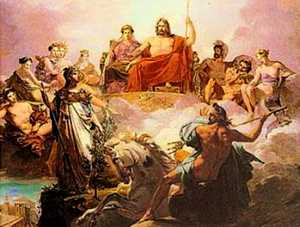
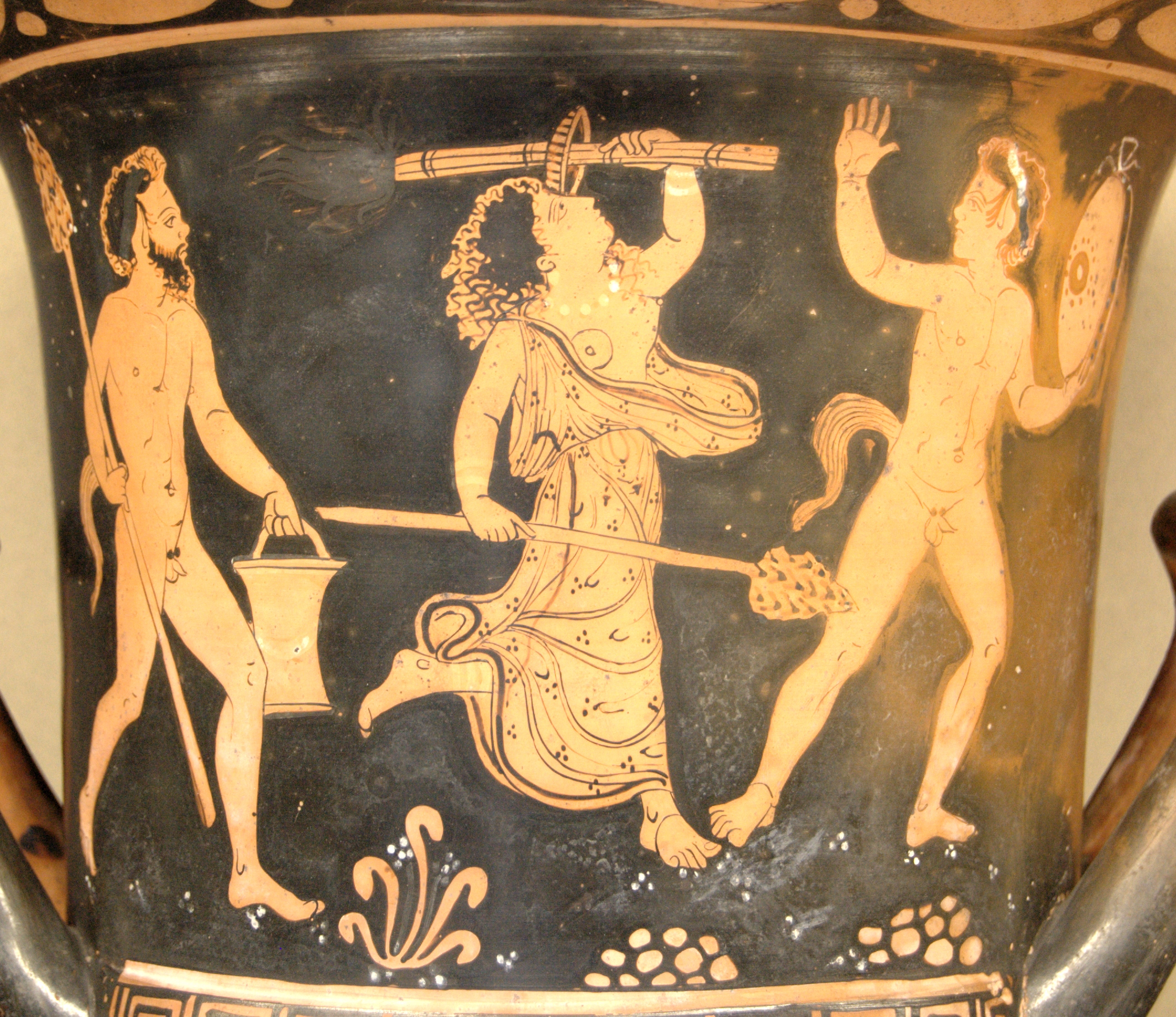


 The Cave of Oracle