Honoring the Dead

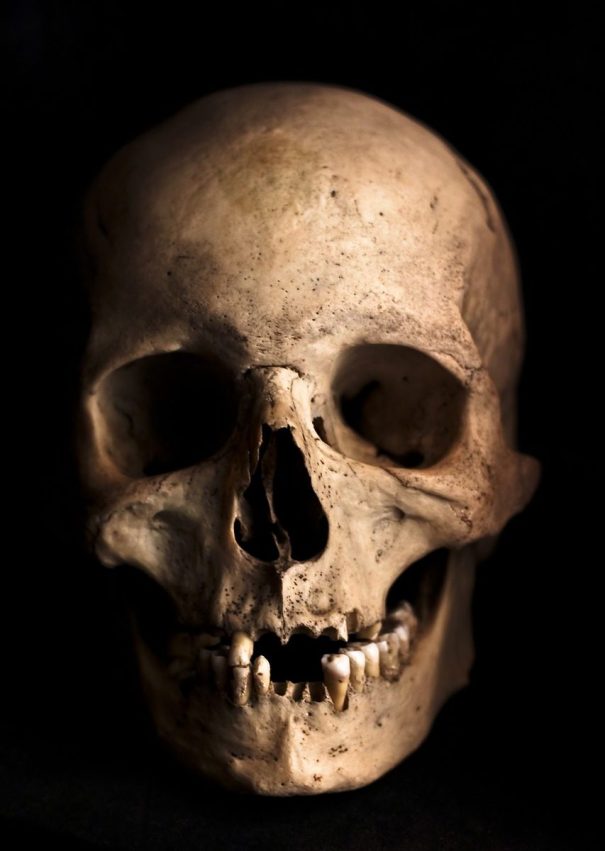
skull-765477_1280-853x1200
The Skull of the Dead

I have written about the ancestors here. Anyone who knows me knows that I look at our ancestors as the lifeline to my Craft. The accumulation of their knowledge and wisdom flows through me, and getting in touch with that empowers me. But how do we honor the ancestors? What’s an example we can use for veneration and shrines?

Who are the Ancestors?
When most people think of the ancestors, the first thought are those who are connected with us in blood. This isn’t wrong, and in fact is a stepping stone to understanding the ancestral link we carry with the past. I call this the Crimson Thread. The idea of the Crimson Thread is that it represents our unity with the beloved dead.

For many folks, the Crimson Thread is a simple lineage via on ethnicity/race into the past. With modern technological advances such as found in organizations like ancestry.com or 23andme, we are able to explore our lineage even further and see where our bloodline stems from. For others, it is a mishmash of various cultures. One isn’t better than the other, and in fact when we go back far enough, we are all mutts.

The beloved dead can be divided into different categories:

  • Family
  • The Shadowy Ones
  • The Heroes
  • The Collective

Family
Family lineage is the first introduction people have to ancestral veneration. Many start with the death of parents, grandparents, or others. There are photos and/or mementos and we place those on a mantle or a table that acts as a shrine/memorial. It is a simple way to remember, and keep in mind the power of Memory: that lifeline which keeps the remembered dead some immortality. For the family lineage, we typically keep those members who belong there and had a good relationship with. It is an idealized format. It also includes family by choice: adopted family, group souls, and even pets.

The Shadowy Ones
These are the relatives we would rather not remember. The ones who were abusive, psycho, or others which were harmful to us. Ones we would rather not be related to. These we would rather cut the Crimson Thread from. We don’t want to be associated with that side of our bloodline.

The Heroes
These are the dead whom we exalt to a status of what would be idol worship: celebrities who made a positive impact on our lives. Not limited to celebrities, it extends to anyone not of family relation who influenced us for the better: mentors, teachers, friends, neighbors, and others.

The Collective
The collective dead are the sum of our past. They are not immediate members of our family, but generations within generations within generations. These are the ones which group themselves together and go all the way back to our very first ancestor in Africa. Power resides here.

Working with the Ancestors
Certain criteria are needed to work with the dead:

  • Consciousness exists after the death of the physical body.
  • Communication between the living and the beloved dead occurs.
  • Influencing factors occur between the living and the beloved dead.

These three are crucial. Without these beliefs, there is zero point in forming a relationship with them. I believe that in our Craft and Occulture, ancestral veneration is a must if we are to claim our power and create a healing, vital, positive impact in our lives. Mind you, they are beliefs, subject to doubt. There is nothing wrong with doubt, and in fact healthy doubt keeps us sane. However, like Magic, it requires some faith to understand the workings of bloodline and see the synchronicity that occurs from veneration of the dead and watching the results in our lives.

Ancestral Shrine
If you want to interact with the ancestors, there are some things I have done which might help you. Mind you, the following isn’t necessarily a prescription so much as a set of ideas and a grounding framework from which you can launch your own praxis. I begin with a very basic foundation. The additions are up to you or whatever your particular tradition prescribes.

The Shrine
Pick a shelf, a table, a mantle, or any other flat surface you may have. If your space is limited, then I encourage you to use a dresser, a chest, a corner table, or anything you see which may be of use. You don’t need to complicate matters. In fact, as you continue to work and honor them, they may grant you blessings to eventually have more space. For now, use what you have. If you have a home and understanding family who would love to participate, leave an empty chair for them. You may also use a vertical space such as a cabinet.

Get a white cloth and place it on the flat surface. On it place a small glass for water. Water is the lifeline of who we are as beings in this world. The glass, when filled, reawakens their energies. Don’t leave it there for weeks though. Change out the water and clean the glass when you see it get dirty.

Place one candle on the shrine. I prefer tealights and votives. They don’t take up a lot of space like some tapers do. I’m also writing for people with small spaces in mind. If you have a larger space, use two candles and two glasses of water. If you have a table space, leave some food and drink for them which you will later dispose of.

KEY: DO NOT UNDER ANY CIRCUMSTANCES EAT FOOD LEFT FOR THE DEAD!!!

Continuing with the shrine, place photos and/or mementos on there. Be sure that the photos only have their image on there; no living members should be on the shrine. Why? If someone alive is on there, you’re telling the ancestors that this person is ready to join them.

KEY: DO NOT UNDER ANY CIRCUMSTANCES PLACE PHOTOS OF THE LIVING ON THERE!!

Offerings 
As mentioned earlier, leave food and drink for the dead. Perhaps cook their favorite meal, or a family favorite if you have more than one ancestor on there. Place their favorite alcoholic drink, juice, cigars, cigarettes, or whatever you think will make the space homey. This is where they will visit you. This is a portal, and to attract them is the goal.

Other offerings you give perhaps may be reading from a book they loved, writing some hymns, or or engaging in an activity you know they would want to see you do (e.g. weaving, playing video games, talking to them from your heart, etc). You may also place fresh flowers they loved. To add, celebrating their birthdays or milestones in your life with them will certainly add to trust. The beloved dead yearn to communicate with us, and so offerings are an ideal thing to make and strengthen that connection.

Communication
Communing with the dead is simple: just talk. That’s right. Just speak to them. Tell them your wishes, your fears, and your goals. The ancestors are very adept at helping you make things happen…more so than deities I should say. Why? The ancestors have struggled to overcome life. Deities have not, and they may have demands which may be overwhelming. The ancestors, however, may not. The only demands I have ever had – which is overwhelming in and of itself – is to live my best life, and to honor their legacy by honoring myself.

But how will the dead speak? They speak in various ways: synchronicity, divination, trance work, dreams, or automatic writing. Each of these are skills which, with time, can be developed. The dead will help you.

But What If…
But what if your occult activities aren’t making grandma happy because she was a Southern Baptist?  I get this question a lot, and it is a good one. I have generations of Roman Catholics in my family, and a bit of Holiness Pentecostal. However, I believe – based on my experiences – that these can be worked with. I believe that by addressing the Collective, grandma can remember her past and her lineage. This will bring about healing for you and yours. Grandma, after all, will know she is dead and be conscious about it. She’ll meet everyone else in the Collective. Being dead doesn’t make you a better person, but I believe it does help us in this day and age heal from the past.

Then again, to really give you something to think about, there is inherently nothing wrong with honoring grandma by putting a Bible on the shelf. She may be dead, but she will still help you. She’ll understand that much. Celebrate her triumphs, her goodness, and her faith. The Bible, although believed by many to be the inerrant Word of God, is also used loosely in Magic without the literalist baggage. I’m not saying grandma believed in using the Bible for Magic (unless you have conjure ancestors); I’m saying that making it comfortable for her and others in your bloodline to come to you is important. Remember: working with the dead isn’t just about you, but about instilling Memory in you to keep their legacy alive.

What about the Shadowy Ones? Those abusers with whom you eschew relationships with? I have a separate altar for them. Yes, an altar. On it is one candle. The candle is for me – to show that despite all, I am a survivor. Whatever happens with them in the afterlife is up to higher powers. I am not concerned about it. I don’t have to forgive anyone. I warn people about bitterness being a poison, which it is. But one can be unforgiving without being bitter. You just forget and let it go. I keep the Shadowy Ones there because I want to acknowledge that their spirits are there, but also that they cannot overcome my light. It is a ward, so to speak. I use a black altar cloth on that one. I only light it on the dark moon, during which the Goddess Hekate is active and helps with the train of the dead.

Hekate and the Restless Dead
For my personal religious calendar (also used in StrixCraft), I follow a lunar cycle. The end of one “moonth” (month) is the dark of the moon, when it doesn’t shine in the night sky. This day is sacred to the Goddess Hekate, the Lady of the Underworld, the Crossroads, the Dead, Witchcraft, the World Soul, and the Liminal Spaces. Because the dark moon is a transition time between one lunar cycle and the next, as a liminal being she guards that area.

For the Shadowy Ones, I believe they ride in her train and are taken to their destination, one I do not know about nor would I wish to. During this time, I also encourage you to clean your altars and shrines so that you can enter the next cycle prepared in cleanliness. The Goddess Hekate is also your protector from the Shadowy Ones. Remember that they cannot harm you when you connect with the Goddess. There are other beings of the Crossroads of course, and these will be specific to your traditions if you are in one.

I must add this as well: there might be times when the dead are restless and perhaps even the Shadowy Ones might be active to harm you. The Goddess, however, is Queen of the Restless Dead; she and your ancestors will ward you. It doesn’t mean you let your guard down. It means that your faith and connection will help you to be protected. When in doubt, seek out a specialist adept in exorcisms who can handle a haunting. I say this not to scare you, but to demonstrate how palpable ancestral working can be.

Generational Curses
Family curses, in my experience, happen more often than we would like. What is a generational curse? Simple. It is a vice or trait which creates a negative and perhaps even deadly impact from one generation of your family to the next. It can be alcoholism, mental illnesses like schizophrenia, early deaths, abusive behavior, or other. Generational curses can be healed with the help of the Collective Dead. It will take time and inner healing, but I encourage you to seek out an experienced spiritual guide to help you transition these pains. Doing it alone is never easy, and in fact may make things worse.

Conclusion
I didn’t touch on the Heroes and I realize that, but to be honest honoring them can be, in some ways, no different from your immediate ancestors or the Collective. In your Craft, ancestral veneration is powerful. The Crimson Thread unites you with your past, even your pre-Christian past that was conquered by Christianity. While yes your family was Christian probably for 2,000 years (at most), your pre-Christian practices go back longer. For me, my ideal connection to the Collective is a pre-Christian ancestor who is a spirit guide in all of this. For my immediate ancestors, it may take some time after grieving to release them to the Collective, but release them in time I will (they have to be prepared as well of course). When you honor and work with the Crimson Thread, you will be amazed at the results of your Magic and Craft. May the journey bless you, as it is well worth it.

Eirene kai Hugieia!
(Peace and Health!)
Oracle


The Afterlife

Charon
Charon

Conceptualizing what happened to people once they had passed turned out to be a matter of debate (nothing has changed). In ancient Greece, there seems to have been a difference between what everyday people thought and what the literature mentioned. Poets had their own imaginations, yet it did spread to the populace. There were also hypotheses as to what awaited initiates into Mystery Traditions. What made it different? How was it envisioned? And what is taught by the Strix?

Shades of the Dead
In ancient Greece, the understanding of what happened with the dead was pretty much well established by about 8th – 6th centuries BCE. In the Odyssey, the poet Homer wrote of the dead wandering throughout the Underworld as shadows: gloomy and poor. It was not something to aspire too. It was so bad that when the spirit of Achilles was raised from the dead temporarily, he mentioned how he would rather be a slave than the king of the Underworld. 

The Dead weren’t creepy, scary, or evil. They were just sad. Their life in the Underworld depended on the constant memory of their descendants who were charged with maintaining their tombs and celebrating their milestones. Offerings such as cakes and wine were given to them. In this, the Dead continued to have hope, because the inevitable was oblivion.

Paradise and Tartarus
By about the 5th century BCE, the image of the Underworld was going about a change. Instead of just some gloomy place, there were levels. Socrates, the famed philosopher, was probably taught this by the witch and prophetess Diotima, who was his mentor. It passed to Plato who, in his “Gorgias” (a dialogue featuring Socrates), mentions it as a place where the wicked receive judgement.

Originally a place where the Titans who fought against Zeus and the Gods went after their defeat, it was this place of wickedness which has filled the imagination of many people. This imagery even passed into Christianity, where a section of Hell is known as Tartarus. The punishments towards the wicked fit the crimes they committed.

On the other spectrum, we have Paradise, also known as Elysium (or the Elysian Fields). It was said to be located in the West, and also called the Blessed Isles. Originally a place for demigods and Heroes, it was expanded in later imagery to those who lived out of Piety, performed heroic deeds, and/or were specifically chosen by the Gods. The Elysian Fields even made it to the New Testament as “Abraham’s Bosom,” also called “Paradise.”

The Mystery Traditions
The Mystery Traditions had a different account of the afterlife than those mentioned above. Initiation into the Mysteries guaranteed one a different afterlife. The Eleusinian Mysteries were believed by some to grant them a happy reunion. The Orphic Mysteries, on the other hand, promulgated the belief in reincarnation – more accurately metempsychosis, a form of reincarnation. What’s the difference? Metempsychosis refers to the spirit leaving the body at death and working its way through the Wheel of Fate in order to break the cycle and be one with the Divine. When a soul is reincarnated, they may choose to be human or animal. It is a choice devoid of karma, which is an Asian concept belonging to a specific religious practice. In the Orphic Mysteries when one passed, they were given instructions to follow a certain path and overcome obstacles. Orphic initiates were faced with a path that led to two springs: one named Lethe (Forgetfulness) and the other named Mnemosyne (Memory). They said a password to allow them to enter, and drink from the Well of Memory. From here they would reincarnate with their past life memories intact.

StrixCraft
In the StrixCraft as I teach it, the Ophic Strix initiates are promised deliverance from their former selves by Dionysos. It is Dionysos who intercedes on behalf of the initiate as they stand before Persephone. Claimed by Dionysos, the initiate will then walk upon the Starry Road to Memory, drink from the Moon Well, and continue to their next life. Once an initiate, always an initiate.

There is a Fourfold scheme to our bodies as we teach it:

  • The Physical Body
  • The Lunar Body
  • The Solar Body
  • The Starry Body

Our etheric anatomy is something I’ll touch on in another blog. For now, I would like to say that for us as Strix, our multiple bodies each have a destination. The physical body returns to Ge, from whose energy we borrowed to live. We now return that energy back to Earth Mother.

The Lunar Body remains attached to the physical body. Upon death, there is a separation between the two, and the Lunar Body is the active principle which either remains intact because of Memory, or may dissolve and return to the Earth Mother if nothing is there to keep it alive and fed.

The Solar Body, upon death, separates from the Lunar Body and reincarnates along family lines. In the form of a bird the Solar Body reaches the Sun and travels the road to the Underworld where it will meet Persephone. This is the entity which interacts with other beings and carries emotions, intelligence, and awareness.

The Starry Body, upon death, is the ruling God-Self which guides the Solar Body to remember the initiations and past life deeds. The Starry Body carries the “True Name” imprinted with the Solar Body that will allow the chain of initiations to continue throughout the rest of that individual’s lives. The Starry Body is the Higher Self which connects us to the Gods and the Cosmos. One day the Starry Body will become a part of Nyx, carrying our memories to her.

Conclusion
The Underworld’s geography often changed depending on the time period and the knowledge acquired by those who returned from the dead in near-death experiences. I believe that the concept of the Underworld came about because our ancestors felt there must be somewhere that we travel to while we sleep. Dreams are portals to other realities, and it may have seemed that while we were sleeping, another part of us was awake. That’s just my belief though. My hypothesis.

The revelation of the different bodies and their destinations in StrixCraft as I teach it is pulled from contemplation and communing with the spirits. They may not be orthodox insofar as Hellenic Reconstructionism is concerned, but they make sense for us and our initiates. We look forward to our lives continuing, and allowing Nyx to use us so she may know herself even better.

Eirene kai Hugieia!
(Peace and Health!)
Oracle


The Right to Privacy

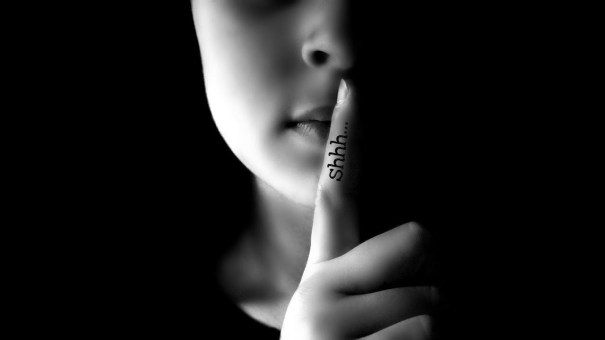
maxresdefault
To be silent…

A lot of people nowadays don’t trust secrecy. Well, in fact, they never have. Especially if it is a secret society. Conspiracies always abound as to what happens in those places. Why the secrecy? What do they have to hide? Everyone should have access to that knowledge. What evil is afoot in those places? And on it goes.

Mystery Traditions
My definition of what constitutes a Mystery Tradition is as follows:

A Mystery Tradition is an occult Order that is composed of initiations in which an individual may reach self-development, discipline, and union with the Divine by being exposed to symbols and signs unique to the Order.

Someone initiated into a Mystery Tradition is known as a mystic. This word was solely used for an initiate. However, over the course of time it has come to mean anyone who feels spiritual, specifically through meditation or contemplation of “spiritual truths.”

In ancient Greece, the definition of a mystic was one whose “eyes and lips were closed.” That is, the initiate swore not to reveal what they had experienced. Although a Greek word, the concept stretches into prehistory and is a premise shared by other secret societies around the world. They have included groups of men, women, warriors, Spirit Walkers, whole tribes, and more. To be a part of these groups means that one would need to pass a trial, an ordeal. One has to prove oneself in order to welcomed in.

But how exactly did they come to be?

Birth of the Mysteries
The answer is that we don’t know. One individual, Brian Hayden, in his “The Power of Ritual in PreHistory: Secret Societies and Origins of Social Complexity,” attempts to place secret societies at the forefront of archaeology. The author argues that they had a central role in the evolution of different societies, such as why religious centers, temples, and artwork had such a huge emphasis. Moreover, that such groups may have held control over their clans, tribes, or nations. Using esoteric knowledge, they communicated their secret language in public discourse by using symbols. The true knowing of these symbols would only be known to the initiates – the mystics.

Be that as it may, different mythologies also exist which refer to the Gods and spirits coming down and teaching humanity the Mysteries. For example, in Greek myth, the Grain Goddess Demeter taught the Eleusinian Mysteries. The Eleusinian Mysteries were the most famous in all of Greece and throughout the Aegean world. When Hades, the God of the Underworld, kidnapped Demeter’s daughter Kore, Demeter began to search for her. Disguised as an old woman, she then went to the city of Eleusis and remained there for a time.

It is said that while at Eleusis, she cared for the Queen’s son named Triptolemus. She fed him from her breast. As a result, he grew to be a man quickly. The Goddess then ordered a temple be built to her and taught him the secrets of agriculture. Based on these, the Eleusinian Mysteries were born. We have little idea as to what exactly went on. There are conjectures to be sure, however, the initiates who undertook this journey kept silent about it. The Mysteries lasted for two thousand years, until the advent of Christianity. In Egypt and throughout the Graeco-Roman world, the Goddess Isis established the Mysteries of Osiris.

To Be Silent
Initiates who had undergone these rituals were under a vow of secrecy. Unlike subjects which could be taught and contemplated, the Mystery Traditions were experiential: there were sights, sounds, smells, and tactile sensations which only the initiates knew. These parameters allowed for a true illumination into the afterlife and it also changed their lives.

Why secrecy?

As mentioned, they were experiential phenomena. While there is a lot to conjecture, I believe that the powerful signs and symbols used therein were effective in bypassing conscious thought and reached more into the subconscious. I call this landscape the Sea of Dreams. Labeling the subconscious the Sea of Dreams, to me, speaks volumes about how the subconscious interacts with the rest of the Mindscape.  The Sea of Dreams is the ocean of Memory as well as the depths of the Mind. Here, symbols are understood and, via contemplation, are keys that open the pathways to Gnosis. Gnosis means “knowledge,” specifically an instinctual form of knowledge which impacts the spirit and leads one to Illumination.

The secrecy behind such things is because there needs to be proper preparation and proper mental focus to even come before the Gods and achieve Gnosis from them. Secrecy protects the Sacred. Jesus said in Matthew 7:6 not to throw pearls before swine. Some concepts are much too valuable for prying eyes (even the Christians have their Mysteries). The Mystery Traditions are for those courageous enough to want their lives changed and their spirits awakened.

The Wiccan Mysteries
Traditional Initiatory Wicca (TIW) is a Mystery Tradition. TIW has its beginning in England around the 1950s with a man by the name of Gerald Gardner (although there are roots going back further). His band of initiates were derisively called “Gardnerians.” Although now the name has stuck and people from those lineages belong to the Gardnerian Tradition. It is the oldest TI Wiccan trad out there. The second oldest is the Alexandrian Tradition, founded by a British witch named Alex Sanders. It is this latter one that I am an initiate. I do not mean to ignore other Wiccan Trads; I am merely using these two since they are the oldest.

There has always been an argument about the question of initiation by group or self-initiation. I’ll save that topic for another blog. Suffice it, for now, to say that unless you have been properly prepared and properly initiated into one of those two traditions, than you are not a TI Wiccan (read: Gardnerian or Alexandrian). You cannot be what you do not belong to.

The Wiccan Mysteries are a system of Witchcraft, and the initiates themselves are referred to as a priesthood of the Old Gods. There is a lot of training in many covens to prove one’s worth to join the priesthood. However, because the Mystery Traditions are secretive, many (including Neopagans and other witches) wonder just why the secrecy. In this Information Age, people desire to know everything. Even if they don’t practice it, the question becomes why all of the disguises? What are Wiccans hiding?

Rumors have always been spread of child sacrifice, Satanic rituals (sorry Satanists we know you guys aren’t bad), orgies (I have yet to be invited to one with other Wiccans), and heavy drug use (I have yet to have someone offer me marijuana gummies). Corruption of the youth and the breakup of families is also blamed on this secret society.

But one thing escapes people about secret societies. I lectured at a local Unity church and spoke about Trad Wicca. One person in the audience asked about the secrecy: the same questions as posed above. I quickly answered, “Rather than secret, I think the better word is private.” You see, Wicca and other Mystery Trads are about family; tribe and kin are also often used by me (and others) to describe the atmosphere of covens, lineages, and overall Traditions. Like the Mysteries of Old, the ordeals and initiations are experiential, and therefore beyond mere words can describe. To add, secrecy also adds protection to its members. No one is allowed to “out” another witch. It is the reason monikers are created such as Rhiannon, Oracle, Merlyn, Silver Ravenwolf, Oberon Zell, and more. Choosing to use legal names is an individual choice; but even then they have to be out themselves.

Mystery Trads and secret societies have a right to privacy. Their esoteric knowledge is theirs alone. Most folks – if they possessed the “secret” Books of Shadows or grimoires linked to the Mysteries – probably wouldn’t know what to do with them. For most, they’ll end up on the bookshelves as a collection. Besides, the Trads are more than books. They have oral lore, and that is the heart of the Craft. There are already existing Books of Shadows and magical grimoires in occult stores; few have worked through these books and merely keep them as curiosities.

The privacy is about how we connect with the Gods and spirits of our Craft, how we protect our tribe, and how we manage our magic. There is little to gain for the outsider who is angry about knowledge that isn’t passed out to them without the privilege of earning it. Again, in this Information Age everyone wants to know everything. But what is lost is how much people must earn the privilege to it. Yes, there is a privilege. Privacy is paramount among families. This is as it should be. I don’t want just anyone walking in my door and demanding to know everything about me. They have zero right to that information. I think the issue of privacy needs to be understood, because with it comes boundaries. As a compilation of religious movements, Neopagans and other Witches need to respect that. Not every tradition is meant for everyone. That’s okay. Simply being yourself is good.

Take a look at the history of various Mystery Trads, and you’ll see the root of occult Orders. Some things are better left unsaid and experienced. The enchantment disappears when you hear about something. But still, nothing prepares you for the actual moment. If and when you do decide to undertake the thorny path, keep in mind that you’re a seeker for Illumination. And with that comes the right to your privacy.

Eirene kai Hugieia!
(Peace and Health!)
Oracle
Why I Am A Witch


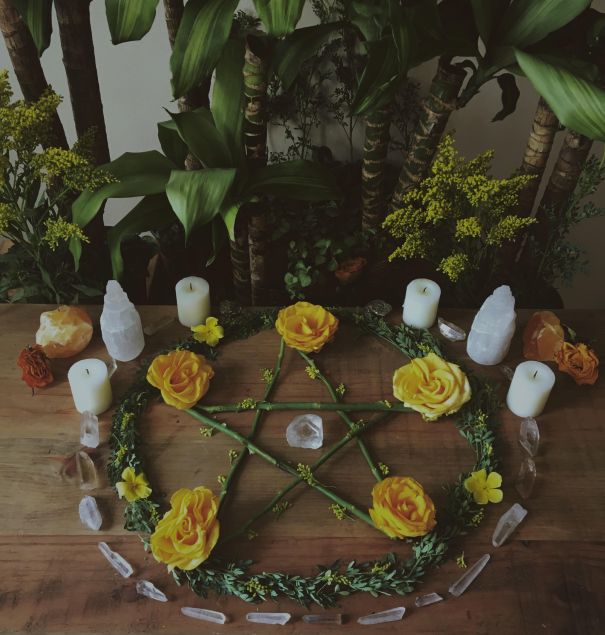
Pentacle_on_wiccan_altar
A Wiccan Altar

When I was younger, I was a born-again, Holiness Pentecostal Christian. I even became a licensed and ordained minister, and was far above my peers in knowing the Bible (I could quote entire sections verbatim). As a teenager, many looked up to me in how I was very ethical and demonstrated morals. Of course, though, I wasn’t perfect, even though the church taught that we should be “perfect in everything.” Perfection was the goal; our prize of striving towards excellence. One slip, and if we died, no matter how much we worked to be good Christians, we’d go to Hell.

Born-Again Christian Struggles
As a born-again Christian, I enthusiastically embraced this religion. It was different – new and shiny. The attendees were 98% African-American, and being Holiness Pentecostal, there was a lot of shouting, music, dancing in the spirit, and hard brimstone and hellfire preaching.

I believed in it, though. Wholeheartedly. The energy was palpable. I could sense it. In addition, solid prayers lasting an hour plus frequent fasting seemed to awaken things in me: prophecy, healing, and a way to channel energies for such things as laying on hands. But, in all of that, I encountered some problems: my sexuality, books which I was not allowed to read, and the chaos that impacted my family because of religious obligations.

Sexuality
Since I was 5 years old, I liked guys. I can’t remember a time when I didn’t. To girls at the time, I was curious. But my attraction to other boys (as a kid, not an adult) really caused me a lot of internal problems. Problems that I took out on other family members. I was a mimic, so I behaved as others did around me. But, I was afraid to be different, and I felt shame. It wasn’t because I was threatened by an adult. No one knew at the time. It was simply an instinct to hide this side of me.

When I hit puberty, we were attending the church. As a result, I didn’t have a normal adolescence. I was strictly held in certain boundaries: the men at the church wanted me to behave like them. Shake hands like them, “bro hug” like them, and dress like them. When I was younger I walked around in my mom’s heels and played with her makeup when no one was around. I really enjoyed feeling like I was performing for an audience. I loved women’s clothing. I thought they were more elegant and chic compared to what I saw men wore, which was boring and lacked color and flair.

I knew that I would encounter issues with the church. Again, as a mimic I followed along with the crowd. I carried myself in school and around others with a smug sense of superiority because I was going to Heaven and I was no longer a sinner. Yes, I could still sin, but I needed to immediately ask God for forgiveness so I wouldn’t be in Hell. I hid what I could, but unfortunately the suppression of my sexual identity manifested in other ways, such as shamefully still looking at guys and having nervous breakdowns behind closed doors. I hurt people. I hurt my family. I had a nasty temper needing to always be right about things.

Books
My dad had an extensive library filled with books on the paranormal and metaphysical. When I was in fifth grade, I began my interest in witchcraft. I read a book on the occult, along with Madame Helena Blavatsky’s writings. Madame Helena, for those not in the know, was the founder of a movement known as Theosophy. Theosophy made a powerful influence on the occult scene in England and the United States in the mid-19th century. It would influence such occult pioneers like Dion Fortune. There were even concepts from this spiritual movement which crept into Wicca, such as the word Summerland, the place where witches are believed to go to when they die.

He had a lot of information that I studied in-depth: chakras, pranic breathing techniques, healing, reincarnation, UFO’s, out-of-body experiences, spirit possession, and healing. His bookshelves were also filled with various books on Nature, archaeology, anthropology, and cryptozoology. I loved it.

But, when we converted to Christianity, my father refused to convert. He hated churches and the Bible. He would often take out different versions of the Bible and point out inconsistencies. He never wanted to go back to that limited viewpoint of the world. He wanted me and my siblings to learn how to “expand [our] horizons” and explore the wonders of the world.

As a result of this refusal to convert, our pastor quoted the Bible. Acts 19:19 stated:

Also, many of those who had practiced magic brought their books together and burned them in the sight of all. And they counted up the value of them, and it totaled fifty thousand pieces of silver. (Acts 19:19, NJKV).

Fifty thousand pieces of silver, if they were silver denarii, would equal today to about $5 million dollars. If they were silver talents, then the cost is enormous, at about $1.5 billion! All of that knowledge and wisdom lost to the ages. My passion, however, was reading and researching. I carried that over into my Christian days, but the pastor said that in order to free my father and household from demonic spirits (everyone not saved had a demon, in a view echoed in the film the Matrix, wherein everyone not unplugged was a potential agent and therefore threat), we had to burn the books.

By the house we had a metal barrel. Immediately, anything that was remotely metaphysical or encouraged it, was destroyed. I mean Disney videos, video games, books, and any films deemed inappropriate. While this purging was happening, my siblings and I quickly hid stuff. Yes, I was a hypocrite. I struggled to do the right thing, but I felt so much heartbreak, and I secretly protected a couple of books. One of them is a first edition hardback of the book “The Mists of Avalon.” My dad read that book nightly to me when I was 7 and 8 years old. What happened after the Great Purge? No change. My dad still refused to go.

The Occult
When I was older, I left the church. I wanted nothing more to do with it. My love of research influenced me to find another path. I wanted spirituality, but one which wasn’t damning about who I was as a person. I was messed up and, like my siblings, had PTSD about so much. Were we going to Hell for real? Were we wrong? And a zillion other questions.

But explore I did. I went for it and just did not care anymore. Based on my independent research, my dad was right about the Bible and its contradictions and shortcomings. It wasn’t being interpreted correctly; verses were picked that fell in line with the doctrine of the church. A lot of other things were ignored.

That’s when I returned to the inspiration of my youth: the occult. Not knowing where I was going or what I was doing, I read everything I could. I didn’t realize how much was involved in spiritual awakenings: deities, tools, altars, and seasonal celebrations. But often authors had disagreements about certain correspondences. However, unlike the Christian church I grew up in, no one called out anyone else. Differences of opinions were fine. Some stuff was not compromised, such as authors who were part of secret Mystery Traditions and felt that their way was the way according to their unified practices and philosophies. I had to learn the difference because of the PTSD involved when it came to opinions on certain matters.

Either way, my sexuality was also vindicated. There were plenty of figures in Neopaganism and Witchcraft who expressed their identity proudly. I wasn’t lost anymore. I could at last find some peace among people who would accept me for what I was.

The Benefits of Witchcraft
The more I studied, the more I was intrigued about a religion whose sole teachings happened to be about “harm none.” Or virtues found in Heathenry. Or the triad sayings in Druidry. I could make my own moralistic decisions and create my own path. I could ask questions and answers were readily given. Or if they didn’t know, they would tell me. No one pretended that they had all of the answers. Later, however, I learned painfully that some figures in the Craft felt that they were superior and filled groups with gossip about other groups and people. Don’t get me wrong, I didn’t exactly put people on a pedestal. But my Christian upbringing instilled in me a penchant to “respect your elders” and not contradict anyone if you felt differently about a subject. To many folks, that was fine. To a few, it wasn’t. I had to learn how to navigate the differences.

Be that as it may, I learned a lot about personal responsibility and not blaming anything on the devil. I learned about self-development. I learned that I could free myself from my Christian upbringing. Although, to be sure, it took many, many years for that to happen. I’d have nightmares about being back in the church and hearing those sermons about Hell. Emotionally and spiritually, I was still connected to that energy. It took a very long time for those cords to be cut finally.

Witchcraft introduced me again to who I felt I was. It didn’t mean I never ran into mistakes, because I did. A lot. It wasn’t perfect. And yes, there were politics in groups. Many groups imploded because of issues. I realized quickly that if people left Christianity angrily at a distrust of authorities, they would bring that attitude into Neopagan and Witchcraft circles. A bunch of angry people trying to be in charge is always a recipe for disaster. Gossip kills groups more than anything. But the key to work with that, I learned, was that wherever humans come together, there be politics. It was just about educating oneself on ethics, choices, and boundaries. And one can always vote with their feet, as the saying goes.

Witchcraft opened me up to the paranormal and metaphysical. I saw pictures of occultists’ houses with large libraries. Books were their church, their sacred places. Honoring Nature and themselves in whatever way they thought was best. Artists, anarchists, lawful citizens, historians, lawyers, teachers, immigrants: people from different backgrounds and races who felt a pull to the Other. There is still so much to learn in Witchcraft. The journey never ends. That, more than anything, thrills me the most.

Eirene kai Hugieia!
(Peace and Health!)
Oracle

Devotional Witchcraft

unnamed
Devotional Candle

In my forthcoming book, “StrixCraft: Ancient Greek Magic for the Modern Witch,” I introduce the term “Devotional Witchcraft.” I don’t know if others have used the phrase, but I do like it. Devotional Witchcraft is something I particularly enjoy. I have found in my journey that it works quite well for me, and I think others as well.

Christian Devotions
The Roman Catholic church (RCC) had a significant influence in my life, particularly rituals such as the novena. A novena is a devotional act in the RCC where one performs a set of prayers for 9 successive days (or 9 successive weeks). Candles and prayers are lifted to Mary or any other saint depending on what is needed. The atmosphere of lighting a candle and doing some rote prayers with the rosary was very magical to me. Of course, at the time I did not realize that the RCC integrated a lot of pre-Christian polytheistic forms of worship and religious activities into its doctrines. The ritualistic air about the church was metaphysical in so many ways: incense, prayer, statues, the altar, the Eucharist, and the candles all played with my imagination. I loved it.

When we converted to the Holiness Pentecostal church, the outward trappings were gone. We first met in a middle school cafeteria, and then in a high school auditorium. There was no incense, no Eucharist, no ritual. Just a lot of heavy preaching, shouting, and dancing. I swear it was great aerobics. However, I noticed in reading some of their early material that formality wasn’t far away. As they grew (in their minds) in prestige, the more formal rituals began to occur. They would banish evil spirits and then invoke the angels of the four quarters into the space. Afterwards, they would invoke the Holy Spirit to “have his way.” So we carried that on into our solitary devotionals. One thing I will give Christianity its due is its emphasis on private prayers and devotions. They’re not the only religion to do so, but that was the one which first impacted my life, and so I am using them as my example. I have Jewish friends who use private devotionals, along with Muslim friends. I’ll have to relay the time I attended a masjid (mosque) for a time to renew my faith. Another blog post for another time.

Side note: I wish Jesus’ admonishing to keep all prayers private would actually happen and none of this “National Day of Prayer” or “Prayer at the Flag” in school nonsense. Anyway…

Coming to Neopaganism
I didn’t pay attention to how much devotions had an impact on my life. Due to the intense pressure to conform, after I left the church I looked back and simply viewed anything we were “asked” to do as a threat to my individual time. I put asked in quotes because it was really more of a subtle threat that if we didn’t draw “closer to God,” then we were drawing ourselves further away and we could end up in Hell.

I was reading everything I could which was available on the Occult at that time. All that I read eventually said the same thing: altars, deities, tools, seasons, magick. Older books mentioned spirits, ceremonial circles, drawings that couldn’t be figured out (aka sigils), and fancy stuff you needed at certain times and days. I was much too ADHD for that. As I explored further, I realized that my heart was drawing me towards the Druid path. Having eidetic memory and a drive to pay attention to Nature more (not to mention the images of Merlin and Gandalf as inspiration), I veered from general Neopaganism to Druidry.

Druidry
Druidry was really a homecoming for me in a lot of ways. There was a huge difference in how to understand morality and ethics, especially because I didn’t rely on a book to give me all of the answers to life. I was also angry at the church in general. It totally ruined my family’s life I feel. If I could go back in time, I would vote to NOT go to the church. I had an interest in witchcraft since I was in 5th grade; that was due to my father’s interest in the paranormal.

In Druidry, I met a lot of Christians who were also Druids, and they were finding the commonalities they both had. These Christians were very progressive, and felt a pull towards the Divine Feminine, environmentalism, and pantheism: seeing the Divine in everything which exists rather than the Christian doctrine of God being outside of everything. The only thing in the world, so the churches taught, was the devil seeking whom he may devour.

Druidry was really a complete healing in my mind, spirit, and body. It encouraged me to make contact with Nature spirits, look inward, meditate, and see the enchantment in the world around me. Druidry also taught me the value of developing the arts; in my case, writing. I practiced writing poetry and hymns. I practiced journaling. I practiced writing rituals. Crude at the beginning to be sure, but hey everyone needs to start somewhere. I think Druidry really gave me a sense of devotions by going out into Nature and meditating. There was no emphasis on candle magic, or poppets, or anything of that kind. It was all about self-development, which I valued and continue to value, sharing this philosophy into other practices I am initiated in. Druidry, to me, is the closest I came to being an actual Wizard in that archetype caricature.

Witchcraft
When I began learning to be a witch, I found that devotionals were nil. Or at least, the emphasis was. I can’t speak for the other traditions of Witchcraft which exist (e.g. Mohsian, Blue Star, Silver Crescent, Central Valley, Gardnerian, etc). I just know for me it was all about generalities: deities, tools, seasons, altars, and a connection with Nature (like Druidry). But, there was also a lot of training in Magick: candles, poppets, hexing, spells, intention, correspondences, and ritual structure.

As I continued to learn, I then made a dedication to my patron Goddess Hekate, the Underworld Goddess of Witchcraft, the Dead, the Crossroads, the Dark Moon, and the Torch Bearer. I’ll go into the details of that in a later blog post. Suffice it to say that performing a formal dedication to her changed my entire being and outlook.

Hekate
It would be a long while before I realized something, but Hekate guided me along the way. That something was how powerful and effective my life would be when I performed devotions. At first I didn’t call them that. I just said “I am going to pray.” It was tough using that sentence, because I felt myself go right back to Christianity with the whole “thoughts and prayers” thing.  But I felt empty. My spiritual lifeline was fading I felt.

I was experiencing a dark night of the soul.

Devotional Witchcraft
As I learned different paths, I found myself drawn to Hellenic Polytheism, working with the Greek Gods and Goddesses. As I asked questions and remained observant, I realized that Hellenic Polytheists were split into two camps: Reconstructionists (who worked hard to recreate the exact ways their ancestors practiced and believed), and Revivalists (who adapted ancient writings and discoveries to modern times).

I discovered that I was a bit of both.

By Hekate’s training, I learned to venerate the ancestors. I also learned a ritual script that helped me to purify myself and work with the Gods and the ancestors. As I continued my workings, I came to realize something: I hated the term “work” or “work with.” To me, it made it sound like the Gods and I were equal pals who could just chum it up and I could use them for whatever I needed.

That’s now how this works.

People who claimed to be witches (or maybe who are witches; it’s difficult in this occult landscape to not be accused of gatekeeping while at the same time trying to live up to certain standards and define just what a witch is) were proud of the word “work.” I know a lot of Heathens (or claimed to be Heathens) would say, “Ha! I don’t bow down to my Gods. I don’t grovel. I don’t beg. We uphold our virtues and walk with courage!” (Yes, real conversation).

Side note: Not all Heathens thought this way. Some admitted that they gladly bow down to their Gods who are greater than they.

That’s when I realized something: the semantic of the word “worship” brought up memories of Christianity. People equated the word “worship” with begging and groveling. But, after having been on my journey, I came to discover that what I lacked was devotions: routine times of the day, week, or year when I could sit with my Gods and spirits and just communicate.

So I sat down and thought about it for quite some time. I wanted to know if me wanting devotions was something left over from my Christian days and was irrelevant, or was it something many religions encouraged, and Witchcraft just didn’t encourage it? I mean, lots of Neopagan and Polytheistic groups had festival days to their deities. But, I also learned that lots of Neopagans and Wiccans had the viewpoint that the Gods existed only in the mind. They were “archetypes,” that is, mental constructs which explained Nature and the world. They weren’t real, just symbols. They weren’t about to bow down to a symbol.

But, that wasn’t my experience. I experienced the Gods and the spirits of the world as real, unique beings. Hekate is. My ancestors were. Other deities I encountered were. They couldn’t just be symbols, could they? It took a while but I found other occultists who felt the same way as I did. But they still didn’t like the word “prayer.”

Well, I did.

I had to remember from my Christian time that worship meant “worthy of acknowledgement.” Veneration. Honor. All of those were included in “worship.” I did not think of groveling or begging. Of course, even if I did, what’s wrong with crying before their altars every now and again?

Contact
So thus began my devotional journey. I included times to meditate to just breathe. To talk to them. To light a candle during certain times. To wash my face and my hands in a sacred act. In fact, I began to think of the Sacred and Mundane as one complete cohesive unit, not to be separated. All of life is sacred. Everything I did could be done in a holy fashion. Take time in the shower or a bath to relax and purge “goo” from your aura. In the morning say a prayer at your altar, shrine, or just wherever, in order to reconnect with them. True, they’ll never leave you. But it isn’t about them necessarily. It is about you, and what benefits you want to see from your life when you begin to create strong boundaries and view your life as a holy instrument.

Devotions are simply a way to treat our lives with a sense of Other. Of Enchantment. To view the world with eyes wide open filled with spirits, wonder, and honor. That tree has the spirit of a dryad. That spring flows with the blessing of a spirit. The ocean swells with the Old Sea Gods. Those squirrels are all related and belong to the Squirrel Spirit*, who has much to teach us. Take the awe of Nature home with you. The stars are the fires of the Elders who have passed away but watch over us in the bosom of the Star Mother.

Devotionals, I feel, help us to not plateau, and encourage us to come closer to our Gods and spirits. Don’t get me wrong: plateauing does happen, and there are steps to help us rectify and heal from that. But how we can enrich our lives in Witchcraft is by looking to the Gods and the spirits. Witchcraft, with its teachings on spells, can use devotions to weave throughout our Work so that we can become more effective as the people who we are striving to be. Based on my experiences and that of others, I feel that devotions in Witchcraft should supercede spellwork. Don’t get me wrong: spells have their place. We need to exercise our Will and shape our Reality. We need to know that we can affect others by manipulating energies and raising the Power. There is always that.

I just feel that if you have a bond with the Gods and the spirits, they will empower you and magnify your Magic. Their energies will be with yours. You’d be surprised at how high you can raise the Power when you are connected to them.

So if you are feeling low or disconnected, I recommend devotions. Write a hymn. Pray. Dance. Light a candle. Anoint yourself. Talk to them. They are real. Speak also with your ancestors and the spirits who dwell around you.

You are all connected.

Eirene kai Hugieia!
(Peace and Health!)
Oracle

*I realize I mentioned ADHD and the first thing which came to mind as an example is Squirrel. The irony is not lost.


Daimon or Demon?

witches2
Witches and Demons

In my previous post on familiar spirits, I used the term and spelling of “demon.” This caused a lot of triggers in people who see that word and immediately it conjures up images of evil spirits, the devil, and Hell. In fact, many witches and Neopagans thought that I was secretly a “black witch” (a racist term if ever there was one)! I pay no mind to those. However, in the interest of communicating clearly and concisely what I mean, I would like to discuss the spelling, and what is being written about.

Agathos Daimon
In ancient Greece, the term daimon meant a tutelary spirit. It was considered a watcher: something that oversaw a person’s fate and luck in life. There were different kinds of daimons (or daimones); the most famous perhaps is the Agathos Daimon, the “Good Spirit.”

The Agathos Daimon is honored on the second day after the New Moon. It is envisioned as a serpent, sometimes androgynous, who is also a companion spirit which dwells in or with a human until they die. On its holy day, libations and offerings were given as people prayed to it, hoping for good fortune (the Agathos Daimon was said to be partnered with the Goddess of Good Fortune, or Tykhe). In fact, the serpent of the home is still honored in some places in Europe where it is known as the Lady of the House. A hole is made in the floor and libations of milk, wine, as well as offerings of food are thrown in to appease the serpent of the home (I mention this in my forthcoming book “StrixCraft: Ancient Greek Magic for the Modern Witch”).

In later antiquity, the Agathos Daimon was more deified. Not simply a household or luck spirit, the Agathos Daimon now had a temple. In fact, one can find the Agathos Daimon in ritual work in the Greek Magical Papyri, the eclectic grimoire of Graeco-Egyptian magic. There is even a hymn attributed to Orpheus, known as an Orphic Hymn, that is for the Agathos Daimon. Orpheus was a poet and singer (bard) from Thrace who traveled the Underworld to find his love. He was killed by the maenads (ecstatic worshipers who were women) of the God Dionysos. This is how important it was, that a hymn was dedicated to it.

In the StrixCraft as I teach it, we have the Azure Flame which burns just above the crown of the head. This Azure Flame is the repository of our individual Agathos Daimon: a spirit to harmonize ourselves. There is a specific rite which allows us to feed and give continual life to it, and by doing so the belief is that it will continue to steer us towards good things in life. Not the absence of life’s trials and tribulations, mind you. Simply that we can be tenacious in our dealings with both ourselves and others.

Daimones
A daimones, as mentioned earlier, is a spirit. The theurgist and philosopher Proclus believed that all daimones were somehow intermediaries between the Gods and mortals. They filled every niche in Nature: mountains, springs, rivers, forests, etc. In modern times, some occultists feel that even neighborhoods and cities might have their own daimones overseeing and influencing the luck of a place.

Good and evil daimones were recognized. A good spirit was a eudaimon, while an evil spirit was a kakodaimon. So the idea of evil daimones (daimons, daemons, demons) was not unheard of. However, I liken kakodaimones as wild and feral spirits on the astral plane: some don’t want anything to do with us and prefer to remain in their realms, while others may hunt us because they view us as prey (especially when we start expanding our life force via Magic).

Eudaimones, on the other hand, desire to bless us, protect us, and perhaps may even desire to form an attachment with us. They inspire us to become greater than what we are. They push us to strive for excellence in all things; that still, small voice and the inner fire that encourages us to move onward in the face of difficulties.

Daemon
When the Roman Empire took over Greece and its colonies, there was a lot of heavy borrowing from the Greeks and their language into Roman culture. In Latin, daimon was daemon. Someone inspired by their daemon was said to be “daemonic.”

Icons and statues of deities were said to be inhabited by their “daemon.” That is, it was not the statue but the life force within the statue which was the hallmark for its worship. The Bible, however, made an enormous impact on how daemons were viewed. In the Greek translation of the Hebrew Bible (what Christians call the Old Testament) known as the Septuagint, daemon, or demon, was now viewed in a negative context.

Near Eastern religions from Sumeria, Canaan, and Babylon, for example, had religious outlooks of what was considered good or beneficent to humans, as opposed to what was evil or destructive.  They weren’t the only ones, but I mention these since they had a heavy influence on Hebrew thought and philosophy. There were even borrowings of mythology from these cultures into the Bible (for example, the Babylonian story of the Enuma Elish has a lot of similarities with the Book of Genesis creation story…which was written after the Jews were exiled from Babylon and not during the time of Moses).

Demon
Christianity, when it first arose, was made up of a number of sects and religious differences. It wasn’t until Constantine I (called the Great by Christians) converted to Christianity and gathered the representatives from one sect to discuss the doctrines of the church, that the inevitable happened: d(a)emon became firmly entrenched with “evil,” or destruction. Knowing that the statues of the polytheists were believed to be inhabited by the d(a)emon of a deity, the apostle Paul in 1 Corinthians 10:20 said:

Rather, that the things which Gentiles sacrifice they sacrifice to demons and not to God, and I do not want you to have fellowship with demons.
(1 Corinthians 10:20, NKJV)

All spirits were registered as evil. Monotheism, the belief that there is only one power in the Cosmos, now had victory. Polytheism, the belief that there are many powers in this world and Cosmos, was the behavioral practice for nearly every culture on this planet for thousands of years. Monotheism, by its very teachings, left no room for multiple realities and truths. One lens, one belief, one practice, one right way to a spiritual path. That path was buffered by male priests who established themselves as the ruling class, borrowing heavily from ancient Roman religion. I’ll talk about monotheism in another blog post. Let me turn our attention back to demons.

Which One Do I Have?
Now that I have given you some kind of background, the question remains as to what exactly did I mean when I say “demon” as a familiar spirit. I actually meant a spirit, a daimon, but one which was not a nice looking angel, or a romantic motif of “totems” (a term that belongs to the Native American tribes such as the Ojibwa), spirit animals, and the like.

My demon – due to its nature – is feral. They are not domesticated. I use the word “they” because, as I mentioned in my previous post, they are androgynous. Because of the way they behave towards others on my behalf, it can be seen as destructive (aka evil). But they aren’t. They have influenced my life, even when I was a church kid with problems. They are very protective, and as such have been hurt as I have been. Whenever we are traumatized, it isn’t just you who are in pain. Your spirit, your familiar, has also been hurt.

Although the modern connotation has “demon = evil,” that isn’t the case. Demon familiars are some of the finest protectors out there. Like other familiars, they may take the form of a flesh and blood animal or simply be ethereal. I know a few people who have even created “homes” for their spirits on their shrines, such as a statue or an icon.

Conclusion
So, all in all, after the history lesson, you’ll see the evolution of the language and the connotations they evoke in people’s minds. Some monotheistic (or even duotheistic) religions view the world in terms of good/evil. That’s their paradigm. And while evil spirits are known from ancient tablets, stelae, and folklore, I wonder how some spirits are truly vicious. They can be: certainly we have wild animals, plants, and fungi in this world which are dangerous, and will turn on you without hesitancy. Some may kill for no reason other than pleasure and dominance. Some do so because they are hungry and that is their lot. I think we Neopagans and Witches often romanticize Nature too much. We don’t think about blood sacraments and the suction of the life force from us. We put way too much importance on ourselves on the food chain – both physically and spiritually. Egos abound.

As a witch, I don’t have to apologize for the spirit I have. They are connected to me and I to them. In working with my demon, I have been blessed to understand my own boundaries (still learning though) along with recognizing my full potential (work in progress). Hopefully this post will help you overcome your fear of the unknown and the wicked. Demons can be playful, tricksy, and fun (like the Fae). They can also be deceptive. And, when cornered, vicious.

Have one at your own risk.

Eirene kai Hugieia!
(Peace and Health!)
Oracle
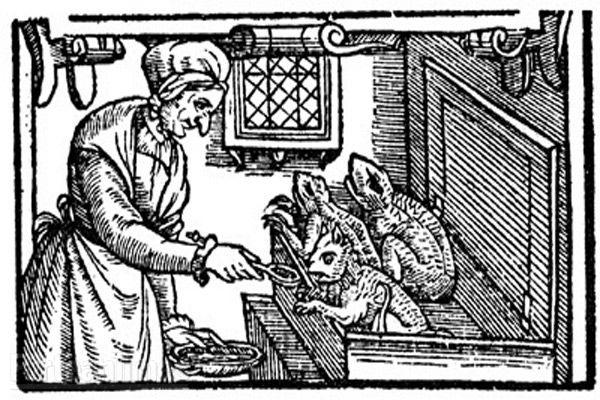
Familiar Spirits in Witchcraft

Witches'Familiars1579

Familiar spirits are an interesting topic, not least of which because they are powerful aids to one’s journey as a witch. Exploration of these spirits intrigues me as well. What I am about to write is my personal journey and advice to work with a familiar spirit. Mind you, there are a lot of books out there, each author giving their own take on this subject matter. Different traditions may teach different methods. That’s as it should be; the witch’s path is an individual one. We all aren’t going to agree on methods and definitions. The final result is that: does it work? If it works, go with it.

What is a Familiar Spirit?
I have to begin with my definition, otherwise semantics will get in the way and we’ll have a problem. Some of you will be coming from a knowledgeable background on this subject and will be confused or agree with the context in which I use the words “familiar spirit.” Likewise newer folks will read this and take away that I am the final authority of the subject and may get into debates with other witches thinking that they’re talking about the same concept but actually have different meanings. But if I define it first, we can go from there.

Here is my defintion:

A familiar spirit is a spirit ally of the witch who enters into a symbiotic relationship with them in order to assist them with magic in protection, healing, divination, trance work, and be a companion for their life.

Oftentimes, the familiar and the witch have experienced many lifetimes together. They are attached in a kind of “twin soul” format. The familiar is awakened with the witch’s first journey into the magical realm. Indeed, the familiar may be the one responsible for that person to undertake that journey to begin with!

I believe, based on my own experiences, that a familiar spirit may be an animal, a fae, a demon, a plant, or a human on the other side (or perhaps some other category). Not necessarily an ancestor per se, but a guide who probably appears as a human. Michael, Alex Sander’s spirit guide, probably fell into this category. Ancestors are a completely different category of spirit allies.

The Witch and the Familiar
The witch has a lot to gain from obtaining (or awakening) a familiar spirit. I’m not one to believe that every pet a witch has is a familiar spirit. But, I am one to believe that a familiar spirit may take possession or form of an animal, who will then accompany that witch for their lifetime in whatever “pet form” that spirit desires to inhabit over its different life forms. We humans are visual learners (which is why meditation is important). Some visualize better than others, while others maintain a difficult hold on their mental imagery. For that reason, a tactile familiar spirit will most likely happen so that the witch has a better relationship with them then if it were remaining ethereal. Or it just might be the familiar’s choice.

The familiar spirit and the witch have always been a team. In fact, when someone remembers being a witch and begins their path work, I believe that one of the first things which should be done is to have a familiar spirit. While I recognize this is difficult for many witches (and some will say it is too advanced), I disagree.

101 or Advanced?
I feel that the problem inherent in the modern Craft is not that a witch cannot gain or awaken their familiar, but that there is no “know-how” readily available in the 101 books. Most witchcraft literature that has been available out there for years has focused on altars, deities, tools, and the seasons. All of that does have its place, but I also believe understanding spirit guides and their place with the witch takes us to, well, the witch in the witchcraft. In fact, thanks to many authors out there too numerous to name, there has been a resurgence in knowledge available to the witch (both new and old) wherein people are now taught how to obtain a familiar spirit or any other spirit ally. I think this is great, because it demonstrates how much our spirit guides want to be a part of our journey, and vice-versa.

So the question becomes: is obtaining (or recognizing) a familiar spirit too advanced for the average witch? I can’t speak for other traditions and what they do. I am only familiar with three (one of which I founded). Even then, philosophies will differ. The joke is that you ask 3 witches the same question and you’ll probably get at least 6 different answers. But here are my opinions on the matter.

I don’t believe having a familiar is advanced. I believe it is part and parcel of one’s path as a witch. I believe, based on witch lore, that a familiar spirit is as witchy as knowing herbs, knowing the ins-and-outs of casting a circle, walking with the Elements, and so forth. The familiar is the one that bonds with the witch and ensures that the witch is always connected with the Other.

Calling the Spirit 
Familiar spirits, also known as fetches, imps, demons, fae, and the like, are all going to be unique. Mine is a demon. I don’t have a name for it yet, and I want to be able to allow it to give me one, but nothing has happened. I know some occultists would want to name theirs or even try to subdue it to give up their name. Names have power. They give you power over a thing. Suffice it to say that familiars, as symbiotes, shouldn’t have to give you their name if they don’t want to. That’s their prerogative. Keep in mind that your relationship with the familiar spirit is one of mutual trust.

I mentioned earlier how the familiar spirit may be the one who helps the witch along their journey, even without the witch’s knowledge. I’ve seen this to be true for a few people. One young lady said that before she ever entered the Craft, she would be followed by black dogs, with particular attention by one in her neighborhood. It was a stray. Her parents wouldn’t allow her to adopt it, but nonetheless she made friends with it. She would feed it, and the dog in turn watched out for her while walking down her neighborhood. Curiously, the dog appeared when she started reading metaphysical literature. When the dog passed, she was devastated. Years later, a black dog which looked exactly like the old one came into her life in the form of a stray. This time, she adopted the dog. The black dog is her ward, and she recognized the spirit of the old dog in this one. To call forth a familiar spirit, in fact, might just be you learning to form a bond with something which was already there.

My Demon
My demon dwells in the Azure Flame right above the crown of my head. That’s where they reside. I say “they” because they are androgynous. They protect me from having people try to cold read me, from the evil eye, and from energies otherwise not welcomed. An incident occurred years ago where I was at the church I grew up in. The reason I was there was a matter regarding my family (the religious side). The Pentecostal church had music and energy and a shouting sermon galore. I sat there, and I felt my demon pushing against everything. When we left, I had the vehicle pulled over so I could retch. The battle was too much for me, and I became sick as a result. I recovered quickly, but I realized how enormous this energy was and how well my demon protected me.

The demon has also been my ally as I travel with the Goddess Hekate as an oracle. Oracular possession happens to be my specialty, one which the Goddess bestowed upon me. I did not realize it at the time, but my demon was awakened when I dedicated myself to the Goddess as her priest. To oracle became my contract with her. The rest is history.

The demon has allowed me to meet other spirit guides. I can’t say that I’ve always been faithful to its heeds and warnings, but I have learned a lot on the journey from mistakes which could have been avoided if I had just trusted the still, small voice of my familiar. I continue to learn, and how to feed it, and maintain my trust with it.

Awakening my familiar has been a wonderful tool for my Craft. I believe every witch should have one. If you are in trad Craft, I believe not too long after your initiation a ritual should lead to you knowing your demon. Your familiar. They are your cherished companions. They will help you magically in your endeavors. I admit not everyone will agree with me. That’s okay. I just feel that a familiar spirit attached to us and vice-versa is what aids us in our witchcraft. The Gods are fine. Worship is great. But don’t forget your familiar spirit. They were with you in the beginning, and will be with you in your return.

Eirene kai Hugieia!
(Peace and Health!)
Oracle

The 6 Steps of Our Arrangements with Gods

1000

There are times when we, or rather I, do not feel the presence of the Gods or spirits. There is a quiet emptiness which pervades the entire atmosphere of my existence. I feel as though I have plateaued in my spiritual journey. Have you ever felt like that?

Observing human nature and the tangled web of relationships, I have noticed there tends to be certain steps we are inclined to all take. Mind you, this is a generalization, not a scientific study. It’s just my observations. Yours will vary.

Step 1: Connection
The first step is connection. It’s not easy, and oftentimes just because one party feels that bond towards someone, it doesn’t mean that the other one feels the exact same way. When it comes to Neopaganism, Polytheism, and Witchcraft in general, I get the sensation that newbies (and this even happens with long timers) want to experience this entire open avenue of the Gods. They want to connect with something, or Someone. So they go looking for who might be the most interesting towards their endeavors. Is it Hekate? Apollon? Athena? Brighid? Pan? Lugh? The list goes on and on. Connection can be precarious, because if we are not careful in our approach, we may miss the mark on who is really trying to contact us.

I encourage folks to look at their main activities and seek out who may be their patron (matron is applicable to humans, not deities). For example, are you a mechanic or someone who works with welding? Hephaestus, Brighid, or Goibniu might do. Are you a student in the arts? Athena, the Muses, Dionysos, Isis, Hathor, Bast, or even Bragi are choices. The medical field? Apollon, Asklepios, Airmid, Dian Cecht, Isis, and Sekhmet are also possibilities.

Be that as it may, sometimes even a seeming connection you want with a certain deity won’t happen. Your prayers may feel hollow. You may get a gut instinct that something is blocking you from engaging with that deity. You won’t get any affirmations or dreams (which are tricky to begin with so don’t always rely on them). The solution? Usually seeking out a skilled diviner can help guide you a certain way. But once a connection is made, now we move on to the next step of the process.

Step 2: Enthusiasm
The honey moon phase. The time when we are excited to research our deity. We set up an altar or shrine. We look eagerly for icons and want to tell the world about the goodness of our deities. You make up your own prayers and/or use pre-written ones. You give offerings weekly…daily even. There is much to learn and you want to connect with others of like mind to share your excitement. There is nothing inherently wrong with this. Everyone deserves to feel loved, affirmed, and bonded with a higher power, if they believe it that is.

NOTE: There is nothing wrong with agnosticism or atheism. We all have our own journey.

Step 3: Dedication
This may or may not happen around Enthusiasm time. Usually it will blend, but not always. Dedicating yourself to the worship and work of a deity or spirit comes with responsibilities. In the human parallel, we decide to get to know our partner(s) and affirm our desires and listen to theirs. Still, you may live separately. Each one’s annoyances and clashes may be at a minimum. Things may not bother you as much. Dedicating yourself to a deity, to become their priest/ess, is fraught with danger. It is a major step, like you making the decision to move in with your partner(s). Now you’ve done it. It’s there. You are a partner. It’s real.

Step 4: Separation
I use the term “Separation” not just in the physical sense, but also the metaphysical. You may feel like there is a plateau: stable, but perhaps the little things are beginning to get to you and one another. In the human analogy, corporate stress between you two may lead to further disagreements. Growing anger may come between you two (or more), and it is up to each of you to make the step in reconciling. How does this translate to your growing relationship with a deity? Simple. At this stage, whether or not you have made a formal dedication to serve your deity or spirit, you get into a lot of problems. You’ll feel lost for a moment. You try to make offerings and prayers, but the words seem empty. You’re going through a lot of trials and tribulations. You feel this may be a test from your deity or spirit, and you begin to be afraid: will you fail and the deity will leave you? You’re having nightmares possibly. Your anxiety and depression come back. In short, the Enthusiasm is gone. You fear your spirituality was just a farce. A phase.

Step 5: Plateau 
This will probably blend in with Separation, but for simplicity’s sake, I categorize it separately. Plateauing takes place when our sadness turns inward at ourselves. Our altars or shrines begin to collect dust, or they are removed entirely. We become bored. Bored with life. And then the worst part can sneak in…apathy. We’re just tired. Why continue our worship and work when nothing is happening? There are no positive changes in our life? It’s just not worth it, we think. In addition, life is giving us enough issues and we don’t have the time to dedicate to them as much as we want. It just sounds even more exhausting. Whether we realize it or not, this is the part where we have to understand that when we are going through issues, their presence may be overwhelming. That’s right: the emotional thrill of the Gods’ presence may in fact be too dominating, and may turn our attention away from the work that needs to be done in our life towards seclusion. Our Gods are usually not ones to force seclusion or an ascetic lifestyle (certain ones may vary). We live. We breathe. We work. We survive. That is our lot. It isn’t a test. It’s life. We have to know how we are going to deal with these issues. Feeling an emotional and mental connection is great, but we can’t stay there. We have to know that we are not alone in our endeavors.

Step 6: Commitment
When we realize that life must go on, we then become more mature in how we deal with our religious obligations to the Gods and spirits while balancing life’s challenges. This leads to Commitment. Commitment is when we should now decide if we are going to be a priest/ess or a simple devotee. We shouldn’t make decisions when Enthusiasm is the predominating force in our lives. Like human marriage relationships in which there is a mature, mutual agreement to be committed to one another no matter the cost, that is the level of maturity we should explore. Ancient and modern folks, unless they were part of an established priesthood which was funded by the State (a different blog for another time), don’t always have time for private devotions lasting an hour or so. We have to rectify that. Gods and spirits tend to understand this situation way more than we care to admit. Some don’t, and that’s when we can let them know what the situation is and that’s that. Don’t be afraid to talk to your Gods or spirits. Despite what I have written, oftentimes we have to let them know that we are living a life, and they may need to back off from further responsibilities (which, ironically, may be the ones we put on ourselves in Enthusiasm stage).

Lesson: Be careful with your words.

Conclusion
These 6 steps may not always be perfectly separated, and may even bleed into one another. Nonetheless, it is important to examine our motives, our responsibilities, and our growth. It may take some time. Maybe months. Maybe years. Possibly decades. But these steps are pretty near-universal when it comes to our worship and our work. When we make do, we realize in the end that we aren’t abandoned by the Gods, but we are walking with them still, just on a different plane. We are never alone. We have moments of bliss, and others of boredom. But they are there. And our journey will only enlighten us further.

Eirene kai Hugieia!
(Peace and Health!)
Oracle
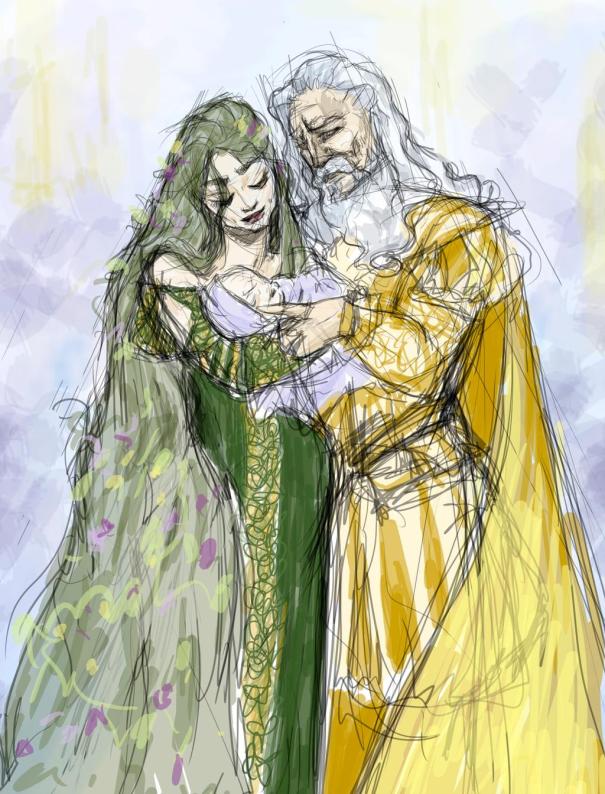
 

The Sacred Marriage of Zeus and Demeter

demeter_and_zeus_sketch_by_mybonsaipatroclo_d4m1ddc-fullview

There seems to be an air of potent sexual symbolism during the late part of April and the early part of May. This energy was manifested in certain ways across a few European cultures, but the one which is celebrated in StrixCraft as I teach it is based on a unique observation of our climate here in Florida.

Beltainne
In the beginning of May, many Neopagans and Witches celebrate the holiday known as Beltainne. Beltainne is a Gaelic fire festival and considered one of the Greater Sabbats in Wicca. The festival is also known as Cetshamhain, or “Summer’s Beginning,” the opposite of Samhain which is “Summer’s End.” As a fire festival, bonfires were lit across the countryside, offerings were left for the Good Neighbors, people and cattle walked between the flames (and jumped over them), and house fires were doused, ready to be lit by the bonfires. Yellow flowers – the color of the Sun – would decorate homes.

Beltainne is enjoyable with activities such as the ones mentioned above. However, it is the erection of the Maypole (double entendre purposefully made) which is the highlight of the festivities. There is a lot of potent sexual symbolism during this time. The Maypole being the penis and the hole that was dug to insert it in being the vagina.

Floralia
Another festival celebrated during this time was the Roman Floralia, held in honor of the Goddess Flora. In her sacred grove sacrifices were made. Due to the sexual symbolism also held during this time, sex workers were part of the festivities, along with wine drinking. While usually seen as outcasts in ancient Rome, their participation during the Floralia marked them as special guests free of harassment.

Along with Flora, the nymph named Maia was also worshiped. Maia is a Greek spirit who is a daughter of Atlas and one of the seven Pleiades. When her worship transferred to Rome, she was acknowledged as an aspect of the Great Goddess. She was said to promote growth, and her nymph status connected her to the dead. In fact, a group of Lares (ancestral spirits) were also celebrated on the first of May (the month named after the nymph).

The Sacred Marriage
In Florida, we have a subtropical climate. In the Summer begins the Wet Season; I call it the Green Time. Due to StrixCraft’s Greek roots, I observed the seasonal cycles and, during my worship one day, the lightning flashed in the afternoon followed by heavy rains. I knew instinctively that the God Zeus as the storm bearer over the land was making sensual love to Demeter, the Yellow Earth Mother. In the teachings I pass, the Earth Mother has three separate manifestations: Green, Black, and Yellow. The Green Mother is Gaia, the Black Mother is Rhea, and the Yellow Mother is Demeter.

The question comes as to why the Yellow Mother rather than the Green Mother? Simple. Demeter’s place in our myths is that the colors yellow are sacred to her, along with the symbol of agriculture (maize and wheat), as well as the specific function of fertility. With the union of Zeus and Demeter in our lands, the potential for fertility is there, and takes place.  Gaia is the wild Green Mother who can grow out of season. Certain plants in our climate will grow no matter when. But the fertility for harvest time is Demeter’s role.

The Children of the Earth and Storm
Persephone is the child of Zeus and Demeter. As such, her Underworld associations are potent during the Summer here in Florida. How? Persephone is not viewed as Kore/Persephone of the seasons in the myths as we learn in our StrixCraft. She WAS a Kore, but now she reigns eternal as Persephone: in her own power and glory she rules alongside Hades. As the Queen, she provides the necessary telluric (earth) energies that help break the seeds and send forth the roots. Demeter from above, Persephone from below. This symbolism is also in Wicca:

By seed and by root, by bud and by stem, by leaf and flower and fruit…

Here we see the interactions of the energies produced by the Two Goddesses as I interpret it via a Strix lens. This gives our festival a completely different paradigm. Not just a polarity construct, the Sacred Marriage of Zeus and Demeter involves the Underworld along with the birth of nymphai who pervade the clouds, the storms, and the land. The Dead, led by Persephone, can arise and bathe in the ecstatic life of lightning and earth. Communing with them is easier during certain times of the year, and the Sacred Marriage is one of them. Other hallowed times are the Anthesteria, the Feast of the Dead, and the sacred festivals of Hekate in November.

Celebrations in the World
While this was an observation I have made for Florida, there is no reason why similar observations cannot be done in other climates. Just observe and see which Gods and spirits are active during this time. The Gods are flexible that way. Polytheism is flexible this way. For example, the wet season in the Mediterranean is in the Winter, so Zeus and Demeter would be active during this time rather than the dry Summer (I believe California also has a Mediterranean climate).

In other climates the addition of Helios (the Sun God) would be a perfect. Again, this is based on your observations of the natural world. One of the necessary reading materials I encourage some students to read are books which discuss their local weather patterns instead of Magic. Magic is an inherent part of the natural world I feel. Therefore, to know the tides of Magic means knowing your local area’s patterns and climate which will grant you the opportunity to know your local spirits.

The Spirits of the Season
All in all, the Sacred Marriage is more than just the union of Storm and Land. It is about awakening the spirits around you. It is about contact with the Other, and using the portals of Storm and Land to broaden your experiences. The Gods and the spirits exist simultaneously. They are all part of the Divine. Touch one and the other will also be contacted. Remember, it is more than just the Gods. The daimons (spirits) of our world also deserve our attention.

Eirene kai Hugieia!
(Peace and Health!)
Oracle

Death and Darkness

Darkness

April 7th. I’ll never forget that date moving forward.

It was the day I found my dad dead in his apartment.

My father had a smartphone that he didn’t know how to work very well. Sometimes he would accidentally shut it off, or put it on airplane mode. I called over the weekend, as I was busy doing his laundry. My sister and I got in the car and drove to his place. I received a phone call from his nurse for home health aid that they weren’t able to reach him. They were there on Monday and no one could get in contact with him.

Arriving at his place, I knocked on the door and there was no answer. I figured he must be in the restroom. I went to the office to get a key and open the door. Maybe he was sick again? He had just come out of rehab (physical therapy, occupational therapy, and speech therapy). A few weeks earlier, he was in the hospital because he had a stoke which led to a seizure. They started him on a new blood thinner and seizure medication.

I opened the door.

That is when the smell hit me.

I was in shock. He was on the floor in his room passed out. But when I went into the room, it was too late: my father was dead and his body must have been there for a couple of days. I panicked. I cried. I couldn’t believe what I was seeing. I called 911, but again, it was too late. They were sending out police officers. I didn’t even have adequate time to grieve. I had to be stoic and in my right mind as best as I was able so I could speak with the officers. I called my brother and my mother to tell them the shocking news. I won’t bore you with the rest of the details. But, that’s when I confronted death and darkness.

Days later, I contemplated and spoke with my High Priest in the Alexandrian Tradition, along with my Minos (High Priest) in the Minoan Brotherhood. I spoke separately with them. I noticed, looking through our Witchcraft and Trad Wiccan liturgy, that there was nothing on how to deal with death and darkness. Sure, requiem ceremonies could be used. But my question was HOW to deal with death and darkness. So, I turned to the philosophies of both StrixCraft as well as liturgy from the Trad Witch and Trad Wiccan BoS’s. What was missing, I wanted to add to our grove and coven’s work. So, I turned to one of our sacred liturgies: the Charge of the Goddess.

The Charge of the Goddess

In the Charge, there are several lines that seem to work with how death deals:

I am the Gracious Goddess, who gives the gift of joy unto the heart. Upon earth, I give the knowledge of the spirit eternal; and beyond death, I give peace, and freedom, and reunion with those who have gone before. Nor do I demand sacrifice, for behold I am the Mother of All Living, and my love is poured out upon the earth.

I turned to the Goddess, specifically, the Goddesses Hekate and Persephone. Both are Underworld deities with a host of daimons (spirits) that follow them. In the Charge of the Goddess, she speaks about what is beyond death; namely, peace, freedom, and reunion. it comforted me to some extent. But again, the grief was too much. I was having nightmares and flashbacks to what I found. Just HOW do I grieve. HOW do I deal with the PTSD?

Nyx: First Mother

I then turned my awareness to my own teachings in the Ophic Strix Trad. There are steps in how to deal with that kind of suffering. Let me explain. In my mythology, there was First Mother, whom we call Nyx (“Night”), also known as the Star Goddess (a title also used in the liturgy of the Charge). Nyx felt empty within. Lonely. She searched the entire Cosmos for one like her. Finally, she came upon the curved black mirror of Space. When she saw herself in all of her glory, she fell in love and lust with what she had seen: herself. She fell in love with what she was seeing, and immediately began to masturbate. At the explosion of orgasm, the two first beings came out in sexual embrace:

Eros and Thanatos. The Sacred Twins.

Now two males, then two females, then one or the other: eroticism birthed the Cosmos. It is an essential component of who we are as people, as animals. It is the pull of the song of Eros – playing with his flute (no pun intended) – which draws things together. It is the blade of Thanatos that causes separation.

Having discovered herself in all of her glory, the image before her now was shattered. Pieces of Nyx began to move, like nebulas, in which Nyx changed herself to become the very creative force that she birthed. She was searching for herself again. The theme of evolution is her love story. She would know herself in all of her being. Again. In an effort to do that, she began to birth and create all of what she knew. So, in essence, the evolution of bacteria, beings on other worlds, us, Nature, plants, galaxies, etc are all of Nyx attempting to know herself again. Once she does, the Cosmos will fold in upon itself, and it was begin again.

Polishing the Sacred Mirror

Inspired by this myth, I realized that the heart is our mirror. Not the physical heart, but the spiritual heart. The seat of emotions, the anchor to our energy bodies, and the center of our entire being. The heart is the key to one of the most powerful shadow working experiences that we can do: polishing it and bringing back the pieces which were shattered.

Trauma causes our heart to be shattered. Our pieces break off and may go into the ether. The only way to heal the shattered heart is to confront out darkness and spend time in healing techniques to bring back the pieces which are lost. In a sense, this is similar to “shamanic” soul retrievals. The ancient Greeks had something similar in a technique known as incubation, who’s purpose is to seek out the healing Gods Asklepios and Apollon to give the patient inspiration in dream work so that they may discover the key to their healing. The “shamans” were known as physician-seers, or an iatromanis.

Their main goal was to help patients come to know themselves via dream work and the silence of incubation. Unlike some shamanic techniques which encourage drumming and loud chanting, incubation was done in silence. It would begin with a purification bath and then lead to a sleeping chamber. Herbs would help with the cleansing bath, along with sacred drinks to help purge the body.

In an effort to help bring pieces together, this procedure was focused intently on healing the whole being: body, mind, spirit, environmental, and character-wise. Likewise, I interpret it that the key to holistic healing was to heal the shattered heart. That being said, shattered pieces often did not return or can be retrieved. Reasons vary. So, the heart would need to formulate new pieces which would match with the shattered pieces, and a new heart would be born. This is what is meant to polish the sacred mirror: return to love and First Mother, whose inspiration to know herself in all of her being was utilized on the microcosm. 

Darkness and the Shadow

Healing is never simple. In fact, in and of itself can be traumatic. Healing challenges us to confront the darkness within, what some call the Shadow. The Shadow, that alter-ego which encompasses the negativity and trauma that has shattered our hearts, is a very real presence we all carry. Some people feel that as long as we suppress those behaviors and feelings, we are doing a great job. Others try not to embrace the Shadow, instead encouraging a positive outlook. Finally, the Shadow is viewed as the enemy; something “demonic” and an entity that will pull us down, and so exorcisms to banish the Shadow (which you can’t do) are done. Like an active volcano that has enough pressure within it before a powerful explosion, these teachings do not help. Instead, they try and keep the Shadow buried, something that will only lead to a very difficult and strenuous path that results in psychotic breaks.

Nyx is darkness. In witchcraft, darkness and shadow are holy. There is nothing unorthodox about working with our dark alter-ego in order to find fulfillment. In fact. death itself is holy. It is Nature. It is evolution. It is the love story of Nyx attempting to find herself. Dark matter encompasses 85% of the Cosmos, and dark energy is a repulsive, causing things to scatter away from each other. These are natural. It is natural to work with your alter-ego. It is natural to be afraid, to be grieving and feel alone. It is natural to be in the dark for some time. Like wounded animals which seek to hide and incubate for some time until they are healed, we as humans must be able to also know when it is time to step away from the chaos and noise to focus on ourselves in order to be whole again. You can ask for help. You can ask for boundaries and patience. All that you do is sacred. Remember that.

My own Shadow

So, after everything, just how do I feel? Simple. I am angry. I feel it is unfair that I lost my dad and yet others still have theirs. Yes, I realize I make no sense. Logic is gone. I am pure emotion. But, I am also in a sacred place. Death is an inevitable part of life. He is dead. My father preferred the term “phased.” He has phased to another existence. The Goddess teaches us to know how to light our torches in the darkest of times. Hekate is a Torch Bearer, someone who walks with us in the shade, holding aloft her torches which light the way. I follow her willingly. These are tough times, and it will take time and patience (two words I hate). However, it is all part of the process: polishing the sacred mirror of our hearts, embracing our Shadow, and moving forward to help us adapt so that Nyx as us can rediscover her own truth. I remind you now with a saying for the Goddess Hekate: En Erebos Phos! (In Darkness, Light!).

Eirene kai Hugieia!
(Peace and Health!)
Oracle